Search Results
Search this site
1275 results found with an empty search
- Fred Litwin on "True Crime Tuesday"
Click on the image below to listen to my latest podcast. Don't miss the Viewer's Guide to JFK: Destiny Betrayed and JFK Revisited: Through the Looking Glass. The Viewer's Guide has now been updated! Over the past several months, I have shown in multiple blog posts how Oliver Stone's documentary series, JFK Revisited and JFK: Destiny Betrayed, misleads viewers. In fact, despite months of work, there are still many more misleading segments that need to be addressed. It's no wonder that the fact checkers of Netflix nixed the airing of the films. There is a choice between four hours of tendentious nonsense (JFK: Destiny Betrayed) and two hours (JFK Revisited: Through the Looking Glass). As a handy guide for viewers, here are all those posts in order of their appearance in JFK: Destiny Betrayed and JFK Revisited: Through the Looking Glass, preceded by some general critiques. The Viewer's Guide has now been updated to include the sources from my new book, Oliver Stone's Film-Flam: The Demagogue of Dealey Plaza.
- Oliver Stone's "JFK" is "Batshit Crazy"
Nice to see someone understand what Oliver Stone's JFK is all about: Here is the section about Oliver Stone's JFK: A cocktail of insomnia and an HBO Max subscription recently inspired me to rewatch Oliver Stone’s 1991 film, JFK—a huge box office hit that was nominated for eight Oscars, winning two. It’s got an 84 percent positive rating on Rotten Tomatoes. And more than three decades later, I can attest that dammit, the acclaim is earned. It’s an outstanding piece of celluloid drama, fast-paced, intelligent, brilliantly staged. There are scenes that consist of nothing but eight lawyers in a room, sweating through their clothes in the New Orleans heat, shouting various threads of information to each other for more than 10 minutes. This should be absolute torture for a viewer, and yet, these are some of the most compelling scenes in the film! A three-hour dramatization of a forgotten criminal investigation and trial (the only case ever brought against someone for the assassination of President Kennedy) led by District Attorney Jim Garrison (played by Kevin Costner, fresh off of his Oscar-dominating Dances With Wolves and at the peak of his fame) should not work. But it does. It’s a fantastic success as a piece of entertainment. It’s also batshit crazy, comically irresponsible with the facts, and lionizes a prosecutor who by many accounts was both unethical and deranged by a fixation with conspiracy theories—some of which plainly contradicted each other. But no matter, the D.A. and his team were “through the looking glass,” justice had to be done “though the heavens fall.” At numerous times in the film, the Garrison character even says things like “I don’t have much of a case,” implying he would have one if only a vast conspiracy including the CIA, the mafia, right-wing Cubans, and a conclave of New Orleans gay men with fascist leanings hadn’t pulled the wool over America’s eyes. Garrison’s case was weak, but he wasn’t shy about using homophobia—during a time when being gay was literally considered a national security threat—to make it stronger. Indeed, as James Kirchick (a past The Daily Beast contributor) wrote in 2022, Garrison described Kennedy assassin Lee Harvey Oswald as “a switch-hitter who couldn’t satisfy his wife” and said Jack Ruby (the nightclub owner who murdered Oswald on live television) was a homosexual nicknamed, “Pinkie.” Most people also don’t know that The New York Times referred to Garrison’s prosecution of Clay Shaw as “one of the most disgraceful chapters in the history of American jurisprudence.” They just know the legend, which is that an unwieldy conspiracy theory is the actual truth, and those who believe “the government” are just dead sheep walking. Garrison’s obsessions found an audience through books, radio shows, and especially, through JFK. And to this day, the majority of the American public has been sufficiently convinced that Oswald didn’t act alone. Good entertainment has that kind of power. There’s an apocalyptic feel to JFK, as if the walls of reality are closing in just as “the truth” could come to light. It makes you want to believe, even if you know better (there wasn’t a viable internet for the layperson to do some basic fact-checking after watching JFK in the early ’90s.) Don't miss the Viewer's Guide to JFK: Destiny Betrayed and JFK Revisited: Through the Looking Glass. The Viewer's Guide has now been updated! Over the past several months, I have shown in multiple blog posts how Oliver Stone's documentary series, JFK Revisited and JFK: Destiny Betrayed, misleads viewers. In fact, despite months of work, there are still many more misleading segments that need to be addressed. It's no wonder that the fact checkers of Netflix nixed the airing of the films. There is a choice between four hours of tendentious nonsense (JFK: Destiny Betrayed) and two hours (JFK Revisited: Through the Looking Glass). As a handy guide for viewers, here are all those posts in order of their appearance in JFK: Destiny Betrayed and JFK Revisited: Through the Looking Glass, preceded by some general critiques. The Viewer's Guide has now been updated to include the sources from my new book, Oliver Stone's Film-Flam: The Demagogue of Dealey Plaza.
- Mike Farrell, of M*A*S*H fame, and Sylvia Meagher
One of the many interesting documents I found in the Sylvia Meagher archives was a series of letters between Mike Farrell and Sylvia Meagher. This was many years before he became famous as the star of the TV show M*A*S*H. Meagher took great exception to his comments on Jim Garrison. Here is his first letter to Sylvia Meagher: Here is her reply: Here is his next letter: Here is Meagher's reply: Meagher writes that she has a "determination to have no association of any kind whatever with any committee or group which is so misguided or so unprincipled as to endorse or embrace the New Orleans "investigation" under the pretense of seeking the truth about the assassination." Mike Farrell's replies that he "cannot make any determination as to the completeness, the validity or the folly of his case" and that he is "willing to wait until the trial to see this and on the basis of that evidence I will make up my judgment." Here is Meagher's reply: Meagher references her letter to the New York Review of Books. She also writes: If Garrison had done and said nothing after having booked Shaw for allegedly conspiring to assassinate President Kennedy, the benefit of doubt and the presumption of innocence would still be due Shaw, as a matter of right and law, until such time as he was pronounced guilty by due process. But Garrison has been anything but silent. He has peppered us with a stream of escalating pronouncements and accusations with constantly altered and elaborated versions of what happened at Dealey Plaza, which have no internal consistency or coherence, which are either totally unsupported by factual evidence or accompanied by "evidence" (e.g., the "code" P. O. Box 19106) which a ten-year-old child would find unconvincing and a twelve-year-old would recognize as the crudest form of fabrication. If anyone argues that Garrison has license to broadcast an unending stream of unsupported or insupportable charges, but that his critics have no right to repudiate or denounce his gross violations of fact and logic, it would be difficult to consider it merely "misguided." You can read all about Garrison's skills as a cryptologist here. The next day, Meagher wrote another letter: Update Paul Hoch has sent me some links about Mike Farrell and the JFK assassination. Farrell wrote about the JFK assassination in his 2007 book, Just Call Me Mike. Here are some of his thoughts from 2018: Mike Farrell (M*A*S*H): I was getting in my car after auditing an English class at Orange Coast College and heard the news on the radio. JFK was the first president I was old enough to vote for and he meant a great deal to me for lots of reasons. It was difficult to take it all in. I sat in front of the television stupefied, as many people were. I watched Jack Ruby shoot down Oswald in the Dallas police department garage and then tried to figure out what the hell was going on. I felt betrayed when the news media, which used to characterize Lyndon Johnson as a local yokel from Texas, was suddenly calling him the savior of the country. I began to think something is terribly wrong here. I think we’ve never been told the truth about Kennedy’s death, his brother’s or Martin Luther King’s. And the country is a lot worse because of the result. Farrell took exception to a History Channel documentary about the JFK assassination. Previous Relevant Blog Posts about Sylvia Meagher When will Oliver Stone Admit he was Wrong about Clay Shaw? A plea to Oliver Stone with a compilation of Meagher's writings about Jim Garrison. Sylvia Meagher on the Clay Shaw Case Howard Roffman writes a letter to Harold Weisberg about Sylvia Meagher. Penn Jones' Phone Call with Sylvia Meagher This phone call broke their relationship. Sylvia Meagher's Letter to Look Magazine Sylvia Meagher's reply to Look Magazine's article "The Persecution of Clay Shaw." Mark Lane vs. Sylvia Meagher An exchange of letters between Lane and Meagher. Sylvia Meagher and Jim Garrison, Part One Sylvia Meagher writes Clay Shaw, and he replies. Sylvia Meagher and Jim Garrison, Part Two An unpublished Meagher memo on the trial of Clay Shaw. Sylvia Meagher and Jim Garrison, Part Three - a never before published article by Meagher Another unpublished Meagher memo on the Garrison investigation and Warren Report critics. Garrison's Playboy Interview - What Couldn't Be Printed Sylvia Meagher's letter to the Editor regarding Garrison's interview in Playboy Magazine. Sylvia Meagher's Reaction to the Verdict in the Shaw Trial Meagher writes Harold Weisberg with her comments on the verdict. Two Letters to Jim Garrison about "A Heritage of Stone" James Phelan and Sylvia Meagher write Garrison letters about his book. Kerry Thornley writes Sylvia Meagher An exchange of letters between Thornley and Meagher. Did RFK Tell Garrison that there were guns between him and the White House? Meagher writes Thornley about Lane's comment on RFK. Sylvia Meagher Congratulates Clay Shaw On His Acquittal Meagher writes Clay Shaw. Was Jim Garrison Napoleon or Rasputin? Meagher writes Thornley with an opinion. M. S. Arnoni and Sylvia Meagher Take On Jim Garrison... Exchange of letters between Meagher, Arnoni and Garrison. Jim Garrison Blows His Top Meagher writes Weisberg about the damage Garrison is doing to critics of the Warren Report. James Phelan Writes to Richard Popkin Meagher replies to the New York Review of Books regarding Popkin's article on Garrison. Sylvia Meagher Replies to Richard Popkin An exchange of letters between Popkin and Meagher.
- Paul Bleau and the Fake Oswald Handbill
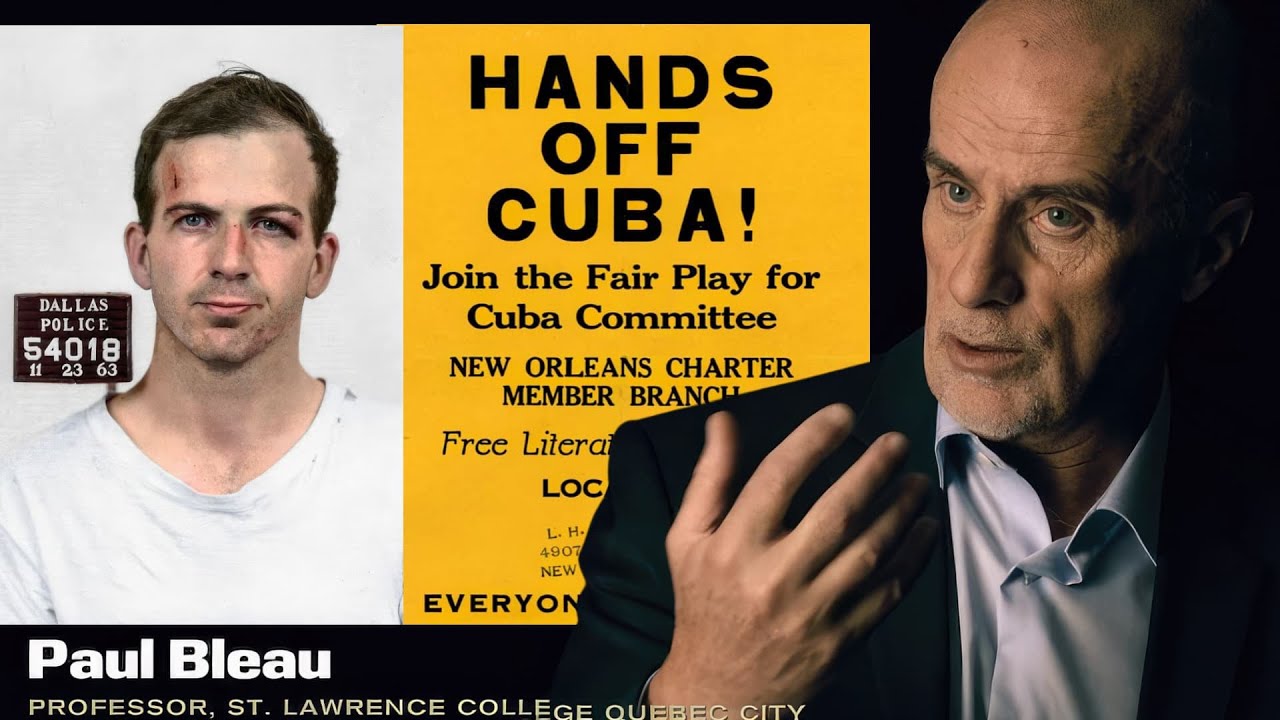
The handbill in the photo above is real, but Bleau talks about the fake handbills. The photo was added later and was not part of the discussion. Paul Bleau is the latest conspiracy theorist to discuss a fake Oswald handbill. He appeared on America's Untold Stories with Mark Groubert. Here is an excerpt from a transcript: (6:43) Paul Bleau: So, basically what happened is you got to a point where you said, he's {Lee Harvey Oswald] not only choosing the worst city, he is choosing the worst time. And where does he set up his office? Mark Groubert: In the middle of their intelligence network. Paul Bleau: Yeah, right in the middle, at 544 Camp Street, right beside his old buddy David Ferrie and ... the actual office that he took was occupied by the Cuban Revolutionary Council. Mark Groubert: Right. You see that on the manifest in JFK, that Oliver had the presence of mind to list that on the outside of the door. If you look close on that shot, Paul Bleau: You have a whole bunch of -- a whole bunch. It's all right-wing. Mark Groubert: Yeah, Yeah. Paul Bleau: That building was right-wing, right-wing Mark Groubert: Guy Banister's in there, who he worked for. Paul Bleau: So, and you know, in the surrounding buildings are what? It's the Secret Service, the CIA, Mark Groubert: The FBI, Paul Bleau: FBI. So, kind of a strange place to set up your office. Mark Groubert: Right. Paul Bleau: And I truly think that that flyer that revealed it, was a mistake and it got everybody really pissed. Mark Groubert: We're talking about the one with a rubber stamp that's said 544 Camp Street? Paul Bleau: That's right. That's right. Mark Groubert: That was quickly removed from future flyers. Paul Bleau: Yeah. So, then what the importance of that is, is most of Oswald's leafleting, at the beginning of the summer -- this is John Newman. who pointed this out, was underground, it was quiet. But around August, when I think they were setting him up to become the patsy, they say, "Hey, become public." Mark Groubert: Right. Paul Bleau: That's when he gets into the fight. That's when the TV stations are all over the place. He's on the radio, he's on TV Mark Groubert: You're talking about the fight with Carlos Bringuier ... Paul Bleau: Carlos Bringuier. Where do you even start with this? Conspiracy theorists have constructed a fantasy world about Guy Banister, 544 Camp Street and Lee Harvey Oswald. The first time Oswald handed out flyers, he got into an argument. This was sometime in June, 1963, probably just after Oswald picked up his handbills from the printer. You can see in the letter that Rafael Costea references "Hands Off Cuba." After the assassination, he wrote to Hoover identifying the man as Lee Harvey Oswald. Oswald may handed out some handbills at Tulane University but apparently those were not stamped with the 544 Camp Street address. (See Oswald and the CIA by John Newman, page 310 - 311) When Oswald handed out "Hands Off Cuba" handbills on June 16, 1963, at the U. S. S. Wasp, there was no address on the handbills. Oswald chose the Wasp because it was part of the Cuban blockade fleet. He was questioned by a patrolman: And, as I have said repeatedly on my blog, Oswald's handbills were NOT stamped with the 544 Camp Street address. He stamped them either with his home address or with his P. O. Box. Oswald did stamp a few Corliss Lamont pamphlets with the 544 Camp Street stamp -- but that stamp did not include his name, just 'F. P. C. C.'. Of course, Lee Harvey Oswald did not have an office at 544 Camp Street. The rest of the video is pure fantasy about supposed plots against JFK in Tampa, Chicago Nashville, and Los Angeles. Bleau then goes into another favorite conspiracy fantasy -- the world of Richard Case Nagell. I'd like to see some conspiracy theorists respond to my posts on the fake Oswald handbill. M. Bleau? Blog Posts on the Fake Oswald Handbill "JFK: Destiny Betrayed" Misleads Viewers on Oswald's "Hands Off Cuba!" Handbills An analysis of the handbill used in Oliver Stone's so-called documentary, JFK: Destiny Betrayed. "JFK: Destiny Betrayed" Misleads Viewers on Oswald's "Hands Off Cuba!" Handbills, Part Two An examination of where the fake handbill came from. "JFK: Destiny Betrayed" Misleads Viewers on Oswald's "Hands Off Cuba!" Handbills, Part Three A look at James DiEugenio's use of the fake handbill. "JFK: Destiny Betrayed" Misleads Viewers on Oswald's "Hands Off Cuba!" Handbills, Part Four Jefferson Morley is the latest researcher to use a fake Oswald handbill. Don't miss the Viewer's Guide to JFK: Destiny Betrayed and JFK Revisited: Through the Looking Glass. Over the past several months, I have shown in multiple blog posts how Oliver Stone's documentary series, JFK Revisited and JFK: Destiny Betrayed, misleads viewers. In fact, despite months of work, there are still many more misleading segments that need to be addressed. It's no wonder that the fact checkers of Netflix nixed the airing of the films. There is a choice between four hours of tendentious nonsense (JFK: Destiny Betrayed) and two hours (JFK Revisited: Through the Looking Glass). As a handy guide for viewers, here are all those posts in order of their appearance in JFK: Destiny Betrayed and JFK Revisited: Through the Looking Glass, preceded by some general critiques. The Viewer's Guide has now been updated to include the sources from my new book, Oliver Stone's Film-Flam: The Demagogue of Dealey Plaza.
- James DiEugenio Misleads Viewers on Oswald's "Hands Off Cuba" Handbills
The 1992 documentary, Beyond JFK: The Question of Conspiracy, by Danny Schecter and Barbara Kopple, is included on the Blu-Ray disc of Oliver Stone's JFK. Here is an excerpt from a transcript: (42:41) James DiEugenio: When Oswald returns to New Orleans in the summer of 1963, he begins to pass out communist literature. On this literature was an address, and the address was 544 Camp Street. The handbill shown in the documentary is fake: Here is a real Oswald handbill: The real handbills used a capital "L" in Literature. The fake handbill uses a lower-case "l". The spacing of 'Location' under 'Literature' differs in the fake handbills as does the spacing for 'Member.' This fake handbill was used in Oliver Stone's film JFK, and a slightly different fake handbill was also used in Oliver Stone's so-called documentary series JFK: Destiny Betrayed. Oswald's handbills were only stamped with his home address or his post office box. 544 Camp Street was stamped on a few Corliss Lamont pamphlets, but under the F.P.C.C., not Lee Harvey Oswald. I have a few questions for James DiEugenio: Why did you use a fake Oswald handbill in this documentary? Where did you get this handbill from? I wrote about the use of a fake handbill in JFK: Destiny Betrayed in August, and you have still not responded. Blog Posts on the Fake Oswald Handbill Paul Bleau and the Fake Oswald Handbill Conspiracy theorist Paul Bleau featured a fake Oswald handbill in a podcast. "JFK: Destiny Betrayed" Misleads Viewers on Oswald's "Hands Off Cuba!" Handbills An analysis of the handbill used in Oliver Stone's so-called documentary, JFK: Destiny Betrayed. "JFK: Destiny Betrayed" Misleads Viewers on Oswald's "Hands Off Cuba!" Handbills, Part Two An examination of where the fake handbill came from. "JFK: Destiny Betrayed" Misleads Viewers on Oswald's "Hands Off Cuba!" Handbills, Part Three A look at James DiEugenio's use of the fake handbill. "JFK: Destiny Betrayed" Misleads Viewers on Oswald's "Hands Off Cuba!" Handbills, Part Four Jefferson Morley is the latest researcher to use a fake Oswald handbill.
- William Gurvich's Interview with the HSCA
New Orleans States-Item, June 26, 1967 William Gurvich, who served as an investigator for Jim Garrison during the early part of his JFK probe, quit in late June 1967. Here is an article from the New York Times about his resignation: Money quote: He said Mr. Garrison has "no case" against Mr. Shaw and that he would support this assertion with "specifics" if he was allowed to appear before the grand jury. He also said he would welcome an opportunity to appear before a Federal grand jury to give evidence that Mr. Garrison had "violated the civil rights of several people -- including Mr. Shaw." He declined to elaborate on his charges in tonight's interview except to assert that Mr. Garrison has failed to prove "even basic charges" against Mr. Shaw. The next day, the New York Times ran another article with more stories from Gurvich: Money quote: In a program prepared by the Columbia Broadcasting System, Mr. Gurvich said tonight that he had visited Senator Robert F. Kennedy, New York Democrat, earlier this month "to tell him we could shed no light on the death of his brother and not to be hoping for such." "After I told him that," Mr. Gurvich added, "he appeared to be rather disgusted to think that someone was exploiting his brother's death and by bringing it up over and over again and by doing what has been done in this [Mr. Garrison's] investigation." More on Gurvich's meeting with Robert Kennedy here. Gurvich was interviewed by the HSCA in 1978. Here is a summary of the interview; note that they spelled his name wrong: SELECT COMMITTEE ON ASSASSINATIONS NAME: William Gurvitch Date 11/7/78 Time: 8:30-10:30pm Address Place: Gurvitch home in New Orleans Interview: Gary Cornwell, Bob Buras, and I interviewed Bill Gurvitch at his home on the night of November 7th. Gurvitch was asked at the outset to provide a running account of his work as Garrison's chief investigator during the early months of the Garrison probe, and to do so in a roughly chronological fashion. Gurvitch spoke at great length about the Garrison probe, and recounted how he (Gurvitch) came to believe that the case was a fraud, based on the outright fabrications of evidence, the testimony of demonstrable mental cases, and highly unethical and in some cases illegal prosecutorial conduct by Jim Garrison. Gurvitch stated that he had known Garrison for years prior to the investigation and that Garrison asked him in the fall of 1966 to join his staff as an investigator on "a very important project." Gurvitch agreed to do so and was soon told by Garrison that it involved a conspiracy to assassinate President Kennedy. Gurvitch stated that any investigator in the country would have agreed to work on the case, and that he thought it was his duty as a citizen to do anything to shed light on such an important event. Gurvitch stated that he worked closely with Garrison for several months before resigning from his staff and denouncing the investigation in early 1967. Gurvitch stated that during the weeks of his work for Garrison he had believed that Garrison did in fact have some credible information about potential conspirators, including Ferrie, and Shaw, and others. He stated that Garrison always was able to give the impression that he had much other significant material which he would not fully discuss. Gurvitch stated that he traveled around a great deal interviewing witnesses and performing other investigative tasks for Garrison. He stated that within a few weeks he began to doubt whether they were coming up with anything really solid or conspiratorial, and began to convey this impression to Garrison. Gurvitch stated that Garrison would always just ignore his doubts and tell him that he didn't know what important information they had. Interviewer: Mike Ewing Signature: Date Transcribed: 11/26/78 (p. 2) Gurvitch stated that as more weeks went by he began to see that Garrison was allegedly a very reckless investigator and did not really comprehend what constituted real evidence. He also stated that this was coupled with a tendency by Garrison to embellish and in some instances invent "evidence." Gurvitch stated that by then he had begun to have intense discussions with Garrison in which he would tell Garrison that they did not have a case; that they did not have sufficient evidence to even consider a prosecution. Gurvitch stated that Garrison had a generally incompetent staff that was afraid to ever question Garrison or differ with him. Gurvitch stated that several of Garrison's aides, particularly his top deputy, James Alcock, privately would admit that the Garrison case was a "fraud," but wouldn't tell Garrison that. He stated that they were more concerned about keeping their jobs with Garrison, and that each of the key Garrison aides involved in the investigation were later rewarded with judgeships by Garrison's political friends. Gurvitch stated that he finally decided he must resign from the Garrison staff and publicly state his disagreements with him. He stated that he agonized over this decision at great length before deciding to do so. He stated that he believed it was important to hold a press conference to publicly air his view that Garrison was blind to his own fraudulent evidence. Gurvitch related how Garrison had him charged with stealing xerox paper from his office after he resigned, and the resolution of that charge. Gurvitch stated that Garrison was very vengeful to anyone whoever disagreed with him on the case, and would attempt to smear them if he could. Gurvitch stated that Garrison never had any interest in investigating Carlos Marcello and the links between Marcello and such Garrison witnesses as Ferrie and Andrews. Gurvitch stated that "Garrison would never fool with Marcello. He was much too heavy for Garrison." Gurvitch stated that one of the specific things which led to his firm belief that Garrison was a man with significant mental difficulties, and a dishonest mentality, was when he heard Garrison once order two of his aides to arrange for Walter Sheridan (the former Kennedy aide) to be severely beaten in New Orleans. Gurvitch stated that Garrison ordered the beating because Sheridan was in town doing an expose on Garrison for NBC. Gurvitch stated that he interceded and stopped Garrison's orders from being implemented. Gurvitch stated that Garrison's office became a gathering place for various mentally unbalanced people who would come in to volunteer their services or testimony. He stated that it was easy for Garrison's staff to find "some nut" to testify to anything they wanted. Gurvitch stated that he did not believe Garrison's "Clinton" witnesses and believed that they were coached into making up their stories about Oswald and Ferrie by Garrison's staff, probably Al Sciambra. Gurvitch stated that he spoke with some of the Clinton witnesses and doubted their stories very much. Gurvitch also stated that Garrison was aware of the alleged Clinton information very early in his investigation, and spoke of it to Gurvitch within a few weeks after he joined the staff. Gurvitch also mentioned that he had been the investigator who had later obtained affidavits indicating that Garrison had sexually molested a 15 year old boy in the New Orleans Athletic club in about 1970. Gurvitch stated that his involvement in this episode came about because he was a member of the club and heard of the story from the father of the boy involved. Gurvitch stated that he secured affidavits from the boy, his father, and the boy's brother, and tried to get the city authorities to press charges against Garrison. He stated that the authorities wouldn't touch the case however, and the boy's father was reluctant to make the alleged incident public. Gurvitch stated that the boy and his father and brother stated that Garrison seemed to be in a drugged state upon emerging from the sauna room facilities after making the alleged sexual advance. Gurvitch stated that it is well known in New Orleans that Garrison has long taken to various pills and drugs and is not in good health as a result. Gurvitch related literally dozens of various stories and anecdotes reflecting what he claimed was Garrison's reckless investigative acts and unbalanced mental state. Gurvitch stated that he knows it must sound awfully one sided, but stated that "that's the way it was. I saw it all firsthand." Gurvitch stated that it all became like a scene out of Frankenstein; that Garrison had created a horrible monster out of the JFK case, and was eventually destroyed by it himself. Gurvitch stated that he does not believe that there is a conspiracy behind the case, and has no thoughts of any real suspicion in any direction based upon his work on the case.
- RFK Jr. Continues with JFK Assassination Nuttiness!
RFK Jr. spouts nonsense in this interview with Russell Brand: Here is an excerpt from a transcript: (11:30) Russell Brand: Bobby, how can you say though, that it’s beyond reasonable doubt, that it was the CIA just because he sacked some higher-ups, because he was gonna dismantle it, or at least he had an intention to, because he was at odds with the military industrial complex. And, if that is true, do you suspect then other high profile assassinations -- there's a comparable structure behind it, including obviously, the assassination of your father and also, the if this is, you know, sort of 70 years ago, wherever how, how entrenched are those … how entrenched are those deep state interests now, with the, with the war, with the current conflicts that are with the with comparable motivations? Do not feel that these … when you have access to sources like this kind of personal information, do you not feel that this is an indefatigable enemy; that this is an unstoppable machine? I mean, like in this country, when Jeremy Corbyn like, you know, got a little bit of traction, but the media just shut that dude down. I mean, he could couldn't get arrested. But so like, how can you talk out, speak out openly against these kind of interests, let alone try and mobilize a political movement and stand against them? Without serious fear of, you know, well, assassination? RFK Jr.: Let me answer the first question, your first question was, you know, why do I say that the case against the CIA, in terms of the assassination of my uncle, is beyond a reasonable doubt? The answer to that would take us a 10-hour podcast to even summarize because the amount of information is so voluminous at this point -- there, there are more than a million documents, including all the documents that show that Lee Harvey Oswald, that they recently released, you know, which we already knew, but it came as a shock to the United States because the press never reports it -- that Lee Harvey Oswald was a CIA asset. You know, Americans didn't know that. Certainly, the Warren Commission didn't know that, and Dulles made sure that they didn't know it. He was recruited when he was at the Atsugi Air Force Base in Japan. He was a Marine radar operator who was in charge of the U-2 flights, and then he defected to the Soviet Union. It was a fake defection that was organized by James Jesus Angleton, who was the Director of Counterintelligence at the CIA. And it was directed to uncover a mole at Langley, they felt, they knew they had a mole at Langley, and that mole incidentally was never caught. But that mole did tremendous damage to U.S. national interest. And one of the things that mole did is it allowed the CIA believe that, the U-2 flights were CIA, they weren't Air Force. And the other, the U-2 the CIA believed that when Khrushchev shot down one of the U-2s in 19, I think May of 1960 right before the election, that that one where Gary Francis Powers was a pilot, that that U-2 flight was shot down; the Russians were able to do that because of the information that were passed on to the Russians by the mole. Oh, they got Lee Harvey Oswald to defect, to do this very, very loud, fake defection that was covered in all the papers. And because it was a US Marine walking into the American Embassy and denouncing his citizenship and saying he wanted to be a citizen of Russia. Though he does all that, and, and then what they thought is when he did that, that the Russians would be very worried about who is this guy, and they would send a message to their moles, saying get us his file. And they had a trigger system on his files so anybody who touched it, they know that that was the mole. And but nobody actually went in and touched it. And so, two years later, they brought him back and he you know, in this weird situation, really Lee Harvey Oswald goes back to the US embassy from which he's defected and says, I want my passport back and they give it to him, and he, can I borrow $600? They gave it to him for an airplane ticket, and they sent him to Dallas, where he's picked up at the airport by George Mohrenschildt, who was a CIA asset and then who gets him the job at the Book Depository among many, many other things. But we know everything about what what Lee Harvey Oswald was doing at that period and before and after. We know his constant interactions with CIA handler, his CIA handler was a guy called David Atlee Phillips. I've talked to Cuban assassins who saw Lee Harvey Oswald in Dallas in in November, oh, no, in September, October of 1963, with Lee Harvey Oswald. But Lee Harvey Oswald, then did this, you know, somebody did a fake defection of him, attempted defection to Cuba. It's kind of, we know so much about, including confessions of many of the people who were involved in the assassination, you know, deathbed confession of E. Howard Hunt, for example, who then mastered, and went on to mastermind the Watergate break-in, and, and many, many others. So, at this point, the evidence and by the way, Russell, if you ever or anybody who's listening to this want to read probably the best distillation the best, of all of this material, a guy who's completely encyclopedic man of the material, and is a really rigorous scholar, Jim Douglass, and he wrote a book called The Unspeakable [sic], I think it's the best book written about this, although I've read probably 40 or 50, maybe 100 books about, you know, the assassination stuff now, because once I started looking into it, I was interested in. The evidence that the CIA killed my father is much less is not well, that well documented, but it's highly circumstantial. Where to even start? First, Russell Brand can't even coherently ask a question. He even believes that Jeremy Corbyn had to be brought down, when, in fact, he was brought down by his own antisemitism and his inept leadership of the Labour party. Second, RFK Jr.'s response is full of factoids gleaned from conspiracy books. While he brags about the number of JFK conspiracy books he has read, it's clear he doesn't have the mental acuity to understand what is nonsense. RFK Jr. can't really tell Brand what the evidence is that the CIA killed JFK. Why, there's so many documents it would take him hours! Once again, RFK Jr. mentions the "confessions of many of the people who were involved in the assassination." Like whom? He mentions E. Howard Hunt, but he confessed to being a "benchwarmer", and no one really takes his so-called deathbed statement seriously. Even Jefferson Morley is skeptical. The Mary Ferrell Foundation notes: Hunt's story has been challenged due to its lack of corroboration, its internal inconsistencies and Hunt's failure to provide any details from his activities in 1963 which would support it. And how about RFK Jr.'s statement that "I've talked to Cuban assassins who saw Lee Harvey Oswald in Dallas." What's that all about? And he gets several facts wrong. Oswald was not met at the airport by George de Mohrenschildt. And de Mohrenschildt did not get Oswald his job at the Texas School Book Depository. Nor was de Mohrenschildt a CIA asset. David Atlee Phillips was not Oswald's handler. Lee Harvey Oswald was not "in charge of U-2 flights." And he was not a CIA asset, nor was his defection false. For someone who has read so many books, he certainly doesn't know some of the basic facts. But that won't stop from him from making ridiculous comments. Previous Relevant Blog Posts about RFK Jr. RFK Jr.'s JFK Assassination Guru Promotes Crackpot Theories RFK Jr.'s favorite assassination book, JFK and the Unspeakable, is full of nonsense. RFK Jr. on the JFK Assassination and Jim Garrison RFK Jr. gets Garrison all wrong. RFK Jr. Misquotes JFK RFK Jr. puts words in JFK's mouth.
- Did Lee Harvey Oswald Have a 'Crypto' Clearance?
As I was perusing James Douglass' book JFK and the Unspeakable, I saw a claim that Lee Harvey Oswald had a 'crypto' clearance: (page 39) When the authors of the Warren Report mentioned Oswald's work in the Marine Corps as a radar operator, they neglected to point out that the future defector had a "Crypto" clearance, which was higher than "Top Secret." and that his work immersed him in information about the CIA's super-secret U-2 flights. His footnote references page 300 in Gerald McKnight's book, Breach of Trust: McKnight's research into Oswald's security clearances determined the fact that "when he served overseas at Cubi Point, the Philippines, and Atsugi, Japan, Oswald had 'Crypto' clearance, probably one of a dozen or more special clearances at that time higher than 'Top Secret' ... the Warren Commission knew about Oswald's 'Crypto' clearance but suppressed it from being included in the report." Here is what McKnight says on page 300: The Warren Commission knew about Oswald's "Crypto" clearance but suppressed it from being included in the record. Rankin never raised this issue in any of the on-the-record executive sessions. The Commission became intensely interested in Oswald's tour of duty in the Philippines when it learned that an eighteen-year-old marine in Oswald's outfit had died of gunshot wound while guarding the crypto van at Cubi Point. The dead marine was Pvt. Martin D. Schrand. Schrand and Oswald had attended the electronics school at Jacksonville, Florida, and advanced radar school at Biloxi, Mississippi, before being posted overseas in the same radar unit assigned to the ultrasecret crypto van. All six marines, including Lee Harvey Oswald, attached to the crypto van had to have "Crypto" clearance. There are no footnotes for any of the references to a 'crypto' clearance in McKnight's book. Schrand was indeed posted at the crypto van. I see no evidence that the marines who guarded the 'crypto van' had to have 'Crypto' clearance. Recently, Martin Hay has published a new review of Gerald Posner's book, Case Closed. He mentions Oswald's supposed crypto clearance: In his 1967 book Oswald in New Orleans, Harold Weisberg told of receiving a phone call during a radio show appearance from a man who wished to remain anonymous but said he had served alongside Oswald in the Marine Corps. The caller went on to explain that in the unit in which he and Oswald had served, five men enjoyed a special clearance called “crypto” and Oswald was one of them. (Weisberg, p. 87) Weisberg later noted how odd it was that although Oswald had to have had a high security clearance for the work he did, none was mentioned in his Navy records. Nonetheless, when he obtained the Navy documents related to the death of Oswald’s fellow Marine, Martin Schrand, Weisberg discovered that Schrand had been guarding the “crypto van,” for which crypto clearance was a necessity. Oswald, it transpired, was one of the six individuals assigned to this van. (See Weisberg letter to Vincent Bugliosi, 7/20/99 and Gerald McKnight, Breach of Trust, p. 300) Needless to say, Weisberg concluded that his anonymous source had been telling the truth. So, the ultimate source is Harold Weisberg: Here is what he writes in his book, Oswald in New Orleans: (page 87 - 88) My writings on the assassination and its official investigation have been restricted to what comes from the official information. Here I make a minor departure because I think it is important. At one o'clock in the early morning of December 15, 1966, in the Oakland, California, studios of Radio Station KNEW, I had just finished appearing on Harvard-educated lawyer Joe Dolan's lengthy phone-in radio program on which listeners called with comments or questions about the assassination and its investigation. There was a man on the line who had called toward the end of the program. He wanted to speak to me but not on the air. Further, he wanted the assurance that our conversation would be private. This was, of course, mysterious. I took the call. The caller was disturbed by the "beep" on the line. He associated that with the required signal for recording. I assured him that the engineer was not on it, that it was not being taped, and that he could talk to the engineer to learn these things. Overhearing this, the engineer explained to me and I to the caller that, with phone-in programs, the beep is automatically built into the line so there can be no possibility of listeners not knowing the conversation is being broadcast. The stranger on the other end of the line was partly satisfied. He alluded to this beep several times in the next hour and a half. We talked that long. It was part confessional, part shame mixed with self-pity and self-derogation, part fear, and all worry. This man had been in the Marine Corps with Oswald. From his personal experience, he did not believe a single word about the Oswald of this period that became public with the Report. He had agonized in silence for three years between the issuance of the Report and our conversation because he knew things, he said, that had not been made public and were not in accord with what had been published -- and he was certain what he knew was correct. Following his military service, he had built a successful life, had a family, and was worried about the possible consequences of being associated with any account not in consonance with the official Oswald "line." He feared he or his business might be hurt or that his family might suffer. By no means could I assure him that nothing would happen; I did encourage him to consider the importance to the country, to his family and himself, of any information he might possess. But he would talk only in anonymity. I respect his desires and will not reveal the few unintended clues to his identify that slipped out. I have made and will make no effort to trace him. Briefly, it is his story that Oswald was bright, not a kook of any kind, not a blatant or proselytizing Marxist, and really a quiet, serious guy. They knew each other socially and engaged in certain recreational activities together. He never heard Oswald say anything about Communism, for or against, in all this time. More important is what he disclosed about Oswald's position in the Marine Corps. The unit in which both served, said my informant, was one of three similar ones of which one was always in Japan and the others in the United States. Their function was classified. Every man in the outfit carried security clearances. They had a security clearance of which I had never heard. These were that kind of unusual military organizations. Of all the men in the outfit, five had special "top" security approvals. The entire complement carried a minimum of "confidential" (the grade the official file records Oswald as having had). Above this there were "secret," "top secret," and a special one, "crypto." Of all the men, only five were "crypto." One of these was Lee Harvey Oswald! "Can you possibly be wrong?" I asked him. He insisted not. "Could your memory be playing tricks?" No, he was positive. He went farther when I questioned him about "crypto," which he indicated was "black box" stuff. I took it to mean a connection with nuclear weapons. So, the whole idea of a "crypto" clearance came from an anonymous phone call to Harold Weisberg. In 1999, Vincent Bugliosi wrote Harold Weisberg a letter asking him about his sources for his claims about Oswald's 'top secret' clearance: Bugliosi references Weisberg's book, Case Open: (pages 174 - 176) A telephone call to any of the many critics familiar with it or to me would have disclosed that I had published the fact that Oswald had a Top Secret and a Crypto clearance when he was a Marine. That kind of high security clearance for a man later accused of assassinating the President and that Commission did not report it? Here is the relevant portion of Weisberg's reply to Bugliosi: Weisberg admits that "there is no record that I know of which says that Oswald had a Crypto clearance." Weisberg says the proof is in the court martial inquest into the suicide of Martin Schrand. I cannot find any evidence of this anywhere. This file is in the Weisberg archive, and I cannot see anything that sustains Weisberg's allegation. Weisberg wrote Bugliosi a second letter: The HSCA investigated Oswald's security clearance and they could not sustain the allegation: Here is a page from Oswald's Marine Corps records: This exhibit has more details of Oswald's clearance. One of the men who served with Oswald was Zack Stout. Here is the relevant section of his interview with the HSCA: Here is an interview with Richard Call, another colleague of Oswald's: I can find no evidence to support the allegation that Lee Harvey Oswald had a 'crypto' clearance.
- Will JFK Assassination Insanity Move to the John Lennon Murder?
Here we go! A three-year investigation into the murder of John Lennon has unearthed a series of extraordinary inconsistencies - including the suggestion that detectives may have fundamentally misunderstood how the shooting happened. British author and TV producer David Whelan has exhaustively examined Lennon's fatal shooting on December 8, 1980, as he and his wife Yoko Ono returned to their home in the Dakota Building overlooking New York's Central Park. Whelan has unearthed a trove of documents relating to the killing, including gunman Mark Chapman's 'hit list' - published for the first time here - which as well as the former Beatle also featured Marlon Brando and former First Lady Jackie Kennedy Onassis. My immediate reaction to seeing this article was to wonder if conspiracy theorist Lisa Pease will now write a book. And sure enough, she did send out this tweet: Pease is referencing her claim that Sirhan Sirhan was hypnotized and only fired blanks at RFK. Whelan thinks Lennon's murder is similar to RFK's: "I think Mark Chapman was potentially shooting a gun or thinking he was shooting a gun possibly blanks." Pease has also retweeted some of David Whelan's tweets: So, Whelan's inspiration was conspiracy books by Lisa Pease and James DiEugenio. Hat tip: Gus Russo and Steve Roe.
- Oliver Stone says that "Putin is a great leader for his country"
I don't have children. But if I did, I would hope that I would love them just as much as Oliver Stone loves Vladimir Putin. Check out his latest interview: The last time the Guardian US profiled Stone, he had just completed a strangely sympathetic 4 hour-long documentary about Vladimir Putin (at the time he said “the Russian people have never been better off”). Have his feelings about the Russian leader changed in the especially troubling years since? “I think Russia is doing a great job with nuclear energy,” he says after a moment’s thought. “China is also a leader in that field, although I never was able to penetrate into China, which was a shame for the movie; I wish we had. But Putin is a great leader for his country and the people love him.” And that is as far as he is willing to go. He’s gone far enough already. What about evidence of Russian war crimes in Ukraine? Here are the testimonies of survivors of Russian war crimes: Like in Syria, Russia is targeting hospitals: LVIV, Ukraine (AP) — For a month now, Russian forces have repeatedly attacked Ukrainian medical facilities, striking at hospitals, ambulances, medics, patients and even newborns — with at least 34 assaults independently documented by The Associated Press. With every new attack, the public outcry for war crimes prosecutions against Russian President Vladimir Putin, his generals and top Kremlin advisers grows louder. To convict, prosecutors will need to show that the attacks are not merely accidents or collateral damage. The emerging pattern, tracked day by day by the AP, shows evidence of a consistent and relentless onslaught against the very civilian infrastructure designed to save lives and provide safe haven to Ukraine’s most vulnerable. AP journalists in Ukraine have seen the deadly results of Russian strikes on civilian targets first hand: the final moments of children whose tiny bodies were shredded by shrapnel or had limbs blown off; dozens of corpses, including those of children, heaped into mass graves. “The pattern of attacks will help prosecutors build the case that these are deliberate attacks,” said Ryan Goodman, professor of law at New York University and former special counsel at the U.S. Department of Defense. “Prosecutors will draw inferences from how many medical facilities were targeted, how many times individual facilities were repeatedly struck and in what span of time.” Previous Blog Posts on Oliver Stone's Politics Oliver Stone is now in Alex Jones Territory! Oliver Stone: Putin is a rational, calm, thoughtful man: the United States is a Doberman... Has Oliver Stone Gone Mad? Oliver Stone Said Vladimir Putin is "very bright" and "wise" Oliver Stone's 'Bromance' with Vladimir Putin Oliver Stone Blames the United States for Putin's Invasion of Ukraine Celebrities Who Have Been Friendly with Putin Oliver Stone Says Vladimir Putin Fell into an American Trap The Day Vladimir Putin Fooled Oliver Stone with a Doctored Video Oliver Stone Watches Dr. Strangelove with Vladimir Putin Oliver Stone is Vladimir Putin's Mouthpiece Oliver Stone Says that Putin was Provoked... Will Oliver Stone Blame Kazakhstan Unrest on the United States? Is Oliver Stone Becoming a Lackey for China? Oliver Stone said the CIA may have injected cancer into Hugo Chavez's rectum... Oliver Stone Sides with Cuba's 'Repressive Dictatorship Two Views on Oliver Stone's Love Affair with Nazarbayev... Oliver Stone Fêtes Another Dictator Relevant Links on Oliver Stone's Politics Oliver Stone's Disgraceful Tribute to Hugo Chavez Is the director's latest film soft on Castro? Oliver Stone defends himself After Calling Russian Anti-LGBTQ Law ‘Sensible’ Hollywood Movie Director Oliver Stone praises Putin for Syria intervention on trip to Saudi Arabia Oliver Stone: Jewish Control of the Media is Preventing Free Holocaust Debate Oliver Stone's Latest Dictator Suckup Oliver Stone’s Latest Piece of Pro-Putin Propaganda May Be His Most Shameless Move Yet ‘The Putin Interviews’: Oliver Stone’s Wildly Irresponsible Love Letter to Vladimir Putin Has Oliver Stone Ever met a Dictator He Doesn't Admire? Oliver Stone's 'Empathy' for Hitler Iran's Fajr Film Festival grabs headlines with Oliver Stone Don't miss the Viewer's Guide to JFK: Destiny Betrayed and JFK Revisited: Through the Looking Glass. Over the past several months, I have shown in multiple blog posts how Oliver Stone's documentary series, JFK Revisited and JFK: Destiny Betrayed, misleads viewers. In fact, despite months of work, there are still many more misleading segments that need to be addressed. It's no wonder that the fact checkers of Netflix nixed the airing of the films. There is a choice between four hours of tendentious nonsense (JFK: Destiny Betrayed) and two hours (JFK Revisited: Through the Looking Glass). As a handy guide for viewers, here are all those posts in order of their appearance in JFK: Destiny Betrayed and JFK Revisited: Through the Looking Glass, preceded by some general critiques. The Viewer's Guide has now been updated to include the sources from my new book, Oliver Stone's Film-Flam: The Demagogue of Dealey Plaza.
- Was Fletcher Prouty an Antisemite? Part Three
For those of you who missed the first two parts, here are the relevant links: Was Fletcher Prouty an Antisemite? A look at Prouty's association with the Liberty Lobby. Was Fletcher Prouty an Antisemite? Part Two A Fletcher Prouty letter has some explicit antisemitism. The Journal of Historical Review was an antisemitic publication of The Institute for Historical Review which focused on holocaust denial. You can read a collection of issues here. Here is the cover of an issue from Spring, 1990. Here is the back cover: That's quite the lineup. David Irving, a controversial historian who has questioned Hitler's role in the Holocaust and is prone to making antisemitic statements. Robert Faurisson wrote a letter to Yad Vashem in 1974 telling that that there had been no Holocaust. You can read about Doug Collins here. You can read about Mark Weber here. Prouty wrote a letter to the Journal of Historical Review in 1992: Primary goals? The primary goal of the Institute was Holocaust denial. The IHR also published books: Including: Fletcher Prouty was an antisemite. Previous Relevant Blog Posts on Fletcher Prouty Jeremy Gunn on Oliver Stone, Jim Garrison, and Fletcher Prouty Jeremy Gunn tells an audience that Fletcher Prouty was totally unreliable. Was Marina Oswald Involved in the JFK Assassination? Fletcher Prouty actually claimed that Marina Oswald was in on the plot. James DiEugenio's Lame Excuses for Fletcher Prouty Mr. DiEugenio can't explain why Fletcher Prouty did such a poor job of testifying before the ARRB. Fletcher Prouty Talks to the ARRB A summary document of his interview with the ARRB Transcript of Fletcher Prouty's Interview with the ARRB Here is a link to the complete transcript of Prouty's interview with the ARRB along with some other documents. Fletcher Prouty and Army Intelligence in Dallas Another summary document from the ARRB about Prouty's allegations and Army intelligence. Was Fletcher Prouty an Antisemite? Prouty had some very unsavory relationships with antisemitic groups. Fletcher Prouty's Interview with the ARRB, Part One Was Fletcher Prouty's Trip to Antarctica Unusual? Fletcher Prouty's Interview with the ARRB, Part Two Regarding Christchurch, New Zealand and The Christchurch Star Fletcher Prouty's Interview with the ARRB, Part Three Regarding the 112th Intelligence Corps (INTC) Group and/or the 316th INTC Detachment Fletcher Prouty's Interview with the ARRB, Part Four Did Prouty keep the notes from his supposed phone call about Army intelligence? Fletcher Prouty's Interview with the ARRB, Part Five Prouty's experience with military presidential protection duties. Fletcher Prouty's Interview with the ARRB, Part Six Flagrant failure by the Secret Service to take minimum precautions? Fletcher Prouty's Interview with the ARRB, Part Seven Did Lee Harvey Oswald participate in a covert program in Indonesia in 1958? Fletcher Prouty's Interview with the ARRB, Part Eight Was General Edward Lansdale in one of the pictures of the three tramps?
- RFK Jr. Misquotes JFK
Great news! Robert Kennedy Junior is running for President of the United States. Bad news - he just can't stop himself from saying stupid things: Where do you even start? Robert Kennedy Jr. sat down with Aubrey Marcus. You have to love his description: Aubrey Marcus (IG: @aubreymarcus) is the founder of Onnit, a globally disruptive brand based on a holistic health philosophy he calls Total Human Optimization. Onnit remains an industry leader with products optimizing millions of lives, including many top professional athletes around the world. Here is an excerpt from a transcript from the interview: (0:40) RFK Jr.: My uncle, when the Joint Chiefs proposed Operation Northwoods to him, which would involve killing a lot of Cuban-American civilians in Miami. They were going to plant bombs at, you know, in shopping centers, etc, in order to blame it on Castro to give us a pretense for invading Cuba. And, you know, the people who were proposing this were people like general Louis Lemitzer [sic – Lyman Lemnitzer] who was the head of the Joint Chiefs of Staff, Curtis LeMay, you know, these people who had been the stalwart, you know, heroes of World War Two. And here they were, you know, in the Oval Office, telling my uncle, you know, we're going to, we're going to kill Americans in order to create a pretense for invading Cuba, and he didn’t comment. He walked out of that meeting, in the middle of it in the middle of the presentation. And he said, I think it was to Arthur Schlesinger. But he famously said, as he was leaving, “and we call ourselves the human race.” JFK did not say "And we call ourselves the human race" in response to a discussion about Operations Northwoods. He was in a meeting to discuss the effects of a nuclear war. Here is an excerpt from Dean Rusk's book, As I See It: Here is another excerpt from a transcript: (7:04) RFK, Jr.: And when, when the Bay of Pigs occurred, what they thought, what Dulles thought is, this young president, we'd hoodwink him into allowing the Bay of Pigs invasion to happen. My uncle refused to get, allow the Navy to transport the Bay of Pigs. He didn't want the military to have anything to do with it. So how did they get over there? They took United Fruit and Standard Oil, you know, provided boats, so they could go land over there. And so when they got stuck on the beach, my uncle walks out of the meeting, and he said, I want to take the CIA and shatter it into a thousand pieces and scatter it to the wind. Here is a good article on the boats used in the Bay of Pigs. The CIA purchased five of the cargo ships from the Cuban-owned, Miami-based Garcia Line, RFK, Jr. is just plain wrong on the supposed quote from JFK about scattering the CIA to the wind. There are no contemporaneous sources for the quote. All we have is a New York Times article from April 25, 1966, "C.I.A.: Maker of Policy, or Tool," by a team of correspondents including Tom Wicker, John Finney, Max Frankel, and E.W. Kenworthy. The article noted: "And President Kennedy, as the enormity of the Bay of Pigs disaster came home to him, said to one of the highest officials of his Administration that he wanted "to splinter the C.I.A. in a thousand pieces and scatter it to the winds." Rather than saying that Kennedy said this as he left a 1961 meeting, it would be more accurate to say that the New York Times claimed in 1966 that Kennedy had said this to a (high-ranking), (unnamed), subordinate. There is a difference. Here is another excerpt from a transcript: (4:38) RFK Jr.: And you know, what my uncle said, my uncle initially said to Dulles and Lemnitzer - Allen Dulles was head of the CIA -- “I don't want to, I don't think it is the place of the United States. Whatever Cuba's," at this point, there was no Russian military missiles in Cuba, it was just, we didn't like Castro. And my uncle was like, “Well, you know, he should be able to choose, they should be able to choose their own government the same way that we did.” And so, you know, my uncle said to Dulles, at that time, “we, I don't feel comfortable going into Cuba and displacing their leader, even though we don't like him.” Robert Kennedy Jr. makes it sound like President Kennedy was against covert action against Cuba. Perhaps next RFK Jr. will be claiming that Operation Mongoose was foisted on the Kennedys against their will. Here is what Tim Weiner, in his book Legacy of Ashes: The History of the CIA, said about John and Robert Kennedy: (page 180) In his wrath after the Bay of Pigs, John Kennedy first wanted to destroy the CIA. Then he took the agency's clandestine service out of its death spiral by handing the controls to his brother. It was one of the least wise decisions of his presidency. Robert F. Kennedy, thirty-five years old, famously ruthless, fascinated with secrecy, took command of the most sensitive covert operations of the United States. The two men unleashed covert action with an unprecedented intensity. Ike had undertaken 170 major CIA covert operations in eight years. The Kennedys launched 163 major covert operations in less than three. Kennedy revamped covert action. He set up the Special Group, or the 303 Committee, to oversee the clandestine service with McGeorge Bundy as its chairman: (page 181) The members were McCone, the chairman of the Joint Chiefs, and senior deputies from Defense and State. But until very late in the Kennedy administration it was left to the CIA's covert operators to decide whether to consult with the Special Group. There were more than a few operations that McCone [Director of the CIA after Dulles] and the Special Group knew little or nothing about. In November 1961, in the greatest secrecy, John and Bobby Kennedy created a new planning cell for covert action, the Special Group (Augmented). It was RFK's outfit, and it had one mission: eliminating Castro. The Kennedys were serious about getting rid of Castro, and they started Operation Mongoose: (page 185) The Kennedys did not want to hear that [that the CIA had limited intelligence on Cuba]. They wanted swift, silent sabotage to overthrow Castro. "Let's get the hell on with it," the attorney general barked. "The President wants some action, right now." Helms saluted smartly and got the hell on with it. He created a new freestanding task force to report to Ed Lansdale and Robert Kennedy. He assembled a team from all over the world, creating the CIA's largest peacetime intelligence operation to date, with some six hundred CIA officers in and around Miami, almost five thousand CIA contractors, and the third largest navy in the Caribbean, including submarines, patrol boats, coast guard cutters, seaplanes, and Guantanamo Bay for a base. Some "nutty schemes" against Fidel were proposed by the Pentagon and the White House, Helms said. These included blowing up an American ship in Guantanamo Harbor and faking a terrorist attack against an American airliner to justify a new invasion. Here is a memo from October 1962: Note the emphasis on sabotage: The Attorney General [Robert Kennedy] opened the meeting by saying that higher authority is concerned about progress on the MONGOOSE program and feels that more priority should be given to trying to mount sabotage operations. If all of this is an example of "scattering to the wind" then it is surely time to update the definition. As for Operations Northwoods, the Kennedys wanted any and all ideas to get rid of Castro. Northwoods was one such plan, but was rejected. Tim Weiner writes: (page 185) Some "nutty schemes" against Fidel were proposed by the Pentagon and the White House, Helms said. These included blowing up an American ship in Guantanamo Harbor and faking a terrorist attack against an American airliner to justify a new invasion. Even Fletcher Prouty got into the action: Doesn't this sound like provocation -- "we'll be well on our way to placing the attrition level at or near the boiling point." Since 2005, RFK, Jr. has promoted a connection between vaccines and autism, and he has since become the leading anti-vaxxer of our time. His latest book, The Real Anthony Fauci: Bill Gates, Big Pharma, and the Global War on Democracy and Public Health, was a massive bestseller in the United States. In his book, he wrote that “The pervasive CIA involvement in the global vaccine putsch should give us pause.” And then there is this: After twenty years of modeling exercises, the CIA—working with medical technocrats like Anthony Fauci and billionaire Internet tycoons—had pulled off the ultimate coup d’état: some 250 years after America’s historic revolt against entrenched oligarchy and authoritarian rule, the American experiment with self-government was over. The oligarchy was restored, and these gentlemen and their spymasters had equipped the rising technocracy with new tools of control unimaginable to King George or to any other tyrant in history. Even his wife Cheryl Hines was taken aback when he publicly compared the experience of anti-vaxxers to victims of the Holocaust: “Even in Hitler’s Germany, you could cross the Alps into Switzerland, you could hide in an attic like Anne Frank did.” Robert F. Kennedy Jr. was forced to apologize. His propensity for conspiracy nonsense makes him unfit for any public office - and I include dogcatcher.. Related Blog Posts Researcher Tracy Parnell covers much of the same ground with a few important links about JFK using the CIA in Laos. JFK's Views on the CIA are discussed in my new book, Oliver Stone's Film-Flam: The Demagogue of Dealey Plaza. My book dissects Oliver Stone's so-called documentary series, JFK: Destiny Betrayed. Download the Viewer's Guide (now updated) to that series. Over the past several months, I have shown in multiple blog posts how Oliver Stone's documentary series, JFK Revisited and JFK: Destiny Betrayed, misleads viewers. In fact, despite months of work, there are still many more misleading segments that need to be addressed. It's no wonder that the fact checkers of Netflix nixed the airing of the films. There is a choice between four hours of tendentious nonsense (JFK: Destiny Betrayed) and two hours (JFK Revisited: Through the Looking Glass). As a handy guide for viewers, here are all those posts in order of their appearance in JFK: Destiny Betrayed and JFK Revisited: Through the Looking Glass, preceded by some general critiques. The Viewer's Guide has now been updated to include the sources from my new book, Oliver Stone's Film-Flam: The Demagogue of Dealey Plaza.