Search Results
Search this site
1274 results found with an empty search
- Tosh Plumlee in 1959
Tosh Plumlee in 1991 One of the first instances of Tosh Plumlee being of interest to the FBI is this report from February of 1959 : Plumlee was arrested "for having attempted to pass a forged check at Morehouse Fashions on 1/29/59." Plumlee admitted to "having passed checks in numerous sections of the country." Plumlee was interviewed on January 30, 1959 and claimed he had flown two loads of weapons to Cuba but after taking off with a third load "became frightened, turned around, flew back to his takeoff point and deserted the aircraft." Plumlee received a sixty-day sentence for passing bad checks. In April, the FBI wrote another report on Plumlee : The FBI noted the the possible "theft of weapons and ammunition from a National Guard Armory in Akron." Here is a document about that theft. Plumlee had "difficulty recalling dates, addresses and employment" during the interview. Plumlee tells the FBI that he "had forged a pilot's license." The FBI noted that he "was at times vague about details ..." Plumlee alleged four Bureau of Customs agents were receiving pay-offs but the FBI noted that he was "basing his statement in this regard upon hearsay or that he possessed additional information which he would not divulge, since his statements were vague and contradictory." The FBI spoke to Plumlee again in July of 1959 to clarify his previous statements : The last paragraph says it all: During the course of the above interview with Plumlee it was noted that he told a very confusing, illogical story, with a complete lack of specifics, and that he has indicated that he has, in the past, used his imagination for the purpose of making his story more believable, that is, in that he has admitted making up names of persons allegedly contacted by him. Here is another detailed FBI report about their interview with Plumlee in July of 1959 : Here is another relevant FBI report : Tosh Plumlee might well have flown some arms to Cuba. But, it's hard to tell. He is no doubt some type of adventurer who got involved in all sorts of stuff -- but he always felt the need to make up stories as well. And so you will never know exactly what is fact and what is fiction with Plumlee. Previous Relevant Blog Posts on Tosh Plumlee Tosh Plumlee Admits He is Not a Credible Source A bizarre story in which Plumlee writes to the FBI that he has provided bad information to an article about him in a Denver magazine. Tosh Plumlee Steals a Plane Plumlee steals a plane and writes some bad checks. Did Tosh Plumlee Try to Abort the JFK Assassination? Did Plumlee fly an abort team to Dallas or the actual assassins? Eugene Dinkin and Vince Palamara Plumlee writes to Palamara that Dinkin's messages might have been the intelligence to send the abort team to Dallas. Rob Reiner's Podcast Series, Part Two PBS Frontline investigated Plumlee's allegations about Nags Head, North Carolina and could not corroborate any part of his story
- Tosh Plumlee Admits He is Not a Credible Source
This previously-released CIA document is now available with no redactions: Plumlee sent a note and a letter over to the Denver office of the FBI. They in turn sent the material over to the CIA. There are some cryptonyms in the document: NVTAG = FBI NWBOLTON - CIA. Plumlee claims that he "sabotaged" an article in the Denver Magazine because the documents and and information was being given to the Denver FBI office. He then alleges he was visited by the FBI who talked to him about "incriminating" statements in the article. Plumlee then changed the names and dates in the article "in an attempt to discredit the article and myself." He then claimed that his house in Colorado was "fire-bombed" and that he was attacked and beaten up in Evergreen Colorado. He ends the letter by noting that "I am not a creditable source -- by my o[w]n doing." Here is the article that Plumlee is referencing, along with my comments: Plumlee used the pseudonym of William Pearson in his interviews with Peter Boyles. He said it was his CIA operative name, but there is no evidence that Plumlee ever worked for, or was associated with, the CIA. The article refers to Bernard Fensterwald as a lawyer with the "House Committee on Assassinations." That is not true - Fensterwald ran his own private organization -- the Committee to Investigate Assassinations. Plumlee provides a lot of details about running guns to Cuba for Fidel Castro -- when he was just 20 years old. This paragraph sticks out: In late August, he calls me and says he's going to meet Congressional investigator Bernard Fensterwald at the Stapleton Ramada Inn. This meeting is part of Fensterwald's probe. A member of the catering service is supposed to be his contact. I think to myself, what kind of 007 crap is this? Later I'll talk to Fensterwald and find that that meeting actually took place. So, Boyles talked to Fensterwald but did not realize he was not working for the HSCA. Plumlee did serve time at Loxahatchee Road Prison in Florida. However, it is ludicrous to believe that the prison was being used as a cover for CIA operations. Boyles turns to Fletcher Prouty to corroborate that the CIA routinely used prisons as cover. Prouty tells Boyles that "it was not unusual for a man to be listed in solitary confinement while he was actually flying missions in Guatemala." Plumlee claims that just prior to the Bay of Pigs operation, he was flying photo reconnaissance over Cuba, and that he was hired by a CIA front company. Then he makes the claim that he flew a last-minute recon mission, just before the invasion, and that he had engine trouble and landed in the Zapata swamps in Cuba. "I was moved back through the invasion by some anti-Castro Cubans, then taken to a U. S. destroyer by a small boat with a five-horsepower motor." Plumlee gives Boyles the number of the plane he flew from New Orleans to Dallas, but he could find nothing in FAA records. The former head of the FAA registration section said the number "does not match any known civil registration marking in any country." Fletcher Prouty comes to the rescue and says that the CIA routinely used "bogus tail numbers made of special black tape that could be fixed on an aircraft." Plumlee says that he was with "C-section of the CIA" which was attached to Operation Mongoose. He flew three missions for C-section -- one of which was for Johnny Roselli, and another was for Bob Bennett -- who was actually David Ferrie. Plumlee finally talks about the flight to Dallas. He says seven flew to Dallas but does not include Johnny Roselli or E. Howard Hunt. Boyles asks Plumlee, "Were they the attack team? Did you fly the hit team to Dallas?" Plumlee replies, "Why not? We flew several groups to kill Castro, why not one to hit Kennedy?" What exactly is Plumlee's story? Hit team or abort team? Gee, even he can't decide. Why would anybody be fooled by this nonsense? Previous Relevant Blog Posts on Tosh Plumlee Tosh Plumlee Steals a Plane Plumlee steals a plane and writes some bad checks. Did Tosh Plumlee Try to Abort the JFK Assassination? Did Plumlee fly an abort team to Dallas or the actual assassins? Eugene Dinkin and Vince Palamara Plumlee writes to Palamara that Dinkin's messages might have been the intelligence to send the abort team to Dallas. Rob Reiner's Podcast Series, Part Two PBS Frontline investigated Plumlee's allegations about Nags Head, North Carolina and could not corroborate any part of his story
- Tosh Plumlee Steals a Plane
Tosh Plumlee was due in court on a charge of writing a bad check when he just plain disappeared. Here is the story as told by the newspapers of the day. Denver Post, April 25, 1963 Denver Post, May 7, 1963 Denver Post, May 9, 1963 Denver Post, June 16, 1963 El Paso Times, June 19, 1963 Palm Beach Post, June 19, 1963 Palm Beach Post, July 30, 1963 Denver Post, January 24, 1964 Rochester Democrat and Chronicle, April 5, 1964 Here is an FBI report about the plane incident . The document states that: Rambled further about involvement in Cuban affairs. Subject known to Miami office as an unreliable chronic complainant. Files reflect subject made similar allegations and claims in 1959 all of which were shown to be false. Some further details : The report continues with details about a variety of bad checks. Here is one example : Here are some details on Plumlee from the FBI Miami office: Money Quote: He said he, subject, is supposed also to fly the planes in raids over Cuba and his pay for flying these raids would be his pay for the whole matter. He did not know where he was to fly the raids from but he thought it was a little island outside of the United States. He claimed the $8,000.00 was then in a locker in the Greyhound Bus Depot in Miami in locker number 713 and he displayed a key to that locker which he had in his possession. He then proceeded to rapidly go through a routine about guns he had run and narcotics capers in which he had been involved and crash landing aircraft on mesas in the desert where he and his cargo were picked up by trucks and about CIA Agents and Cubans who were following his every move in Miami. He mentioned other such capers and none of the conversation was coherent or other than fantastic. They checked the locker in Miami for $13,000 and they just found a pair of old binoculars. They noted that "Subject is known to the Miami Office as an unreliable chronic compainant." Previous Relevant Blog Posts on Tosh Plumlee Did Tosh Plumlee Try to Abort the JFK Assassination? Did Plumlee fly an abort team to Dallas or the actual assassins? Eugene Dinkin and Vince Palamara Plumlee writes to Palamara that Dinkin's messages might have been the intelligence to send the abort team to Dallas. Rob Reiner's Podcast Series, Part Two PBS Frontline investigated Plumlee's allegations about Nags Head, North Carolina and could not corroborate any part of his story
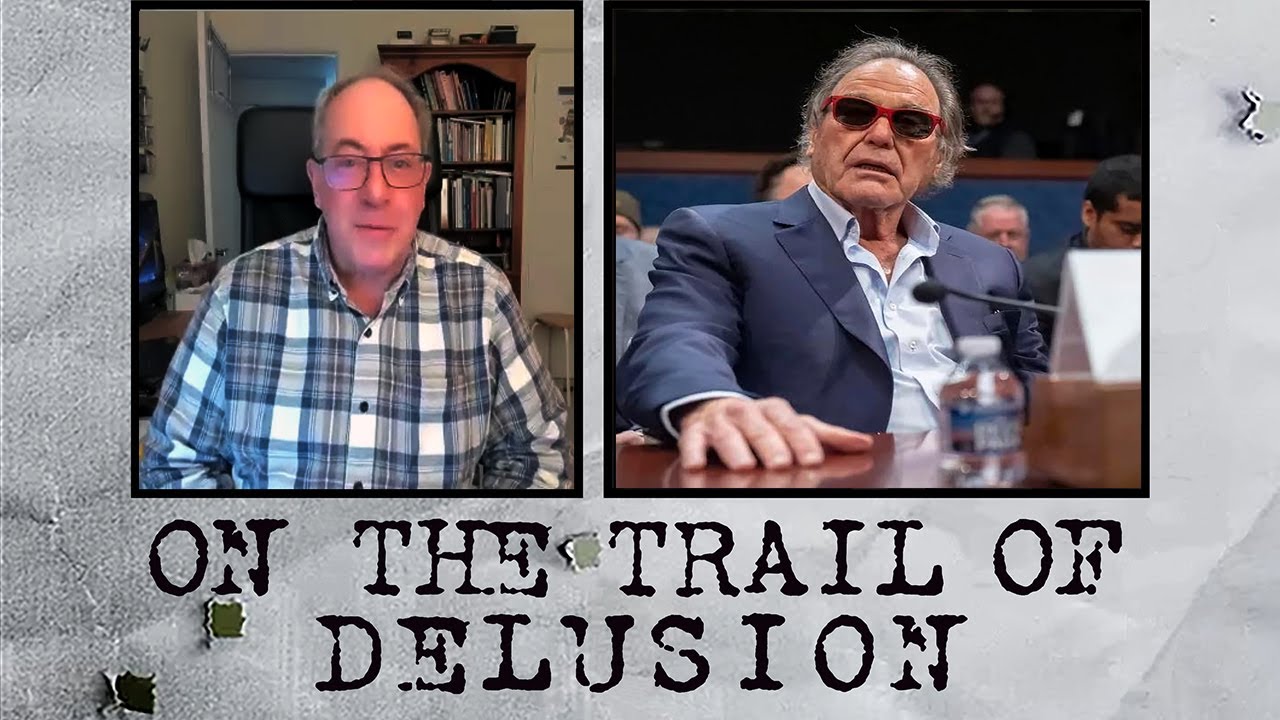
- On the Trail of Delusion, Episode 17 with Michel Gagné
It was a ton of fun talking with Michel Gagné about the JFK assassination, his podcast Paranoid Planet , conspiracy theories in general, and his excellent book, Thinking Critically about the Kennedy Assassination . You can buy a copy of Michel's book here. Previous Episodes of On the Trail of Delusion : Episode 1 My first guest was Robert Reynolds who is an expert on the JFK assassination files . Episode 2 Robert A. Wagner discusses his new book, JFK Assassinated. Episode 3 Gerald Posner discusses the JFK assassination and conspiracy theories. Episode 4 Dr. Martin Kelly, Jr., discusses conspiracy theories and the medical evidence in the JFK assassination. Episode 5 Steve Roe discusses the life of General Edwin Walker and Oswald's attempt to kill him. Episode 6 Gus Russo discusses his participation in the PBS Frontline documentary on Lee Harvey Oswald. Episode 7 Dave Perry tells some great stories about debunking JFK conspiracy nonsense. Episode 8 Nick Nalli explains some of the science behind the assassination. Episode 9 Alecia Long discusses Jim Garrison and his non-existent case against Clay Shaw. Episode 10 Don Carpenter discusses the life of Clay Shaw. Episode 11 Bill Brown discusses the murder of Officer J. D. Tippit. Episode 12 Eric Dezenhall discusses the relationship between the mob and JFK. Episode 13 Nick Nalli discusses the acoustics evidence and the Zapruder Film. Episode 14 Scott Maudsley discusses Lee Harvey Oswald's antisocial personality disorder. Episode 15 Document expert Robert Reynolds discusses what to expect in the upcoming JFK assassination file releases. Episode 16 A panel discussion on the document releases with Fred Litwin, Gus Russo, Robert Reynolds, Larry Haapanen, Mark Allen, and Steve Roe.
- A Case Study in Redaction: The CIA's LIFEAT File
Hat Tip: Robert Reynolds incredible blog . Robert is the expert on the JFK assassination files. Back in July 2023, Jefferson Morley wrote a Substack post about a heavily-redacted CIA document: While President Biden and the CIA slammed the door on full JFK disclosure on June 30, a CIA surveillance file released with heavy redactions that same day tells a tale the clandestine service does not want you to know, a story about CIA counterintelligence and Lee Harvey Oswald. Like the story of “The 17 Month Gap,” the story of a surveillance operation known as LIFEAT illuminates what the CIA wants to hide the most as the 60th anniversary of President Kennedy assassination approaches later this year: counterintelligence operations around the suspected assassin who claimed he was “a patsy” before being killed in police custody. Here’s the heavily redacted LIFEAT file as it was recently releas ed. Robert Reynolds presents a good history of LIFEAT : LIFEAT was a wide ranging teltap operation, i.e. CIA was listening in on people’s telephone conversations. The taps were in Mexico City. LI is a digraph code, indicating Mexico related. FEAT is a randomly chosen codeword. There were two major CIA teltap operations in Mexico city in the early 1960s: LIFEAT and LIENVOY. LIENVOY was a joint operation with the Mexican government, proposed and put into place by the then president of Mexico Mateos-Lopez. This was one of the great secrets that CIA concealed for as long as it could. LIENVOY tapped the lines of Cuban and Soviet Russian diplomatic facilities, and was highly regarded by both U.S. and Mexican governments for the type of information the operation provided. It was the LIENVOY tap which recorded a phone call to the Russian embassy from someone who identified himself as Lee Oswald. As one might expect, this call and several others which the CIA later determined were related to Oswald, was an important part of the Warren Commission investigation into President Kennedy’s death, and perhaps an even MORE important part of the HSCA re-investigation of the JFK assassination. LIFEAT, in contrast to the joint LIENVOY taps, was a CIA “unilateral” teltap. The Mexican government did not know CIA was doing this, and the CIA apparently gave them no LIFEAT info or leads at all. LIFEAT could NOT tap Cuban and Soviet diplomatic facilities without bumping into the LIENVOY team, an embarrassing flap to be carefully avoided. Instead, LIFEAT did teltaps, outside the two embassies, on an impressive range of people in various places, including Eastern bloc and Cuban diplomats, and various Russian embassy personnel when they were not in the office. We know this from a partially redacted CIA history of their Mexico City station. Oswald was not recorded in the LIFEAT taps, though some have speculated that the big redactions in “Contacts with Cuban Officials” were perhaps hiding Oswald contacts. I’ll have more to say about such speculation below, suffice to say here that Oswald doesn’t show up in this file. Morley wrote what the redactions would tell us: The file runs backwards chronologically from 1965 to 1960. The opening pages, about LIFEAT surveillance operations 1965, are the most declassified portion of the file, along with the final pages, which concern operations in 1960. In other words, it is reasonable to assume that the redacted pages document the CIA's counterintelligence interest in Cuban targets in Mexico City between 1961 and 1964—including the time when Oswald visited. This is not to say that the LIFEAT redactions hide information about Oswald or a conspiracy to kill the president. They probably do not. The LIFEAT file was reviewed in the 1990s by the staff of the Assassination Records Review Board staff. If these pages contained any information about Oswald the ARRB would have released it. Instead, the redacted passages were designed "Not Believed Relevant" to JFK's assassination. And he concluded his article with this: Nonetheless, the blank pages in the LIFEAT file are not entirely mute. We can be fairly sure they do not contain the details of Oswald's contacts with the Cubans in 1963. But they do document the context in which CIA operatives observed Oswald and made decisions about him while JFK was still alive. While we can’t see what’s hidden, we can say with confidence that the massive redactions in the LIFEAT files hide what the CIA has always sought to hide: details of the CIA’s counterintelligence activities around Oswald, the alleged "lone nut," as he made his way to Dallas. The LIFEAT file in question has now been released with no redactions. What were the redactions? Robert Reynolds provides an excellent analysis, and here is what is in the document: Three pages about a Canadian, Don Lowry, who was looking for a press job in Cuba. Dispatches from Port-au-Prince, Haiti. There are twelve pages about coverage of Haitian communist studying in Mexico City. Over sixty pages of teltaps on the Dominican Embassy in Mexico City. A telephone conversation between Judith Feretto and Adelias Zendejas. January 1960 dispatches about LIEXIT, a project to acquire hard copies of Russian diplomatic communications from Mexico City to Moscow. Robert notes that the whole page redactions in this file "were clearly from 1960, the context made this obvious, so none of the dates fit into the assassination chronological window." Here is Robert Reynolds' conclusions : Is this file worthless to historians? No! Of course not! If you are writing a history of U.S. intelligence efforts in Mexico, it is gold, the kind of stuff it has previously been impossible to get hold of. It is, however, of almost no value whatsoever for anyone who wants to write anything about the JFK assassination. The first few pages have a little interest, illustrating the counterintelligence use of teltaps. Yes, this is reminiscent of what happened with Oswald. But Lowry was not Oswald, who was dead in 1967. All this shows us is that CIA was using LIFEAT just as it used LIENVOY. Where’s the surprise in that? Here is another case study where Mark Lane was sure what was in a redacted document. I am hoping that the CIA declassifies the personnel file of George Joannides . I believe that there won't be anything relevant to the JFK assassination in that file. Previous Relevant Blogs Posts on Jefferson Morley's Congressional Testimony Jefferson Morley's Congressional NothingBurger An analysis of Congresswoman Luna's Congressional Hearings In Search of the Oswald Operation, Part One An FBI memo that quoted James Angleton is used by Morley to reach an unwarranted conclusion. In Search of the Oswald Operation, Part Two Morley misreads Angleton's testimony before the HSCA. In Search of an Oswald Operation, Part Three Morley believes a document proves the CIA did not believe that a lone gunman killed JFK. Update on the Heath Memo Additional documents relevant to Part Three. In Search of an Oswald Operation, Part Four Morley claims that there is some connection between the suicides of Gary Underhill, Charles Thomas, George de Mohrenschildt, and the overdose death of Dorothy Kilgallen. In Search of an Oswald Operation, Part Five Morley believes that Agustin Guitart was spying on pro-Castro forces in New Orleans Previous Relevant Blog Posts on Jefferson Morley The Schlesinger Memo Unredacted! Several months ago, I posted an article, in association with several researchers, that showed what was contained in the redacted section of Schlesinger's memo. Jefferson Morley's Clairvoyance Morley somehow knows what is in the supposed 2,400 recently-discovered FBI files. Was Israel Behind the JFK Assassination? Morley discusses Israel with Tucker Carlson. Morley's Bad History Lesson Morley believes that the United States can never be great unless it solves the JFK assassination. Morley's List of 13 Documents Will Tell Us Little An analysis of the 13 documents Morley wants to see. The Schlesinger Memo, Again! Morley claims I am a CIA apologist and then misquotes me. For The Sake of Our Sanity - Release the Joannides File It would be worthwhile for the CIA to release the Joannides file just to stop the incessant posts from Jefferson Morley. Did Oswald Stay at a Luxury Hotel in Helsinki? Actually, Oswald stayed at two budget-priced hotels in Helsinki. Morley Keeps Asking the Same Questions He keeps asking the same questions, and we keep posting the same answers. The JFK Assassination and Truth Conspiracy authors are playing fast and loose with the facts. Was Herminio Diaz a Grassy Knoll Assassin? There is no evidence that Diaz was involved in the JFK assassination. Morley Misleads on Arthur Schlesinger's Memo on the CIA There are clues as to what is in a redacted section of Schlesinger's memo. Jefferson Morley's Podcast on New Orleans Lays an Egg Chad Nagle and Dan Storper's article on New Orleans gets everything wrong. Chad Nagle and Dan Storper Lay an Egg Believing Michael Kurtz is problematic. Is Jefferson Morley Seeing Double? Morley wrote that there are two redacted memos on CIA reorganization, but there is only one. He wrote about Goodwin's copy as if it was a different memo, rather than a copy of the Schlesinger memo. Jefferson Morley is wrong about "Who Shot John?" The phrase 'who shot John' does not refer to the JFK assassination. Jefferson Morley is Wrong on William Harvey, Again! Only one word is redacted in Harvey's deposition. Jefferson Morley is Wrong about Operation Northwoods, Again! There are no redactions in the Operation Northwoods document. Did Dorothy Kilgallen Have any Special Knowledge about the JFK Assassination? Kilgallen had nothing to tell. Morley's Interview of Marina Oswald Porter Fizzles! An underwhelming interview of Marina Oswald. Jefferson Morley: Able to Leap Intellectual Chasms in a Single Bound Morley often repeats stories and changes their meanings. There was NO Assassination Plot in Chicago Chad Nagle claims there was an assassination plot against JFK in Chicago in November 1963. One problem: There is no evidence of such a plot. Fred Litwin, CIA Apologist? A response to Morley's Substack post alleging that I am a CIA apologist. A Reply to Jefferson Morley on Bill Harvey A rebuttal to Morley's response to my post Was Bill Harvey in Dallas in November of 1963? Was Bill Harvey in Dallas in November of 1963? There is no credible evidence Harvey was in Dallas in November of 1963. Does it Matter Where Allen Dulles was on November 22, 1963? Morley repeats the claim that Dulles was at a CIA training center during the weekend of the JFK assassination. He wasn't. Jefferson Morley's Claims about Reuben Efron Morley's claims about Efron are all wrong. A Reply to Jefferson Morley regarding Operation Northwoods Morley responded to my article "The Truth about Operation Northwoods." Here is my reply. W. Tracy Parnell on Jefferson Morley W. Tracy Parnell is one of the best JFK assassination researchers out there. Here is his look at Jefferson Morley with several important articles. The Truth about Operation Northwoods Operation Northwoods can only be understood as part of the Kennedys' war against Cuba and Operation Mongoose. Jefferson Morley Responds to my Post on MK-Ultra and Jack Ruby And a response from me. Did Dr. Louis Jolyon West Ask to Examine Jack Ruby in November 1963? There is no evidence that Dr. West petitioned the court to examine Jack Ruby before his trial. Did the CIA use a MK-Ultra Psychiatrist to Interfere with Jack Ruby's Case? There is absolutely no evidence that Dr. Louis Jolyon West interfered with Jack Ruby's case. "JFK: Destiny Betrayed" Misleads Viewers on Oswald's "Hands Off Cuba!" Handbills, Part Four Jefferson Morley used a fake Oswald handbill in his press conference for the Mary Ferrell Foundation. Redactions, Redactions, Redactions... An examination of redactions in the JFK collection of documents. Jefferson Morley Doesn't Understand Jim Garrison's Homophobic Prosecution of Clay Shaw Morley doesn't understand Alecia Long's arguments about homophobia and Jim Garrison. Jefferson Morley asks why "what the CIA knew about Herminio Diaz is still off limits." Morley misses that a lot of redactions are actually available. Belief in a JFK Conspiracy Drops! Jefferson Morley's press conference presents evidence that belief in a conspiracy has dropped.
- On the Trail of Delusion, Episode 16, Panel Discussion on the Document Releases
It was a ton of fun holding my first panel discussion with Robert Reynolds, Gus Russo, Larry Haapanen, Mark Allen, and Steve Roe. Previous Episodes of On the Trail of Delusion : Episode 1 My first guest was Robert Reynolds who is an expert on the JFK assassination files . Episode 2 Robert A. Wagner discusses his new book, JFK Assassinated. Episode 3 Gerald Posner discusses the JFK assassination and conspiracy theories. Episode 4 Dr. Martin Kelly, Jr., discusses conspiracy theories and the medical evidence in the JFK assassination. Episode 5 Steve Roe discusses the life of General Edwin Walker and Oswald's attempt to kill him. Episode 6 Gus Russo discusses his participation in the PBS Frontline documentary on Lee Harvey Oswald. Episode 7 Dave Perry tells some great stories about debunking JFK conspiracy nonsense. Episode 8 Nick Nalli explains some of the science behind the assassination. Episode 9 Alecia Long discusses Jim Garrison and his non-existent case against Clay Shaw. Episode 10 Don Carpenter discusses the life of Clay Shaw. Episode 11 Bill Brown discusses the murder of Officer J. D. Tippit. Episode 12 Eric Dezenhall discusses the relationship between the mob and JFK. Episode 13 Nick Nalli discusses the acoustics evidence and the Zapruder Film. Episode 14 Scott Maudsley discusses Lee Harvey Oswald's antisocial personality disorder. Episode 15 Document expert Robert Reynolds discusses what to expect in the upcoming JFK assassination file releases.
- Anna Luna's JFK Conspiracy Circus
Michael Isikoff has written an excellent article on the circus this week in Congress. I was privileged to be part of the conversation. You can listen to the podcast here. In fact, the declassified Oswald dossier isn’t all that new—much of it had been released with minimal redactions years ago. And it proves virtually nothing: It consists largely of newspaper clippings about Oswald’s 1959 defection to Russia, cables from the State Department about his interactions with the U.S. Embassy in Moscow, and FBI reports about his arrest in New Orleans (where he got into a scuffle with anti-Castro Cubans.) All this was material in which the CIA was routinely copied, along with the Immigration and Naturalization Service and the Department of the Navy (Oswald had been a Marine). “Well, I've always said the JFK assassination is the Rosetta Stone of conspiracy theories because you could use it for whatever you want to prove,” said Fred Litwin, a blogger and historian who has written multiple books debunking Kennedy assassination conspiracy theories. There are also, to be sure, several cables from the CIA’s station in Mexico City about Oswald’s visits to the Soviet and Cuban Embassies in October 1963 seeking visas so he could return to Russia. But as Litwin notes, this wasn’t CIA surveillance of Oswald: It was surveillance of the embassies where Oswald happened to show up. “Why are all these documents in the hands of the CIA before the assassination?” he said on the SpyTalk podcast. “Well, if you go to the Soviet and Cuban embassies in Mexico City at the height of the Cold War, guess what? Your name is going in a CIA file. If you defect to the Soviet Union, yeah, you're going to be in a CIA file. So Oswald was always brushing up against American intelligence, but he wasn't under constant surveillance.” Peter Kornbluh was the other guest on Michael's podcast, who is a senior analyst at the National Security Archive. ”There are smoking guns in these documents, but they're about the history of CIA covert operations around the world, not about the Kennedy assassination,” said Peter Kornbluh, an analyst for the National Security Archive, a research group that pushes for greater transparency over government secrets. Previous Relevant Blog Posts Jefferson Morley's Congressional NothingBurger My analysis of Luna's hearings in Congress. My Five-Part Series on Jefferson Morley's Allegations In Search of the Oswald Operation, Part One An FBI memo that quoted James Angleton is used by Morley to reach an unwarranted conclusion. In Search of the Oswald Operation, Part Two Morley misreads Angleton's testimony before the HSCA. In Search of an Oswald Operation, Part Three Morley believes a document proves the CIA did not believe that a lone gunman killed JFK. In Search of an Oswald Operation, Part Four Morley claims that there is some connection between the suicides of Gary Underhill, Charles Thomas, George de Mohrenschildt, and the overdose death of Dorothy Kilgallen. In Search of an Oswald Operation, Part Five Morley believes that Agustin Guitart was spying on pro-Castro forces in New Orleans
- JFK Revisited Distorts John Stringer's Testimony
Oliver Stone's so-called documentary makes it sound like the autopsy photographer said that he did not take the photos of JFK's brain that are in the current inventory, Photo of John Stringer from JFK Revisited (53:10) Here is an excerpt from a transcript of JFK Revisited: Through the Looking Glass : (53:05) Oliver Stone : Who was the autopsy photographer? Douglas Horne : John Stringer. He was a Navy civilian. He was widely respected; he had written a textbook on medical photography for the Navy. So he was the photographer of record. He photographed the autopsy itself and also photographed the President's brain. Oliver Stone : The autopsy photos of the President's brain are housed at the National Archives. These photos cannot be scanned or reproduced, but are only available to be viewed onsite by researchers authorized by the Kennedy family. Douglas Horne : Half of the brain photos are taken of a brain from above, superior views, which is what Stringer said he shot of the complete organ. But the other half of the brain photos in the archives are taken of the bottom, called basilar views. We were very careful to question Mr. Stringer about all the photographs he took, and asked him what kind of film he used for black and white, what kind of film he used for color. Jeremy Gunn showed Stringer the color positive transparencies of the brain, and Stringer immediately noted, "well, these aren't Kodak. These might be ANSCO. I don't see the name of the manufacturer on there, but these don't have the right notches in the corner." So Jeremy Gunn said, "Did you use this film with these notches in it?" Stringer said "No." "Did you take basilar views when you shot the brain?" He said, "not as far as I know." Whoopi Goldberg : Doesn't this all lead to the question: if Stringer did not take these photographs, then who did? JFK Revisited then makes the claim that Robert Knudsen, JFK's photographer, took photos of another brain. I will cover this in another blog post. I want to highlight what John Stringer actually told the ARRB. You can read a summary of his interview from April 1996 here, and you can also read his full deposition . Here is what he said about the authenticity of the autopsy photographs: Here is his description of the head wound: During his deposition to the ARRB, Stringer was show various autopsy photographs and he confirmed, every single time, that he took the photographs. Here is the page number in his deposition and the autopsy photographs that he authenticates: Page Number Autopsy Photographs 161 29. 30, 31 162 1, 2, 3, 4 164 5, 6, 26, 27, 28 168 7, 8, 9, 10, 32, 33, 34, 35, 36, 37 173 11, 12, 38, 39 188 13, 14, 40, 41 192 15, 16, 42, 43 206 17, 18, 44, 45 216 19, 21, 22, 46, 47, 48. 49 (brain photographs) 222 20, 27, 24, 25, 50, 51, 52 (brain photographs) In terms of the brain, Stringer notes the different type of film. Here is an excerpt from page 224: Q : Okay. And these are not Ektachrome notches, or you're not certain? It's just that they're different. Stringer: I'm not certain, but they're different. It's -- I think it's a different type of film. It could be Ansco film, like this. Q : Did you ever use Ansco film yourself in conducting medical photography? Stringer : Not very often. Q : Did you use Ansco film in the -- taking the autopsy -- Stringer: Not as far as I know. Q: -- photographs of President Kennedy? Stringer : Not as far as I know. Q: Is there any question in your mind whether you were the photographer of these images that are before you right now. Stringer : Yes, if it's Ansco film, and if it's a film pack. I have no -- I have no recollection of using a film pack. Stringer really is just not certain: (page 221) Q : Mr. Stringer, if I recall correctly, during the course of the deposition you identified three different factors relating to photography of the brain that would suggest that you would not have an identification number in it; you would not have used a film pack; and that you did not take a basilar view of the brain. Is that correct? Stringer : I think so, yeah. That is what -- Whether I took that, I don't know. The plain fact of the matter is that John Stringer's memory wasn't the greatest. Just read his deposition and you will find many instances where he just couldn't remember an incident. For instance: (page 10) Q : After the autopsy, did you ever speak to any of the physicians who were present at the autopsy regarding the autopsy? Stringer : No, I don't think so. Q : So, for -- Stringer : I can't remember. Or this: (page 50) Q: Okay. Could we switch from cameras now and talk a little about film? Stringer : Mm - hmmm. Q : You mentioned that you would -- it would be typical to take black and white, as well as color film during an autopsy. And that it would typically be the two sheets of black and white that would be used. What kind of black and white film was used around 1963? Stringer : Panatomic X rings a bell. I don't remember, to tell the truth. Or this: (page 51) Q : Do you recall the kind of color film that was used around 1963? Stringer : Kodachrome, it was. Kodachrome. Q : Kodachrome or Ektachrome? Stringer: I think it was Koda -- I'm not sure, to tell the truth. I think it was Kodachrome, though. Or this: (page 134) Q : Do you remember seeing an image of the entire -- or the full length of the body of the President? Stringer : I don't remember. Q : Under sub A on Exhibit 78, it refers to Ektachrome E3 film. Does that help refresh your recollection as the type of film -- Stringer : Yes, it does. Q : -- that was used? Stringer : Yes. Q : Earlier, if I recall correctly, you had said that you understood that it was Kodachrome. Stringer : Yeah. Q : It was Ektachrome E3 Stringer : I would say it was Ektachrome, yes. Stringer also did not remember a variety of meetings: (page 54) Q: In the document marked Exhibit 19, it refers on page 14 to a visit that a Mr. Stringer and Jim Kelly and Colleen Boland took to the National Archives. Does that help refresh your recollection as to whether you ever went to the Archives? Stringer : It does not. I don't remember it. Q : As you're sitting here today, does it seem to you to be very unlikely that you went to the Archives; or you just have no recollection, one way or another? Stringer : I don't think I went. I don't have any recollection of it. And after '77. I was living in Vero Beach. It does say that I was staying with my daughter. Whose name is wrong here. It's R-u-s-k. Q : Mrs. Rusk, rather than Mrs. Ross? Stringer : Rusk. I certainly don't remember going to the Archives with these people. I don't know how I would have gotten there. Here is an excerpt from the document, "Search for missing autopsy materials," in question: (the 'myself' in the quote is Andy Purdy of the HSCA) More on Stringer's memory: (page 62) Q : I'd like to show you a document that has been marked as Exhibit MD 80. Could you take a look at that document and tell me whether you've ever seen that previously? Stringer: Yes, I, evidently, wrote that; yes. Mr. Gunn : I'll state for the record that on its face Exhibit MD 80 appears to be a letter, dated September 11th, 1977, from Mr. John T. Stringer, Jr. to Mr. Donald A. Purdy, Jr. Mr. Gunn: Mr. Stringer, do you have any recollection of having written the letter? Stringer : I guess, I must have. But that was in 1977. I don't have a copy of it. Mr. Gunn: As best you can tell, is that your signature - Stringer: Yes. Mr. Gunn : - at the bottom of the page? Stringer : Yes, I would say it is. Yes. Mr. Gunn : Does the letter help refresh your recollection about any contacts, even through writing, that you may have had with the House Select Committee on Assassinations? Stringer : Well, evidently, this was from them, but - But I don't even, - I mean, this is bringing back memories, but I don't remember - Here is that letter that Stringer sent to Purdy: Here is another example of Stringer's memory: (page 154) Q : Okay. Early in the deposition, you made reference to identification tags being used. Do you have a recollection as to whether there were identification tags used at the time of the photography of the brain? Stringer : No. I don't remember. But there should have been. As you can see, John Stringer's memory is quite spotty. Just above Stringer says that he cannot remember if identification tags were used when the brain was photographed. Here is an excerpt of his testimony about the brain photographs: (page 217) Q : Mr. Stringer, If I remember correctly from earlier in your testimony, you said you had not recalled that there were any basilar photographs of the brain of President Kennedy. Can you identify whether the photographs that are in front of you now are basilar or superior views of a brain? Stringer : They're basilar. Q : If I recall correctly, earlier in your testimony, you said that there were identification cards that were used for identification of the brain when photographs were taken. Was that correct? Stringer : Well, there's a ruler there, but there's no identification on there. Q: Based up on these being basilar views of a brain and based upon there being no identification cards, are you able to identify with certainty whether these photographs before you now are photographs of the brain of President Kennedy? Stringer: No, I couldn't say that they were President Kennedy's. I mean, there's no identification. All I know is, I gave everything to Jim Humes, and he gave them to Admiral Burkley. Q : Do you have any recollections in 1996 about what the appearance of the brain of President Kennedy looked like at the supplementary examination? Stringer : No. Q : Are you able to determine whether the photographs in front of you now are consistent with or not consistent with the brain, as you remember it from 1963? Stringer : Well, it has to be, if that's Mr. Kennedy. Q : Well, that's the question. Stringer : Yeah. Q : Does the brain in the photograph that you're looking at seem to be more hardened or drier than you recall at the time you conducted this supplementary autopsy? Stringer : No. Stringer does not deny that that the brain photographs are of President Kennedy. It's just that there is no identification tag, and we have seen that Stringer said that he did not remember if identification tags were used at the time the brain was photographed. Faced with Stringer's poor memory, one could easily conclude that he just didn't remember using Ansco film. We have already seen him get confused by Kodachrome and Ektachrome. But to Oliver Stone and James DiEugenio, that is enough for them to reach another conclusion -- that a different brain was photographed. Which is more likely? A different brain, or a lack of memory for minor details after 32 years? The Assassination Records Review discussed the issues of memory in their final report: “Finally, a significant problem that is well known to trial lawyers, judges, and psychologists, is the unreliability of eyewitness testimony. Witnesses frequently, and inaccurately, believe that they have a vivid recollection of events. Psychologists and scholars have long-since demonstrated the serious unreliability of peoples' recollections of what they hear and see. One illustration of this was an interview statement made by one of the treating physicians at Parkland. He explained that he was in Trauma Room Number 1 with the President. He recounted how he observed the First Lady wearing a white dress. Of course, she was wearing a pink suit, a fact known to most Americans. The inaccuracy of his recollection probably says little about the quality of the doctor's memory, but it is revealing of how the memory works and how cautious one must be when attempting to evaluate eyewitness testimony. The deposition transcripts and other medical evidence that were released by the Review Board should be evaluated cautiously by the public. Often the witnesses contradict not only each other, but sometimes themselves. For events that transpired almost 35 years ago, all persons are likely to have failures of memory. It would be more prudent to weigh all of the evidence, with due concern for human error, rather than take single statements as "proof" for one theory or another.” Update John Stringer died in 2011 and his family asked that donations go to the Alzheimer's and Parkinson Association : Memorial contributions may be made to Alzheimer's and Parkinson's Association, 2300 5th Avenue Suite 150, Vero Beach, FL 32960 or to the Visiting Nurse Association & Hospice Foundation, 1110 35th Lane, Vero Beach, FL 32960 in memory of Mr. Stringer.
- The Parkland Doctors, Part Five
Jacob Carter interviewed Dr. Robert McClelland for his 2015 book Before History Dies , and what he had to say was quite illuminating: (page 50 in the Kindle edition) Jacob Carter : So, you have no doubt in your mind that there was a wound in the right rear portion of President Kennedy’s head? Dr. McClelland : Oh gosh, no more so than the sun comes up every morning. I saw that directly as I said from a distance of maybe 18 inches above it, and stared at that wound for five or six minutes before he was pronounced dead. Jacob Carter: Did the other doctors see the same thing? Dr. McClelland : No . They weren’t in the position I was in. Dr. Perry and Dr. Baxter were working on the president’s neck, doing the tracheotomy. So, they turned all their attention towards that, not the wound at his head. And, people who were walking around the trauma room didn’t get anything but indirect glances at t he head. I had the best and most direct view for the longest period. So, only Dr. McClelland got a good view of Kennedy's wounds. All the other doctors only had "indirect glances" of the head wound. He says that he stared at that wound for five or six minutes. It's interesting that his initial written report says that he was only in the Emergency room for ten minutes. And then there was this question: (page 51 in the Kindle edition) Jacob Carter : Do you think you couldn’t see the entry wound because of the damage on his head? Dr. McClelland : It was bloody and there was a lot of hair, and also we didn’t get a chance to examine him closely. All we saw him was five minutes, and all I could see was the back of his head. Yes, exactly. There was a lot of blood and hair and that obscured everybody's view of Kennedy's head wounds. Hat tip : Hideji Okina, a terrific researcher from Japan . Previous Relevant Blog Posts on the Medical Evidence The Parkland Doctors, Part Four A 1992 article in the Journal of the American Medical Association has some interesting comments from a few of the Parkland doctors. The Parkland Doctors, Part Three The Boston Globe interviewed some of the Parkland doctors in 1981. The Parkland Doctors, Part Two A look at what the Parkland doctors wrote and what they said. The Parkland Doctors, Part One Attending physicians often make mistakes in determining the nature of gunshot wounds. Should we care what the Parkland doctors think? Why Autopsies are Needed The attending physician in the John Lennon murder was proved wrong about his wounds. Dr. Cyril Wecht Complains Wecht complains about the HSCA's forensic pathology panel. Dr. Cyril Wecht writes to Dr. Michael Baden Wecht has a suggestion for Dr. Baden. The Wecht Conclusion that Dare Not Speak Its Name, Part Two Wecht's memoir mentions his examination of the autopsy materials in 1972 but neglects to talk about his conclusion that the fatal head shot came from behind. The Wecht Conclusion that Dare Not Speak its Name James DiEugenio's obituary of Dr. Wecht leaves out his conclusion that the fatal head shot came from behind. Dr. Cyril Wecht (1931 - 2024) זיכ רונו לברכה My obituary for Dr. Cyril Wecht. Dr. Cyril Wecht Rules Out a Head Shot From the Front A letter from Dr. Wecht to Thomas Stamm on the head shot. Sylvia Meagher and Dr. Cyril Wecht Discuss the Head Shot A letter from Dr. Wecht to Sylvia Meagher on the head shot. "JFK Revisited" Misleads on JFK's Throat Wound Dr. Wecht believes that JFK's throat wound was one of exit. "JFK Revisited" Misleads on JFK's Brain, Again... Dr. Robert Kirschner's consultation with the ARRB explains a mystery in the documentary. "JFK Revisited" Misleads on the Weight of JFK's Brain JFK Revisited makes a big deal about the weight of JFK's brain and ignores a non-conspiratorial explanation. JFK Revisited Distorts John Stringer's Testimony Oliver Stone's so-called documentary makes it sound like the autopsy photographer said that he did not take the photos of JFK's brain that are in the current inventory, "JFK: Destiny Betrayed" Misleads on Dr. Charles Crenshaw Oliver Stone's so-called documentary series, JFK: Destiny Betrayed , features Dr. Charles Crenshaw to bolster its claim that President Kennedy was shot from the front. Viewers are not informed of Dr. Crenshaw's credibility problems. "JFK: Destiny Betrayed" Misleads on JFK's Head Wound, Part Three Oliver Stone's so-called documentary, JFK: Destiny Betrayed , misleads viewers on the opinions of Parkland Hospital doctors and Bethesda witnesses regarding JFK's head wound. "JFK: Destiny Betrayed" Misleads on the Harper Fragment Oliver Stone's so-called documentary series, JFK: Destiny Betrayed , misleads viewers into thinking the Harper fragment was occipital bone that came from the back of Kennedy's head. Dr. Joseph Dolce: Another Problematic Witness from "JFK: Destiny Betrayed" Have a look at Dr. Joseph Dolce's bad judgment. "JFK: Destiny Betrayed" Misleads on JFK's Head Wound, Part One Oliver Stone's so-called documentary series JFK: Destiny Betrayed uses a variety of supposed witnesses to allege that the wound in the back of Kennedy's head was one of exit. Audrey Bell is one such witness and she doesn't have much credibility. "JFK: Destiny Betrayed" Misleads on JFK's Head Wound, Part Two Oliver Stone's so-called documentary series, JFK: Destiny Betrayed , tries to make the case that because Parkland Hospital doctors saw cerebellum extruding from Kennedy's head wound, that it indicated an exit wound. "JFK Revisited" Misleads on Kennedy's Back Wound While Gerald Ford edited some language in the Warren Report, he did not change the location of the back wound. Autopsy photographs show exactly the location of the back wound. "JFK: Destiny Betrayed" Misleads on JFK's Autopsy Oliver Stone's so-called documentary series, JFK: Destiny Betrayed , alleges that autopsy pathologists were told to fit the wounds to a presupposed conclusion. On the Trail of Delusion, Episode 2 with Robert A. Wagner A podcast with Robert Wagner who has written an important book on the medical evidence.
- The Parkland Doctors, Part Four
In 1992, some of the Dallas doctors discussed what happened in 1963 : Crenshaw was in the Emergency room but only performed a cutdown on Kennedy's leg to insert some tubes. Dr. Jenkins notes in the above page that "He may have been in the room, but he was not among the inner circle attending to the patient." Dr. Carrico said, "Charles has extended his conclusions far beyond his direct examinations. Everyone in that room was trying to save a life, not figure out forensics." Dr. Malcom Perry's quote is important: Crenshaw says that the rest of us are part of a conspiracy of silence and that he withheld his information for 29 years because of a fear his career would be ruined. Well, if he really felt he had valuable information and kept it secret for all those years, I find that despicable. Here is my blog post on Dr. Crenshaw. Money quote: In fact, Dr. Jenkins doubts if any of the Parkland physicians even had a good look at the President's head, explaining, "I was standing at the head of the table in the position the anesthesiologist most often assumes closest to the patient's head. My presence there and the President's great shock of hair and the location of the head wound were such that it was not visible to those standing down each side of the gurney where they were carrying out their resuscitative maneuvers." Money quote: Rose, who is a board-certified forensic pathologist and who has personally examined Kennedy's autopsy materials and records, next turned his attention to the claims made by Dr. Crenshaw, who is a surgeon. "I believe that Dr. Crenshaw believes what he is saying when he argues that the shots came from the front," Rose says, "but he is mistaken." Pressed on his degree of confidence in this statement, Rose finally says, "I am absolutely sure that he is in error." Money Quote: Interviewed in Dallas, he [Dr. McClelland] told this reporter (Dennis Breo) that he maintains a "strong opinion" that the fatal head wound came from the front. Pressed on his reasons, he says, "After I saw the Zapruder film in 1969, I became convinced that the backward lurch of the head had to have come from a shot from the front. Unlike Crenshaw, I do not believe that one can tell the direction from which the bullet came simply by looking at the head wound, as I did, but the wound I observed did appear consistent with a shot from the front." So, McClelland was swayed by the Zapruder film. Previous Relevant Blog Posts on the Medical Evidence The Parkland Doctors, Part Three The Boston Globe interviewed some of the Parkland doctors in 1981. The Parkland Doctors, Part Two A look at what the Parkland doctors wrote and what they said. The Parkland Doctors, Part One Attending physicians often make mistakes in determining the nature of gunshot wounds. Should we care what the Parkland doctors think? Why Autopsies are Needed The attending physician in the John Lennon murder was proved wrong about his wounds. Dr. Cyril Wecht Complains Wecht complains about the HSCA's forensic pathology panel. Dr. Cyril Wecht writes to Dr. Michael Baden Wecht has a suggestion for Dr. Baden. The Wecht Conclusion that Dare Not Speak Its Name, Part Two Wecht's memoir mentions his examination of the autopsy materials in 1972 but neglects to talk about his conclusion that the fatal head shot came from behind. The Wecht Conclusion that Dare Not Speak its Name James DiEugenio's obituary of Dr. Wecht leaves out his conclusion that the fatal head shot came from behind. Dr. Cyril Wecht (1931 - 2024) זיכ רונו לברכה My obituary for Dr. Cyril Wecht. Dr. Cyril Wecht Rules Out a Head Shot From the Front A letter from Dr. Wecht to Thomas Stamm on the head shot. Sylvia Meagher and Dr. Cyril Wecht Discuss the Head Shot A letter from Dr. Wecht to Sylvia Meagher on the head shot. "JFK Revisited" Misleads on JFK's Throat Wound Dr. Wecht believes that JFK's throat wound was one of exit. "JFK Revisited" Misleads on JFK's Brain, Again... Dr. Robert Kirschner's consultation with the ARRB explains a mystery in the documentary. "JFK Revisited" Misleads on the Weight of JFK's Brain JFK Revisited makes a big deal about the weight of JFK's brain and ignores a non-conspiratorial explanation. JFK Revisited Distorts John Stringer's Testimony Oliver Stone's so-called documentary makes it sound like the autopsy photographer said that he did not take the photos of JFK's brain that are in the current inventory, "JFK: Destiny Betrayed" Misleads on Dr. Charles Crenshaw Oliver Stone's so-called documentary series, JFK: Destiny Betrayed , features Dr. Charles Crenshaw to bolster its claim that President Kennedy was shot from the front. Viewers are not informed of Dr. Crenshaw's credibility problems. "JFK: Destiny Betrayed" Misleads on JFK's Head Wound, Part Three Oliver Stone's so-called documentary, JFK: Destiny Betrayed , misleads viewers on the opinions of Parkland Hospital doctors and Bethesda witnesses regarding JFK's head wound. "JFK: Destiny Betrayed" Misleads on the Harper Fragment Oliver Stone's so-called documentary series, JFK: Destiny Betrayed , misleads viewers into thinking the Harper fragment was occipital bone that came from the back of Kennedy's head. Dr. Joseph Dolce: Another Problematic Witness from "JFK: Destiny Betrayed" Have a look at Dr. Joseph Dolce's bad judgment. "JFK: Destiny Betrayed" Misleads on JFK's Head Wound, Part One Oliver Stone's so-called documentary series JFK: Destiny Betrayed uses a variety of supposed witnesses to allege that the wound in the back of Kennedy's head was one of exit. Audrey Bell is one such witness and she doesn't have much credibility. "JFK: Destiny Betrayed" Misleads on JFK's Head Wound, Part Two Oliver Stone's so-called documentary series, JFK: Destiny Betrayed , tries to make the case that because Parkland Hospital doctors saw cerebellum extruding from Kennedy's head wound, that it indicated an exit wound. "JFK Revisited" Misleads on Kennedy's Back Wound While Gerald Ford edited some language in the Warren Report, he did not change the location of the back wound. Autopsy photographs show exactly the location of the back wound. "JFK: Destiny Betrayed" Misleads on JFK's Autopsy Oliver Stone's so-called documentary series, JFK: Destiny Betrayed , alleges that autopsy pathologists were told to fit the wounds to a presupposed conclusion. On the Trail of Delusion, Episode 2 with Robert A. Wagner A podcast with Robert Wagner who has written an important book on the medical evidence.
- Jefferson Morley's Congressional NothingBurger
JFK Facts Smackdown Live was a hoot. Congresswoman Luna's task force on government secrets threw lobs at Jefferson Morley, Oliver Stone and James DiEugenio. I couldn't tell what was worse - the testimony or the inane questions by the Congresspeople. Morley provided a written statement and I will address that. His spoken remarks were slightly different, perhaps because of time, but the major points were still made. He has also uploaded his testimony on his Substack platform. Morley brought with him copies of a file he had put together of material on Oswald in the CIA's possession before the assassination. What I did see was an emerging fact pattern. In the spring of 2023, the CIA fully declassified its pre-assassination file on Lee Harvey Oswald, the accused assassin who said he was a “patsy” for others who committed the crime. I have a copy of the CIA’s complete pre-assassination Oswald file here and I will submit it for the record. The Oswald file runs to 198 pages. In November 1963, all this information was held in one place: the second floor office of counterintelligence chief James Angleton at CIA headquarters in Langley, Virginia, not five miles away from the White House where President Kennedy lived and worked. There was more than one CIA file on Oswald. There was a defector file, a main file on Oswald, and then there was HTLINGUAL material. This file examines what was in Oswald's different files and why. Of course, the CIA was going to have material on Oswald in its files before the assassination. After all, he defected to the Soviet Union. At the height of the Cold War, he visited the Soviet and Cuban embassies in Mexico City. Does Morley expect the CIA would not have this material in its files? Of course, the release of JFK assassination documents on March 18th changed his views dramatically: To be sure, the fully declassified Oswald file is NOT a smoking gun. When I showed the Oswald file to fellow journalists whose judgment I trust, they shrugged. The Oswald file, they said, is only evidence of CIA CYA, cover your ass incompetence. I doubted that but I couldn’t disprove it. Until March 18. That’s when the new JFK files were posted on the National Archives site. I started by reading nine long-secret, newly-declassified documents about Angleton, my reservations about assigning responsiblity vanished. I have discussed the Angleton documents in my five-part series on Morley's search for an Oswald operation: In Search of the Oswald Operation, Part One An FBI memo that quoted James Angleton is used by Morley to reach an unwarranted conclusion. In Search of the Oswald Operation, Part Two Morley misreads Angleton's testimony before the HSCA. In Search of an Oswald Operation, Part Three Morley believes a document proves the CIA did not believe that a lone gunman killed JFK. In Search of an Oswald Operation, Part Four Morley claims that there is some connection between the suicides of Gary Underhill, Charles Thomas, George de Mohrenschildt, and the overdose death of Dorothy Kilgallen. In Search of an Oswald Operation, Part Five Morley believes that Agustin Guitart was spying on pro-Castro forces in New Orleans There is really nothing to Morley's allegations. He believes that Angleton was interested in Oswald as a source or a contact, but he reads way too much into an FBI memo (see Part One above). Morley thinks that Richard Helms lies to the Warren Commission and quotes an excerpt of his testimony. But this is completely misleading. Helms was only commenting on the amount of information the CIA had from the State Department : Mr. Dulles: Looking back now that you have the full record, do you feel that you received from the State Department adequate information at the time that they were aware of Oswald's defection and later activities in the Soviet Union, did you get at the time full information from the State Department on those particular subjects? Mr. McCone : Well, I am not sure that we got full information, Mr. Dulles. The fact is we had very little information in our files. Mr. Helms : It was probably minimal. A few minutes later, Helms clarified the point : Representative Ford : In this case, Oswald attempted to defect, he did not, he subsequently sought the right to return to the United States, he had contact with the Embassy. Was the Central Intelligence Agency informed of these steps, step by step, by the Department of State? Mr. McCone : You might answer that. Mr. Helms : Mr. Ford, in order to answer this question precisely I would have to have the file in front of me. I have not looked at it in some time so I don't have it all that clearly in mind. But it is my impression that we were not informed step by step. When I say that there is no requirement that I am aware of that the State Department should inform us and when I said a moment a go that we had minimal information from them, this was not in any sense a critical statement but a statement of fact. Morley also makes a big deal out of Jane Roman's initials (JAR) on routing slips of FBI documents to the CIA. I have blogged about this before: Morley goes on to claim that J. Edgar Hoover forwarded a report of an Oswald interview with FBI agent John Fain James Angleton in the CIA. But he provides no sources that Hoover sent it to Angleton. Here is the CIA routing slip : The FBI sent the report of John Fain to ONI New Orleans, INS Dallas as well as 5 copies to FBI Headquarters. Copies were also sent to the State Department, the CIA and other agencies. Morley alleges that because it was routed to the Counterintelligence Operations office (CI/OPS) that this "is strong evidence that the returning ex-Marine defector was being used for operational purposes. Why would CI/OPS be notified about Oswald if he was not involved in counterintelligence operational activity?" There might be many reasons. We have no idea of who actually read the file at CI/OPS, how closely it was read, or what some people might have thought, let alone if Angleton read it. There were probably many documents routed through the office that were of limited interest. It's easy to read too much into routing slips. I worked for Intel Corporation for nine years. I was included in many email strings in which I had absolutely no interest. I'd hate for Morley to review my emails from Intel -- I am sure he would find all sorts of anomalies. The plain fact of the matter is while a document might have been routed through Angleton's office, we have no idea if he read it or even saw it. And, of course, Morley talked a lot about George Joannides, even leading to a pretty serious allegation: The new JFK fact pattern leads to a new conclusion. We now know what they knew and when they knew it. We now know that Helms, Angleton, and Joannides were responsible for, or complicit in, JFK’s death, either by criminal negligence or covert action. Morley did not tell Congress that the ARRB did review the personnel file of George Joannides, and that they ruled that much of it was irrelevant to the JFK assassination. Oliver Stone and James DiEugenio were also there to testify and answer questions: Some highlights: DiEugenio mentioned that the CIA might have been behind the attempted coup against French President Charles de Gaulle. I thoroughly debunked that claim years ago. Oliver Stone brought up the "40 witnesses" who saw a gaping hole in the back of JFK's head. I debunked this in my series on the Parkland doctors: The Parkland Doctors, Part One Attending physicians often make mistakes in determining the nature of gunshot wounds. Should we care what the Parkland doctors think? The Parkland Doctors, Part Two A look at what the Parkland doctors wrote and what they said. The Parkland Doctors, Part Three The Boston Globe interviewed several doctors and a few nurses in 1981 and their recollections were all over the map. Both Oliver Stone and James DiEugenio brought up chain of custody. I have blogged about this multiple times: Dr. Henry Lee, Star of "JFK: Destiny Betrayed" Dr. Lee is not the great criminologist that some believe. "JFK: Destiny Betrayed" Misleads on CE399 Darrell Tomlinson did identify CE 399 at the bullet found at Parkland. The "Chain of Custody" Concept in 1964 There would have been little problem admitting JFK evidence in 1964. Bombshell: "JFK: Destiny Betrayed" Proven Wrong on Chain of Custody of CE 399 Oliver Stone's documentary makes a big mistake! James DiEugenio's Deflector Shields A large segment of this blog post discusses chain of custody. The Congresspeople on the committee were clueless. Lauren Boebert asked Oliver Stone about his book alleging that Lyndon Johnson killed JFK. (1:14:00) Of course, it was Roger Stone that wrote that book. James DiEugenio was asked about this tweet of his : (57:00 in the video linked above) DiEugenio was startled and just said he could not remember it: "Did I say that?" He did not want the MAGA folks on the Committee to know he was not one of them. DiEugenio's closing statement mentioned the supposed plots in Chicago and Tampa in November of 1963. (1:47:00) But there is absolutely no evidence of these plots. Secret Service Survey Report for Chicago, November 1963 This document was supposedly destroyed by the Secret Service. There was NO Assassination Plot in Chicago Chad Nagle tries to argue that there was a plot. Edwin Black Speaks to the HSCA The HSCA did speak to Edwin Black. It was a memorable interview. "JFK Revisited" Misleads on the Supposed Chicago Plot There is no evidence of a plot in Chicago against JFK. Paul Bleau and the Supposed Chicago Plot Against JFK Bolden's story about the supposed Chicago plot has changed over the years. Paul Bleau's Plots An examination of supposed other plots against JFK. Abraham Bolden's May 1964 Press Conference Bolden didn't say one word about a supposed plot against JFK in Chicago. There Was No Plot against JFK in Tampa There is no evidence of any plot in Tampa. Congressman Eric Burlison just threw three softball questions. He actually said that we now know that Oswald met with Kostikov, who might have been in department 13 , at the Soviet Embassy in Mexico City, because of Oliver Stone. Sorry, this has been known for years. A lot of KGB agents worked in consular affairs as well : He is also one of the KGB officers stationed at the Embassy. It is standard Soviet procedure for KGB officers stationed in embassies and in consulates to carry on the normal duties of such a position in addition to the undercover activities. Surprisingly there was very little talk of where the Committee could find additional documents. No mention of documents in Mexico City, Havana, Minsk, or Moscow. No mention of massive private collections like Mark Lane, David Lifton, and the AARC. No mention of the RFK papers in the Kennedy library. This was a disappointing start to Luna's task force. I tried my best to reach out to the Committee but they weren't interested. Please check out Tracy Parnell's review of today's testimony.
- Congresswoman Luna Finds a New Witness
I was all excited when I heard that Congresswoman Luna would be hearing from witnesses this week, and I wondered if this person might be her first witness. Update Here is an email that Congresswoman Luna sent out today: If you click on the survey you will taken to a fund-raising page. Previous Relevant Blog Post Is Congresswoman Luna a Luna-tic? She actually wants members of the Warren Commission who are still alive to testify. Is Congresswoman Luna a Luna-tic? Part Two Luna is photographed with a copy of Mortal Error: The Shot That Killed JFK by Bonar Menninger, published in 1992, on her desk.