Search Results
Search this site
1274 results found with an empty search
- Tom Bethell Leaks Garrison's Witness List to Shaw's Attorneys
Note: This is a very long post. I have tried to type out the important sections of Tom Bethell's memo below. I have included all of these documents for historical purposes. In August of 1968, Tom Bethell leaked a memo that listed the witnesses to be called in Clay Shaw's trial to Sal Panzeca, one of Shaw's attorneys. Here is that memo: This memo is proof of Garrison's extremely weak case against Clay Shaw. Many of these witnesses would not be used - Thomas Breitner , Clyde Johnson , Peggy Landry , Vernon Gerdes , David Lewis , and Jules Ricco Kimble . The witnesses that Garrison did use were bad enough -- the ones that did not testify were even worse. In April 1969, Bethell wrote Sylvia Meagher : The Art Kevin and Art Kunkin interview will be posted in an upcoming post. Here is the letter that Mark Lane wrote in the March 7, 1969, edition of the New Orleans States-Item : Of course, Bethell had the proper counter to Lane: " .. that the Grand Jury and the Judges do what Garrison tells them to do, to a large extent." Here is a blog post about Garrison's grand juries . Some of the judges in New Orleans parish were elected because of Garrison's support, and thus were in his pocket from the start. Here is the memo that Bethell wrote about giving the witnesses memo to Panzeca: Bethell is talking about Billings meeting with Sciambra and Russo . It is important to understand that there was no discovery in the courts of Louisiana at the time. So, Shaw's defense team had no idea of which witnesses would be appearing in court. They had no access to internal Garrison memos and statements. This put them at an incredible disadvantage. Bethell is surprised that Panzeca did not know anything about the Clinton witnesses. I was particularly surprised that he appeared not to know about the Clinton area. I then decided that I would do more to help the defense than just mention a few names, and I told Panzeca that I had fairly recently written a memo listing witnesses who would be used, and I offered to give it to him that evening. I think Bethell is wrong about Edgar Eugene Bradley. He certainly did travel in very anti-Kennedy waters, but I don't think he ever "solicited someone to kill him." Bethell adds that "In Shaw's case, however, it did not look as though there was any evidence that he was even anti-Kennedy. Therefore, I said, the charge against him was particularly unjustified." The leak was noticed because Hugh Aynesworth, Kent Biffle and William Gurvich went to Clinton to check out the witnesses . You can read Aynesworth's impressions of Clinton here. It is interesting that Alcock did not believe that Bill Boxley was the source of the leak since "he 'worshipped' Garrison." A couple of the Clinton witnesses "called up the office, and had said they had been shown copies of their statements by Gurvich and Aynesworth. He [Lou Ivon] obviously was at a loss to understand how the statements could have gotten out, as they had been closely guarded in a locked file in Ivon's office." Gurvich and Aynesworth did not have any statements -- just the memo above, but it's interesting that the witness statements were locked up. Those witness statements would have been a gold mine to Shaw's defense because they showed a variety of inconsistencies in their stories. The leak really worried them: Alcock was really worried. "They're looking right down our throat," he said. "This could be a disaster. I tell you, we could be looking at a directed verdict in this case." I think he also said something about this would depend on whether Russo cracked or not. Russo cracking? Is this an admission that he knew Russo was making his stories up? Alcock went public about the leak. Here is an article from the Times-Picayune: New Orleans Times-Picayune, January 14, 1969 After Bethell told Ivon that he was the leaker, they drove out to get James Alcock: Alcock said words to the effect that "I thought we were friends," and I said as far I was concerned we still were friends, but that I did not believe that Clay Shaw was guilty. Alcock asked me specifically what bothered me about the case against him, and I said, "Russo," he said, ""Well, I believe we've all had our doubts about Russo, but don't you believe any of the other people, such as the postman, the Clinton witnesses, etc." I said I did not. A few important quotes: "I hope you don't think that I would ever charge a man unless I believed that he was guilty," he [Jim Garrison] began. I said I believed that, ie, I believed that he did think that Clay Shaw was guilty. He paused to take this in and then went on: "I am a district attorney, and that is all I am; if I wasn't district attorney I wouldn't be anything, and I hope you realize that I take my job seriously --" words to that effect. He wasn't mad or shouting at me, he seemed to be trying to make me feel sorry for him. I noticed that he looked worse that I had ever seen him: a livid blistering tan acquired over the weekend, and his eyes were bloodshot. He made a comment about how hard he had worked on the case "working till 3 o'clock in the morning," and he added that he had "wrecked his health" in so doing. "Thank God it's only physical and not mental," he said. Here is a very telling section: He [Jim Garrison] explained the harm which, in his opinion, my actions had done. He said that the trouble is once witnesses have been approached by investigators from the other side, you have to spend "hundreds of hours" talking them back into their original position. (Parenthetically, it does not seem that this did result from the defense's investigation of the witnesses, ie. all the witnesses came forward with the same story they had told before, as far as I know. (Except I don't know what happened to Connie Kaye or Thomas Breitner;) also some "talking" may have been necessary, because I know Sciambra made an emergency trip to Clinton in the week before the trial.) And then the conversation turned to Shaw and Oswald and Ferrie: Garrison then went into my feelings about Shaw. He seemed to have no quarrel with my position about Russo or my estimate of Shaw as a conspirator, (although I can't remember his exact words on this point,) "but surely you can believe that Shaw knew Oswald and Ferrie?" I said I couldn't believe that either. Why not? Because, I said, the FBI's investigation had been so thorough that Shaw and Oswald could hardly have known each other without it long ago having been in the public record. "Take the case of George de Mohrenschildt," I said. I was aware that Garrison thought of Shaw as a sort of New Orleans counterpart to de Mohrenschildt -- a Dallas oilman who surprisingly befriended Oswald. I pointed out that it was no secret that Oswald had known de Mohrenschildt. Garrison seemed exasperated by my stupidity on this point. "Don't you realize de Mohrenschildt was a decoy , he didn't have anything to do with the assassination. I realized that the minute I saw the Federal government wanted us to believe he was involved." He conceded that de Mohrenschildt probably played some minor "custodial" role. Bethell is crack on when he surmises that Shaw might have "some connection with an intelligence agency, in view of his war background and his position in the trade mart." As we know, Clay Shaw was a domestic contact of the CIA between 1948-1956 . Money Quote : I also told Garrison that I was not contending that his whole investigation was a waste of time, because there were a few points about Oswald's background and his stay in New Orleans which were of interest and had not been explained by the Warren Commission. I cited the "544 Camp St" found on some pamphlets which Oswald had on his possession while in this city. Garrison seemed to concur with this, and pulled out a big chart drawn by George Eckert of the 544 Camp St. area. He also rather hesitantly injected the name "Guy Banister" into the picture, who had an office at that address. I said it was one of the big disappointments of the investigation that this interesting lead had not resulted in anything. (which I meant sincerely: when the investigation began, I think the people working on the case thought that there was a good chance of turning up something important in Oswald's background at this address. Despite considerable investigation, however, nothing turned up.) Then Garrison gets downright nutty: Garrison then got going on his theories about the 4900 block of Magazine Street, where Oswald lived. It was his contention that this was a "safe block" used more or less exclusively by CIA agents. He cited one person who lived there at the same time as Oswald and then moved to an address on Lark St., which Garrison says is a high class neighborhood; this person also had "Omnirad Corporation" against his name in the phone book, I believe. I made no comment as Garrison expounded on these theories, based on a belief that propinquity is an incriminating factor. [link added] What is really amazing about the leak is that Garrison decided to put Charles Spiesel on the stand despite knowing that the defense knew about him. Maybe they thought that they wouldn't realize just how crazy he was. In addition, Bethell continued to work for Garrison after they knew about the leak. Additional Material Ivon memo on the Bethell confession: Here is Tom Bethell's affidavit: Here is the indictment: Here is coverage of the indictment in the press: New Orleans Times-Picayune, March 5, 1969 Jim Garrison had to recuse himself from the case: New Orleans Times-Picayune, April 7,1969 The charges were eventually dropped. Update Here is a letter that Sylvia Meagher sent to Bethell about the charges :
- Jim Garrison's Great Escape
Here is a Tom Bethell article from the American Spectator of December 1998: A couple of quotes stuck out: First Money Quote : People have said to me: He can't have just arrested Clay Shaw with no evidence. But that is what he did. The evidence produced at his trial was manufactured by unscrupulous people, using witnesses who were either mentally unbalanced (as in the case of the man who fingerprinted his own children to make sure that the government did not substitute ringers who spied on him), or who avoided prison by testifying as the D. A. wished. Second Money Quote : I have no doubt that he [Jim Garrison] was taking bribes, however. Once I was with him in New York on one of his jaunts, this time to Life magazine, the editors rolling their eyes as they realized he was making a day of it. Garrison took me to a nearby bar later. When the check came, he produced a thick roll of $50 bills. "Money doesn't mind who spends it," he said, enigmatically. I wondered where it came from. Later, we learned more. According to the 1971 federal indictment, Garrison had in the years 1967 - 68 received $60,000 in "bribe monies contributed by defendants," to keep them "free of any substantial law-enforcement interference." In a rash press release, Garrison explained that his former chief investigator, Pershing Gervais, later "turned" by the Feds, had wanted to see him at home one night. Saying he was in a rush to catch a plane, he showed up and handed Garrison an envelope, asking him to hold it for a few days. "It was unsealed, so I glanced inside," Garrison wrote. "I saw a large number of bills, the smallest denomination of which appeared to be $50." Early the next morning, there was a knock at the door and Garrison was arrested by U. S. marshals. Previous Relevant Blog Posts regarding Tom Bethell Tom Bethell Leaks Garrison's Witness List to Shaw's Attorneys The complete story behind the memo that Bethell gave to Sal Panzeca. Letters to Jim Garrison Tom Bethell compiled some of the craziest letters to Jim Garrison. The Diaries of Tom Bethell and Richard Billings I've added many new pages to the Bethell diary from the Sylvia Meagher archives. Perry Russo Talks - in Baton Rouge, Part Five Additional information about a meeting with Perry Russo and James Phelan. Perry Russo Talks - in Baton Rouge, Part Four Tom Bethell wrote Sylvia Meagher details about a meeting he had with Richard Billings in which they discussed Perry Russo and James Phelan. Tom Bethell Writes Sylvia Meagher about the Shaw Trial Bethell sat through the Shaw trail and he wrote Meagher about what happened. Jim Garrison's Files and Mark Lane Tom Bethell had lots to say about Mark Lane's usage of Jim Garrison's files. "Earl Warren: On the Mob's Payroll" by Tom Bethell An article by Tom Bethell from the Washington Monthly of March 1976. Tom Bethell Died This Week at Age 84, R.I.P. A tribute to Tom Bethell and an article he wrote for the National Review.
- Eugene Dinkin and Jim Garrison
This is part two of my series on Eugene Dinkin. You can read part one here . Jim Garrison mentioned Eugene Dinkin in his September 1967, interview in Playboy Magazine : Tom Bethell had supplied Garrison a list of secret Warren Commission documents . That list included CD 943 , "Allegations of Pfc. Eugene Dinkin re Assassination Plot." Here is CD 943 : Here is the attachment: Various segments of the letter were redacted over the years, largely because of some sensitive source s : What was redacted was "the CIA station in Geneva, Switzerland" and "the Geneva Station." Even the distribution list was left out of some released copies of the Warren Commission document: This copy is informative about the deletion process . Here is a clue as to why the document was secret : The CIA used a source with the code-name TARZAN, and another source with the code-name MIDDAUGH . ARMATT refers to the Army attaché. Interestingly this memo says that Des Fontaines was "skeptical" of Dinkin's story and was "still convinced Subj unbalanced." The Army Attaché "still assess [es] Subj story as fabrication by unbalanced person." The secret nature of the Warren Commission document raised Garrison's interest. He listed Dinkin in one of his lead memos (although he spelled his name wrong): Here is the letter that Garrison received from Richard Moltzon : This is a fascinating letter. Moltzon says that Dinkin "tended to be an idealistic leftist intellectual, who was constantly talking of plots and conspiracies being formed by the John Birch Society and elements of the right wing." And Moltzon tells us why the Army was so upset at Dinkin's article in Overseas Weekly -- "He identified his job in the installation in the article, which was secret and thereby a security violation." Dinkin told lots of stories: He was always talking of plans the Army had to take over the government, and was convinced the right wing would attempt to assassinate President Kennedy. He'd always impressed me as a very intelligent kook who'd gone off the deep end; especially towards the end. He was sure the CIA, Army CID were following him, "bugging" his room, spying on him etc. Garrison investigator Bill Boxley tracked Dinkin down and interviewed him in Brooklyn. Dinkin was the subject of a discussion at a conference in New Orleans held on September 21, 1968, between Garrison and his investigators: (Box = Bill Boxley; T = Bill Turner; F = Bud Fensterwald; G = Jim Garrison) On page 74, Boxley describes Dinkin: Box: Now this is the guy who is suppose [d] to be nuts and if you go see him today in Brooklyn like I did a couple or three months ago, he will convince you he's a flat nut. Boxley then completely either misspeaks or he just misunderstood Dinkin: He interrupted some traffic, that's what happened. He read some code going back and forth on the OAS operation apparently that tipped him to what was going on out of down there --- out of New Orleans. Dinkin never said that. As you will see in a future post, he never said he read messages related to the assassination. But then Boxley relates a conversation he had with Dinkin: (page 75) Box: Now his cover story is this and he's got it down pat. He will pull out all of these clippings from Stars and Stripes and Overseas Weekly and so on dated back in those days and he'll refer to typographical errors that he's got underlined. Now, this is how I got on to him. He said "see here's an article about kidney operations but they don't spell it "kidney", they spell it Kindney. It's a typographical error. He'll say "you see that means really Kenneth." Well it's even further out and more of a nut approach than ESP or something but they don't put guys like this in NSA to begin with. Boxley felt it was all a cover story because "you don't put guys like him in NSA to begin with." But Dinkin wasn't in the NSA -- he was just a crypto-equipment operator in the Army. There is absolutely no evidence that he was ever in the NSA, and Dinkin never made the claim. Garrison lost interest in Dinkin and he is not mentioned in either of Jim Garrison's books. In part three of this series, I will look at Dinkin's lawsuit against the American government. Previous Relevant Blog Post Did Eugene Dinkin Try to Stop the JFK Assassination? Dinkin's story from 1964 about his interpretation of various newspapers.
- The Death of David Ferrie
Some rarely seen pictures of David Ferrie and his apartment after his death. That is a wig and fake eyebrows on Ferrie. You can see that David Ferrie was reading Edward Jay Epstein's book, Inquest . You can read Ferrie's autopsy report here. I previously wrote about Ferrie's last week here - he believed he was seriously ill with encephalitis. Ferrie died of natural causes - he had a berry aneurysm which is a congenital defect. The autopsy was done by Dr. Ronald Welsh, and "It burned him up" that Ferrie's name was continually on the lists of mysterious deaths, To make sure there was no controversy, Dr. Welsh preserved the brain and brought it to Dr. Paul McGarry, a neuropathologist. The brain was cut open and the artery was dissected. They could see "scar tissue indicating that Ferrie had another bleed, a small one, previously, not fatal, at least one or two of them at least two weeks before he died. This is a common occurrence with berry aneurysm - people have one or two before they blow out completely." Welsh told Patricia Lambert that "everything here is exactly like what you see with any berry aneurysm. Nothing suspicious." One last item. Frank Minyard, who was coroner after Nicholas Chetta (who oversaw Welsh), believed that there was bruising on Ferrie's mouth which might have indicated someone trying to force down pills, etc. Patricia Lambert asked Welsh about this, and he was quite dismissive, saying that "Minyard is not a pathologist. He is an obstetrician/gynecologist and not interested in the anatomical aspects." Welsh was a professional pathologist with a background in anatomical pathology. The autopsy report does not mention any bruising, but does mention a small area of dryness. Welsh concluded, "It is absurd for anyone to try to construe an imaginary scenario." Update : Here is an article from the Washington Post of March 1, 1967 on Ferrie's death:
- Was Jim Garrison a Prophet of the American People?
From an interview with Mark Lane on WVUE-TV, New Orleans on April 29, 1978. Aaron Kohn of the Metropolitan Crime Commission produced a transcript and here is an excerpt about the JFK assassination: (the rest of the interview was about the Martin Luther King assassination, Lane was in town to promote his book, Code Name Zorro , which was co-authored with Dick Gregory) Kohn sent copies of the transcript to the FBI and to Robert Blakey. He made the transcript from a video tape copy of the program that he received from the television station. Money Quote : Mark Lane: And I'd just like to say one thing if I can in closing because when I look back, because it comes up when you talk of the King assassination, more than 10 years ago, eleven, twelve years ago before Dr. King was killed, there was a lone voice in this country saying, "Lee Harvey Oswald worked for the American Intelligence organization; the Warren Commission Report is in essence a license to kill national leaders and we have to do something about it; we have to get to the bottom of this." And that voice was Jim Garrison of this City. And if he'd been listened to in 1967, I believe that maybe Robert Kennedy would not have been assassinated; maybe Martin Luther King would not have been assassinated. He was trying to revoke, Mr. Garrison alone in a struggle in this City, which the whole world was listening to, was trying to revoke the Warren Commission Report which was a license to kill national leaders. And I don't know how people in New Orleans feel about him now. I know that there really is no such thing as a prophet in your own time and especially in your own home town, but he is indeed a prophet of the American people. But while the prophet was persecuting, I mean prosecuting, Clay Shaw, Mark Lane was supportive, even though he claimed in 1992 that he saw no evidence that Shaw was Clay Bertrand. And Mark Lane was just lying when he said that the HSCA totally corroborated everything that Jim Garrison said. The HSCA final report said that Garrison had been "fairly criticized for questionable tactics." They did find some credence in the Clinton allegations but that part of their investigation was poorly handled. Update : Was Oswald's gonorrhea in the line of duty, as alleged by Mark Lane? John McAdams covers this in his book, JFK Assassination Logic : (page 211 - 212 in the Kindle edition) Author Anthony Summers phoned one of the doctors who treated Oswald and reported, “He did not recall the episode and explained that the notation was most probably a routine device to avoid jeopardizing Oswald’s pay.” More specific information is available in the Warren Commission’s Folsom Exhibit. Apparently, “not due to own misconduct” is a term of art. As explained by the judge advocate general, in a memo dated October 17, 1958, Misconduct is wrongful conduct. Simple or ordinary negligence, however, does not constitute misconduct. The fact that an act violates a law, regulation or order does not, of itself, constitute misconduct. In order to support a determination of misconduct, it must be found that the injury was intentionally incurred, or resulted from negligence that was so gross as to demonstrate a reckless disregard of the consequences. Translation: you can screw up to a degree, and we aren’t going to call it “misconduct.” Mark Zaid, a JFK researcher and a lawyer, notes that the Manual of the Judge Advocate General (section 0809 [b]) specifies, “Any disability resulting from venereal diseases shall not support a misconduct finding if the member has complied with regulations requiring him to report and receive treatment for such disease” (emphasis added). Oswald had done exactly this. Zaid further found that actions that do not rise to the level of “misconduct” will be ruled “in the line of duty” so as not to threaten a Marine’s severance benefits. There is one final piece of evidence: when Oswald shot himself with a Derringer pistol that he was not allowed to have in his possession, according to Marine rules, his injury was ruled “in the line of duty” and was “not the result of his own misconduct.” And this incident led to his being court-martialed. So screw-ups worse than contracting VD might still be ruled “in the line of duty” and “not the result of his own misconduct.” Of course, the Marine Corps could have mounted a crusade against VD, and harshly punished any soldier coming down with a case, but that would have invited large problems as Marines failed to get treated, and would have been a big hassle all around. So, the Corps had a rather forgiving and sensible policy. Oswald was dealt with in an entirely routine way. But you can’t know that based on how the bureaucratic language sounds. You have to do a little research to find out what it means. Previous Relevant Blog Posts on Mark Lane Mark Lane and J. C. Price Lane cuts out a scene in which Price says the man he saw might have been carrying a hat. Mark Lane: The Rush to Publication An excellent article from the Dallas Morning News on Lane's witnesses. Mark Lane and Warren Reynolds Lane cuts out a few of Reynolds' answers. Mark Lane and Napoleon Daniels Sylvia Meagher was incensed at Lane's inclusion of this story in his film. Mark Lane and Charles Brehm A good case study in Lane's intellectual dishonesty. G. Robert Blakey on Mark Lane Robert Blakey and the HSCA were very critical of Mark Lane. George Lardner on Mark Lane Mark Lane and the HSCA. When Mort Sahl Kicked Mark Lane Out of his House An interesting anecdote from Mort Sahl's book, Heartland. Should We Blame Mark Lane? Some ads for Lane's film Rush to Judgment. In Defense of the Warren Commission A Garry Wills opinion piece on Mark Lane. Victor Navasky Reviews Mark Lane's "A Citizen's Dissent" Navasky tests Lane's book and finds it wanting. Mark Lane and Jonestown A New York Times profile of Lane and his involvement with Jonestown. New York Times Profile of Mark Lane An apt profile. Nightmare Brought to Life An opinion piece by Anthony Lewis in the New York Times on Mark Lane and Jonestown. Mark Lane, Again An opinion piece from the Washington Post Mark Lane: A Bent for the Macabre Side A good opinion piece from the Philadelphia Bulletin . Sylvia Meagher Corresponds with Philippe Labro Meagher tells Labro a story about Mark Lane. Mark Lane and The Progressive Even a left-wing magazine like The Progressive found Mark Lane hard to take. Mark Lane on Clay Shaw Mark Lane's addition to the 1992 edition of Rush to Judgment is eye opening. Mark Lane on the Joe Dolan Show Lane tells Dolan about Garrison's amazing evidence. Did the CIA Try to Kill Mark Lane? Lane makes a startling allegation. Mark Lane: The Left's Leading Hearse-Chaser A profile from Mother Jones magazine. Mark Lane vs. Sylvia Meagher Lane and Meagher feuded about a blurb for her book. The Case Against Mark Lane A profile from Esquire Magazine . Mark Lane saw a conspiracy - as usual An article from the Tampa Bay Times . The Mark of Zorro An Anthony Lewis column on Mark Lane from 1978. Mark Lane's Scholarship! Howard Roffman finds that Mark Lane's scholarship is lacking. Mark Lane, Conspiracy Addict A profile of Mark Lane in Newsweek . Mark Lane offers to introduce Jim Garrison to "Mr. Candy" Mark Lane offers to introduce Jim Garrison to a witness that, for $25,000, would tie Jack Ruby with Clay Shaw. Redactions, Redactions, Redactions... This post has a good case study of how Mark Lane exploited a redaction in a document. "I Know Who Killed JFK," Part Three Lane tells the Danish press he knows who killed JFK. Mark Lane Said that Clay Shaw Was a "Powerful, Domestic Force in the Assassination." Lane speaks at the Louisiana State Bar Association.
- Good Thing They Weren't Betting Men!
Houston Post, May 4, 1975 Money Quotes : "If I were a betting man," says trial lawyer Bernard J. Fensterwald, "I'd bet the full story will be known within a year." "A year? I'm surprised at Fensterwald," said Dr. Richard Popkin, a philosophy professor at Washington University in St. Louis. "I'd make in six months." Fensterwald's comment on Marina Oswald strikes me as fairly cruel: "Can you imagine what you could do with Marina (Oswald's Russian-born widow) in one morning if you put her under oath, and told her the first time you lie you're going to be on the first plane back to Moscow?" he asked. And then Richard Popkin tops it all off with another ridiculous theory: One hypothesis, Popkin said, is that "they [the CIA] might need to solve the Kennedy case to get back into business." He foresees a time when the CIA "commits suicide in public, there will be confessions of wrongdoing, Congress will ban all sorts of activities, and the CIA will be reconstructed in another form." Had they actually made a wager, they both would have lost. Previous Relevant Blog Posts Did The HSCA Have a Confession Tape? Jim Garrison thought the HSCA had a confession tape. They did, but it was a nonsense story peddled by Thomas Beckham. Richard Popkin Writes Garrison About Richard Case Nagell Popkins writes Garrison and gets an interesting reply from Tom Bethell. Richard Popkin Melds the Second Oswald Theory with the Richard Case Nagell Story Popkin tries to meld his Second Oswald theory with the story of Richard Case Nagell. Jim Garrison Discusses the Two Oswalds At a conference in New Orleans, Garrison discusses the two Oswalds with Bernard Fensterwald, Bill Turner, Bill Boxley, and Richard Sprague.
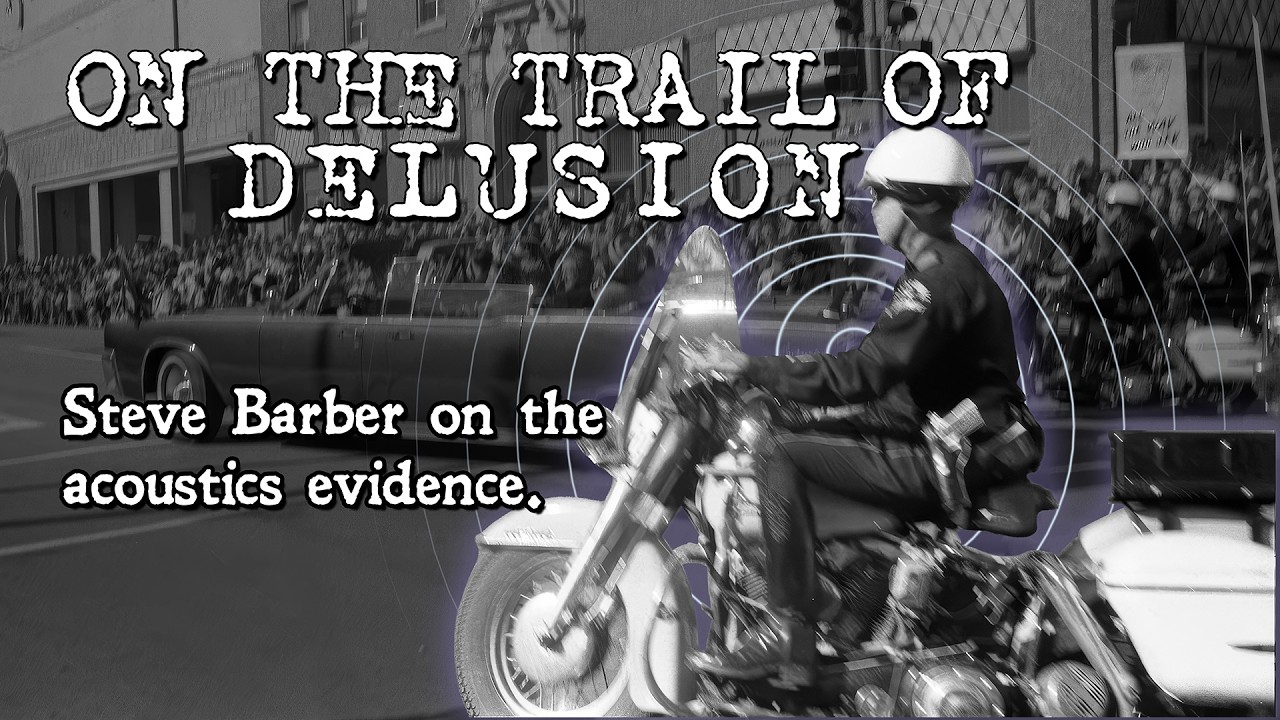
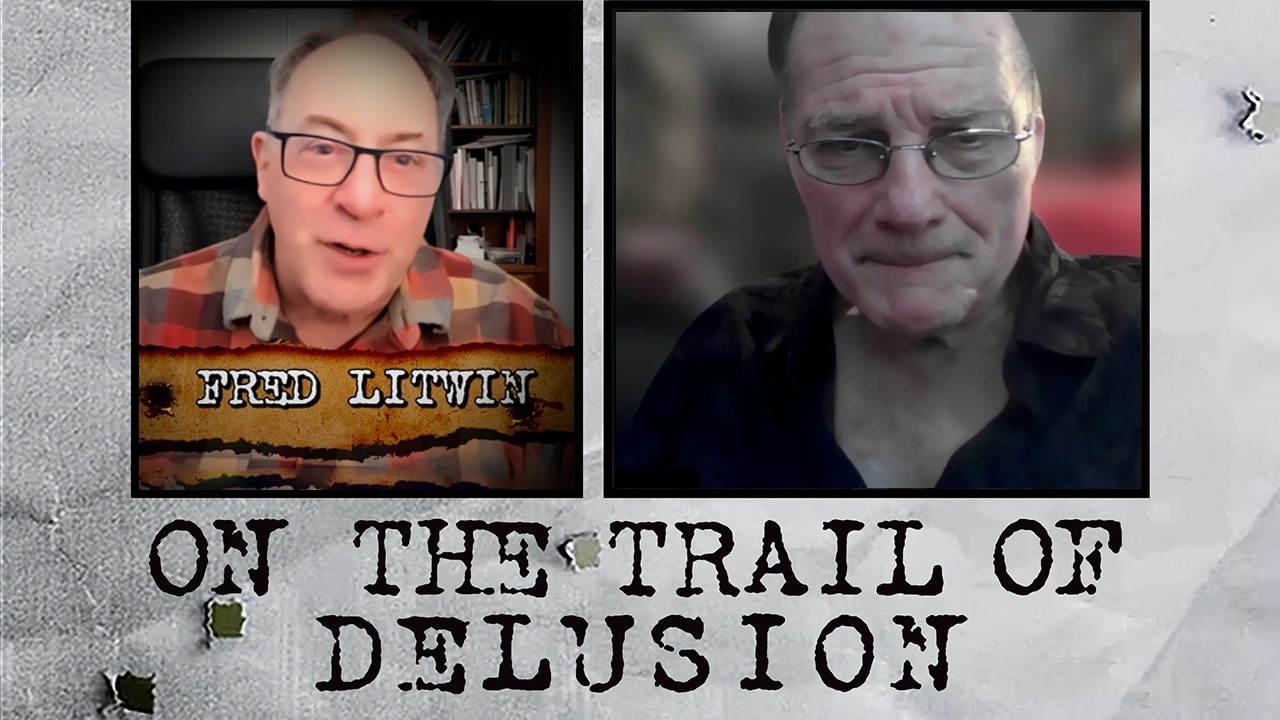
- On the Trail of Delusion, Episode 34, with Steve Barber
It was an honor to talk with Steve Barber who played a critical role in debunking the HSCA acoustics evidence. Previous Episodes of On the Trail of Delusion : Episode 1 My first guest was Robert Reynolds who is an expert on the JFK assassination files . Episode 2 Robert A. Wagner discusses his new book, JFK Assassinated . Episode 3 Gerald Posner discusses the JFK assassination and conspiracy theories. Episode 4 Dr. Martin J. Kelly, Jr. discusses conspiracy theories and the medical evidence in the JFK assassination. Episode 5 Steve Roe discusses the life of General Edwin Walker and Oswald's attempt to kill him. Episode 6 Gus Russo discusses his participation in the PBS Frontline documentary on Lee Harvey Oswald. Episode 7 Dave Perry tells some great stories about debunking JFK conspiracy nonsense. Episode 8 Nick Nalli explains some of the science behind the assassination. Episode 9 Alecia Long discusses Jim Garrison and his non-existent case against Clay Shaw. Episode 10 Don Carpenter discusses the life of Clay Shaw. Episode 11 Bill Brown discusses the murder of Officer J. D. Tippit. Episode 12 Eric Dezenhall discusses the relationship between the mob and JFK. Episode 13 Nick Nalli discusses the acoustics evidence and the Zapruder Film. Episode 14 Scott Maudsley discusses Lee Harvey Oswald's antisocial personality disorder. Episode 15 Document expert Robert Reynolds discusses what to expect in the upcoming JFK assassination file releases. Episode 16 A panel discussion on the document releases with Fred Litwin, Gus Russo, Robert Reynolds, Larry Haapanen, Mark Allen, and Steve Roe. Episode 17 An interview with author Michel Gagné about conspiracy theories. Episode 18 An interview with Phil Tinline about his book, Ghosts of Iron Mountain . Episode 19 An interview with Janet Banister, grand-niece of Guy Banister. Episode 20 The Marina Oswald Tapes . Episode 21 Dr. Chad Zimmerman discusses JFK's autopsy X-rays and photographs. Episode 22 Tour guide Daniel Evans talks about his years of researching the JFK assassination. Episode 23 Adam Gorightly discusses Fred Crisman, Thomas Beckham, Raymond Broshears and Kerry Thornley. Episode 24 A fun interview with Larry Haapanen who discusses the Garrison investigation, and his involvement with Project Blue Book. Episode 25 Dale Myers discusses the Tippit shooting and shows us some nifty animation. Episode 26 Brian Roselle discusses the timing of the first shot. Episode 27 Dr. Martin J. Kelly, Jr. talks about the psychology of Lee Harvey Oswald and Jack Ruby. Episode 28 Gus Russo talks about what happened to Lee Harvey Oswald in Mexico City. Episode 29 John-Paul Pagano discusses conspiracy theories, conspiracism and antisemitism. Episode 30 Dr. Robert Vitt talks about conspiracy theories, the early JFK researchers, and how to evaluate evidence. Episode 31 Josh Sundloff discusses conspiracy theories and his TikTok channel. Episode 32 A panel discussion of the single-bullet theory with Dr. Martin Kelly, Dr. Nick Nalli, Fred James and Scott Maudsley. Episode 33 Ernest Kearney discusses conspiracy theories and how to evaluate evidence.
- Gerald Posner on "Oliver Stone's Film-Flam"
Gerald Posner, author of Cased Closed , tweeted out my new book yesterday : Click here for the link to his tweet and have a look at some of the comments! Don't miss Gerald Posner's list of the best books on the assassination. He included my book, On the Trail of Delusion -- Jim Garrison: The Great Accuser . Don't miss the Viewer's Guide to JFK: Destiny Betrayed and JFK Revisited: Through the Looking Glass. Over the past several months, I have shown in multiple blog posts how Oliver Stone's documentary series, JFK Revisited and JFK: Destiny Betrayed , misleads viewers. In fact, despite months of work, there are still many more misleading segments that need to be addressed. It's no wonder that the fact checkers of Netflix nixed the airing of the films. There is a choice between four hours of tendentious nonsense ( JFK: Destiny Betrayed ) and two hours ( JFK Revisited: Through the Looking Glass ). As a handy guide for viewers, here are all those posts in order of their appearance in JFK: Destiny Betrayed and JFK Revisited: Through the Looking Glass, preceded by some general critiques. The Viewer's Guide has now been updated to include the sources from my new book, Oliver Stone's Film-Flam: The Demagogue of Dealey Plaza .
- Gerald Posner Reviews "On The Trail of Delusion"
My last book, I Was a Teenage JFK Conspiracy Freak , detailed how I became a JFK conspiracy freak at eighteen, and then slowly moved to believe that Lee Harvey Oswald was the lone assassin. When I first started questioning my beliefs, I was lucky to read several issues of Paul Hoch's excellent newsletter, "Echoes of Conspiracy." Here is a quote from my book: In the November, 1993, issue Hoch wrote about his two talks at the Second Annual Midwest Symposium on Assassination Politics held in Chicago in April, 1993. On the physical evidence, Hoch wrote that "the specific items of Dealey Plaza conspiracy evidence have tended to get weaker over the years. This has been a surprise, naturally underappreciated - especially by newer buffs and non-technical buffs." Hoch pointed to the HSCA who "took a stab at the tests the critics wanted - not completely, and not perfectly, but we expected that any one of the tests would demolish the WC [Warren Commission] reconstruction - neutron activation analysis, trajectory analysis. And they didn't." To make a long story short, I bought a copy of the HSCA volumes of evidence on CD-ROM and was fascinated by all the scientific testing they had done. At that point, I decided it was time to buy a copy of Gerald Posner's Case Closed . Buying it was easy, but it sat on a shelf for several days before I found the courage to open it and start reading. I went to Posner's chapter on the medical evidence, and I felt ill. I agreed with everything he wrote, and, it was at that point, that I fully changed my position. So, it is quite an honor that yesterday Gerald Posner reviewed my book at Quillette.com , one of my favorite websites. They are dedicated to free speech and they fight political correctness and the current avant-garde position of being 'woke.' Click here for the review. "It turns out that the answer to "What's new?" is "Plenty." Litwin did his research the old fashioned way: He reviewed primary sources in the collections of private researchers and authors as well as government archives. The result is a surprisingly fresh and fully persuasive account of the Garrison fiasco. Litwin’s retelling of the story is straightforward and accessible for an audience far beyond assassination and history buffs, and he writes with the confidence of someone in complete control of the facts. Relying on original transcripts, case files, memos, correspondence, and recorded interviews, Litwin provides unshakeable evidence to buttress his conclusion that the New Orleans investigation was doomed from inception by Garrison’s “mental illness” and “endless paranoias.” Sandwiched between the withering introduction and conclusion, he delivers an avalanche of documentary evidence that allows readers to draw their own conclusions about the extent to which the Garrison probe was a historic travesty of justice." Please check out the review and the other terrific articles at Quillette.
- Gerald Posner's List of the Best Books on the JFK Assassination
I am quite honored to have made his list. The reaction to Posner's list on Twitter has been quite flattering: Here is a link to Gerald Posner's review of On The Trail of Delusion - Jim Garrison: The Great Accuser. "This careful deconstruction of Jim Garrison and what Litwin describes as his “scam prosecution” is thoroughly persuasive and satisfying. It serves not only as a fast and entertaining read about the pitfalls of looking for buried truths in the JFK assassination, but also as a clarion warning of the dangers of excessive and unchecked power in the office of any prosecutor. On the Trail of Delusion has moved to the top of my “recommended” list as an antidote to Oliver Stone’s portrayal of Garrison as a dedicated truth-seeker. After finishing On the Trail of Delusion , most readers are likely to conclude that the only person who should have been charged and imprisoned as a result of Garrison’s investigation was Jim Garrison himself."
- Fred Litwin: The pro-CIA Troll
Jefferson Morley seems to be a tad upset. My blog post on his Evelyn Lincoln article hit a nerve. When troll Fred Litwin starts croaking, you know something significant has turned up that worries the anxious and isolated defenders of the lone gunman theory. But what is revealing is that Morley now has a remarkable ability -- he can both honestly quote me and then distort the same quote in the same paragraph! Check this out: (Anyone that is except Fred Litwin. He writes of Lincoln, “Who really cares? She is entitled to her opinion, like anybody else. But she had no special knowledge of anything related to such a plot.” A rich phrase worth savoring. The woman had no special knowledge. The thinking of a woman who worked daily with JFK for 12 years has no more historical value for the JFK story than his own self-published insights. Does Litwin live on the wrong side of that fine line between blatant sexism and ordinary male cluelessness? Unproven. Is he a troll? Old news.) Morley knows that my sentence about Lincoln's special knowledge is specific -- "she had no special knowledge of anything related to such a plot. " (emphasis added) I did not deny that Lincoln had some special knowledge related to her job. Yes, she knew when JFK drank coffee. She knew how his days were scheduled. She knew when he was mad or happy. She possessed all sorts of special knowledge. But, it was not related to any plot against JFK. And Lincoln knew that. That is why she talks about conjecture: It's interesting that Morley did not mention or uncover the 1994 letter that Lincoln wrote to Richard Duncan with her thoughts about the assassination. And the replies that Duncan received repeat exactly what I wrote in my article -- nobody found her "theories' worthwhile. And then Morley makes an incredible leap: Lincoln wrote that she wanted to address the two most frequent questions she had heard asked about JFK: his love life and his assassination. Blithe to moralists and armchair psychoanalysts, she condoned his prolific love life as “one of life’s pleasantries.” If we put aside the titillation factor (and Lincoln did), the Addenda shows us that she had access to the nuances of JFK’s hopes, doubt, fears, passions, suspicions, ambitions, and plans. She lived in his mental, emotional, and political universe. She inhabited his thoughts. The point is both obvious and subtle, which is to say, profound: She thought like JFK. In his 2020 JFK assassination dirge, “Murder Most Foul,” Bob Dylan dared to put listeners inside the president’s mind on Nov. 22, 1963. He said, “Wait a minute, boys, you know who I am?” “Of course we do, we know who you are” Then they blew off his head while he was still in the car Like Dylan, Evelyn Lincoln puts us inside JFK’s mind on November 22. Her Addenda illuminates how President Kennedy would have analyzed his own assassination. No, it’s not a “smoking gun.” No, it’s not a popular conspiracy theory. No, it’s not legally admissible evidence. It’s more like common sense. Lincoln "thought like JFK." And from there, Morley writes that "Her Addenda illuminates how President Kennedy would have analyzed his own assassination." So, now we know how JFK would have analyzed his own assassination. Talk about a leap in logic. And I should add, who really cares what Bob Dylan thought, or wrote, about the assassination. My friend Gus Russo said that taking Dylan’s opinions about the assassination seriously would be like asking Yo-Yo Ma’s opinion of particle physics. Previous Relevant Blog Posts on Jefferson Morley Jefferson Morley's Latest Nothingburger: Evelyn Lincoln JFK's secretary thought the JFK assassination was a conspiracy. Who cares? Jefferson Morley Gets it Wrong, Once Again! Morley misinterprets a Soviet document. The Incurious Dr. Pearcy A supposed CIA whistleblower wasn't very curious. The Reuben Efron Story, Once Again! How many times must Morley repeat this story? Jefferson Morley's William Harvey Nothingburger, Continued It wasn't hard to find evidence that Charles Niles worked for the FAA. Jefferson Morley's Latest William Harvey Nothingburger The truth about FAA credentials. Jefferson Morley Platforms Max Good A rebuttal to Good regarding Ruth Paine. Morley's Substack Goes After Ruth Paine Morley presents several conspiratorial allegations about Ruth Paine. I Am Now a Pro Bono Lawyer for the CIA! I don't even have law degree! Yet Another Morley Nothingburger A new CIA file on Herminio Diaz does not sustain allegations that he was a grassy knoll gunman. Richard Russell and the Warren Report Richard Russell always believed that Oswald was the lone gunman. Was Hoover's Warren Commission Testimony Altered? An article by Chad Nagle, on Morley's Substack, gets it wrong on Hoover's testimony. My Quillette Article on Morley's Nothingburger My latest article for Quillette.com CBS Practices Stenography The recent segment on CBS about Morley and JFK documents was not journalism. Lee Harvey Oswald was not under Surveillance Morley's list of six CIA operations does not prove that Oswald was under surveillance. The CIA's Pro Bono Lawyers Morley claims the SpyTalk authors are working as pro bono lawyers for the CIA. Did the CIA Know Oswald's State of Mind? The CIA was just quoting from a State Department memo. SpyTalk on the Joannides' File, Part Two SpyTalk replies to Jefferson Morley. The Illusion of a Smoking Gun Gerald Posner on the Joannides file. Fact Checking Morley's Fact Check Morley's Fact Check on SpyTalk needs a fact check. SpyTalk on Morley's Nothingburger Gus Russo and Michael Isikoff on the Joannides personnel file. Jefferson Morley's Unbearable Lightness of Being Now that the entire personnel file of George Joannides has been released, Jefferson Morley has now published his unified theory of nothingness. More Morley Nothingburgers on the way Morley is requesting more documents -- they will reveal nothing about the assassination. Morley's Non-Story Hits the Press Morley got the headlines he wanted to a complete non-story. George Joannides and the HSCA Joannides did not come out of retirement to work with the HSCA. There Was No "Oswald Operation" There is no mention of an "Oswald Operation" in the Joannides' personnel file. The Parkland Doctors, Part Six Morley believes that Dr. Robert McClelland's recollections provides proof of a shot from the front. Here is the truth about McClelland. On the Loss of Occam’s Razor in the JFK Case A reply by Nicholas Nalli to Jefferson Morley. A Case Study in Redaction: The CIA's LIFEAT File Morley suspected a redacted file would reveal major secrets. It didn't. The Schlesinger Memo Unredacted! Several months ago, I posted an article, in association with several researchers, that showed what was contained in the redacted section of Schlesinger's memo. Jefferson Morley's Clairvoyance Morley somehow knows what is in the supposed 2,400 recently-discovered FBI files. Was Israel Behind the JFK Assassination? Morley discusses Israel with Tucker Carlson. Morley's Bad History Lesson Morley believes that the United States can never be great unless it solves the JFK assassination. Morley's List of 13 Documents Will Tell Us Little An analysis of the 13 documents Morley wants to see. The Schlesinger Memo, Again! Morley claims I am a CIA apologist and then misquotes me. For The Sake of Our Sanity - Release the Joannides File It would be worthwhile for the CIA to release the Joannides file just to stop the incessant posts from Jefferson Morley. Did Oswald Stay at a Luxury Hotel in Helsinki? Actually, Oswald stayed at two budget-priced hotels in Helsinki. Morley Keeps Asking the Same Questions He keeps asking the same questions, and we keep posting the same answers. The JFK Assassination and Truth Conspiracy authors are playing fast and loose with the facts. Was Herminio Diaz a Grassy Knoll Assassin? There is no evidence that Diaz was involved in the JFK assassination. Morley Misleads on Arthur Schlesinger's Memo on the CIA There are clues as to what is in a redacted section of Schlesinger's memo. Jefferson Morley's Podcast on New Orleans Lays an Egg Chad Nagle and Dan Storper's article on New Orleans gets everything wrong. Chad Nagle and Dan Storper Lay an Egg Believing Michael Kurtz is problematic. Is Jefferson Morley Seeing Double? Morley wrote that there are two redacted memos on CIA reorganization, but there is only one. He wrote about Goodwin's copy as if it was a different memo, rather than a copy of the Schlesinger memo. Jefferson Morley is wrong about "Who Shot John?" The phrase 'who shot John' does not refer to the JFK assassination. Jefferson Morley is Wrong on William Harvey, Again! Only one word is redacted in Harvey's deposition. Jefferson Morley is Wrong about Operation Northwoods, Again! There are no redactions in the Operation Northwoods document. Did Dorothy Kilgallen Have any Special Knowledge about the JFK Assassination? Kilgallen had nothing to tell. Morley's Interview of Marina Oswald Porter Fizzles! An underwhelming interview of Marina Oswald. Jefferson Morley: Able to Leap Intellectual Chasms in a Single Bound Morley often repeats stories and changes their meanings. There was NO Assassination Plot in Chicago Chad Nagle claims there was an assassination plot against JFK in Chicago in November 1963. One problem: There is no evidence of such a plot. Fred Litwin, CIA Apologist? A response to Morley's Substack post alleging that I am a CIA apologist. A Reply to Jefferson Morley on Bill Harvey A rebuttal to Morley's response to my post Was Bill Harvey in Dallas in November of 1963? Was Bill Harvey in Dallas in November of 1963? There is no credible evidence Harvey was in Dallas in November of 1963. Does it Matter Where Allen Dulles was on November 22, 1963? Morley repeats the claim that Dulles was at a CIA training center during the weekend of the JFK assassination. He wasn't. Jefferson Morley's Claims about Reuben Efron Morley's claims about Efron are all wrong. A Reply to Jefferson Morley regarding Operation Northwoods Morley responded to my article "The Truth about Operation Northwoods." Here is my reply. W. Tracy Parnell on Jefferson Morley W. Tracy Parnell is one of the best JFK assassination researchers out there. Here is his look at Jefferson Morley with several important articles. The Truth about Operation Northwoods Operation Northwoods can only be understood as part of the Kennedys' war against Cuba and Operation Mongoose. Jefferson Morley Responds to my Post on MK-Ultra and Jack Ruby And a response from me. Did Dr. Louis Jolyon West Ask to Examine Jack Ruby in November 1963? There is no evidence that Dr. West petitioned the court to examine Jack Ruby before his trial. Did the CIA use a MK-Ultra Psychiatrist to Interfere with Jack Ruby's Case? There is absolutely no evidence that Dr. Louis Jolyon West interfered with Jack Ruby's case. "JFK: Destiny Betrayed" Misleads Viewers on Oswald's "Hands Off Cuba!" Handbills, Part Four Jefferson Morley used a fake Oswald handbill in his press conference for the Mary Ferrell Foundation. Redactions, Redactions, Redactions... An examination of redactions in the JFK collection of documents. Jefferson Morley Doesn't Understand Jim Garrison's Homophobic Prosecution of Clay Shaw Morley doesn't understand Alecia Long's arguments about homophobia and Jim Garrison. Jefferson Morley asks why "what the CIA knew about Herminio Diaz is still off limits." Morley misses that a lot of redactions are actually available. Belief in a JFK Conspiracy Drops! Jefferson Morley's press conference presents evidence that belief in a conspiracy has dropped. Previous Relevant Blogs Posts on Jefferson Morley's Congressional Testimony Jefferson Morley's Congressional NothingBurger An analysis of Congresswoman Luna's Congressional Hearings In Search of the Oswald Operation, Part One An FBI memo that quoted James Angleton is used by Morley to reach an unwarranted conclusion. In Search of the Oswald Operation, Part Two Morley misreads Angleton's testimony before the HSCA. In Search of an Oswald Operation, Part Three Morley believes a document proves the CIA did not believe that a lone gunman killed JFK. Update on the Heath Memo Additional documents relevant to Part Three. In Search of an Oswald Operation, Part Four Morley claims that there is some connection between the suicides of Gary Underhill, Charles Thomas, George de Mohrenschildt, and the overdose death of Dorothy Kilgallen. In Search of an Oswald Operation, Part Five Morley believes that Agustin Guitart was spying on pro-Castro forces in New Orleans.
- On the Trail of Delusion, Episode 33, with Ernest Kearney
Playwright Ernest Kearney stopped by to discuss conspiracy theories, and the influence of two books, Virtues of the Mind by Linda Zagzebski and The True Believer by Eric Hoffer, on his worldview. Others topics discussed are a critique of the documentary The Assassination and Mrs. Paine , The Jim Garrison/Clay Shaw case, and the books Rush to Judgement by Mark Lane and Vincent Bugliosi's Reclaiming History . This episode also contains never before seen footage of Fred Litwin's appearance at the 2024 LANCER conference in Dallas, Texas, and an in-person examination of the infamous storm drain in Dealey Plaza. Previous Episodes of On the Trail of Delusion : Episode 1 My first guest was Robert Reynolds who is an expert on the JFK assassination files . Episode 2 Robert A. Wagner discusses his new book, JFK Assassinated . Episode 3 Gerald Posner discusses the JFK assassination and conspiracy theories. Episode 4 Dr. Martin J. Kelly, Jr. discusses conspiracy theories and the medical evidence in the JFK assassination. Episode 5 Steve Roe discusses the life of General Edwin Walker and Oswald's attempt to kill him. Episode 6 Gus Russo discusses his participation in the PBS Frontline documentary on Lee Harvey Oswald. Episode 7 Dave Perry tells some great stories about debunking JFK conspiracy nonsense. Episode 8 Nick Nalli explains some of the science behind the assassination. Episode 9 Alecia Long discusses Jim Garrison and his non-existent case against Clay Shaw. Episode 10 Don Carpenter discusses the life of Clay Shaw. Episode 11 Bill Brown discusses the murder of Officer J. D. Tippit. Episode 12 Eric Dezenhall discusses the relationship between the mob and JFK. Episode 13 Nick Nalli discusses the acoustics evidence and the Zapruder Film. Episode 14 Scott Maudsley discusses Lee Harvey Oswald's antisocial personality disorder. Episode 15 Document expert Robert Reynolds discusses what to expect in the upcoming JFK assassination file releases. Episode 16 A panel discussion on the document releases with Fred Litwin, Gus Russo, Robert Reynolds, Larry Haapanen, Mark Allen, and Steve Roe. Episode 17 An interview with author Michel Gagné about conspiracy theories. Episode 18 An interview with Phil Tinline about his book, Ghosts of Iron Mountain . Episode 19 An interview with Janet Banister, grand-niece of Guy Banister. Episode 20 The Marina Oswald Tapes . Episode 21 Dr. Chad Zimmerman discusses JFK's autopsy X-rays and photographs. Episode 22 Tour guide Daniel Evans talks about his years of researching the JFK assassination. Episode 23 Adam Gorightly discusses Fred Crisman, Thomas Beckham, Raymond Broshears and Kerry Thornley. Episode 24 A fun interview with Larry Haapanen who discusses the Garrison investigation, and his involvement with Project Blue Book. Episode 25 Dale Myers discusses the Tippit shooting and shows us some nifty animation. Episode 26 Brian Roselle discusses the timing of the first shot. Episode 27 Dr. Martin J. Kelly, Jr. talks about the psychology of Lee Harvey Oswald and Jack Ruby. Episode 28 Gus Russo talks about what happened to Lee Harvey Oswald in Mexico City. Episode 29 John-Paul Pagano discusses conspiracy theories, conspiracism and antisemitism. Episode 30 Dr. Robert Vitt talks about conspiracy theories, the early JFK researchers, and how to evaluate evidence. Episode 31 Josh Sundloff discusses conspiracy theories and his TikTok channel. Episode 32 A panel discussion of the single-bullet theory with Dr. Martin Kelly, Dr. Nick Nalli, Fred James and Scott Maudsley.