top of page

Search Results

1175 results found with an empty search

Blog Posts (1164)

  • Tosh Plumlee Finds an Important Photograph

    Here is an excerpt from Plumlee's DEA file : Wow! A photograph of Jack Ruby, Johnny Roselli, Sam Giancana, Ed McLamore, and Lee Harvey Oswald. So, where is this supposed photograph? Previous Relevant Blog Posts on Tosh Plumlee 1991 Tosh Plumlee Interview, Part One Part One of two parts. 1991 Tosh Plumlee Interview, Part Two Second of two parts. Tosh Plumlee in 1959 Some of Plumlee's interesting activities in 1959. Tosh Plumlee Admits He is Not a Credible Source A bizarre story in which Plumlee writes to the FBI that he has provided bad information to an article about him in a Denver magazine. Tosh Plumlee Steals a Plane Plumlee steals a plane and writes some bad checks. Did Tosh Plumlee Try to Abort the JFK Assassination? Did Plumlee fly an abort team to Dallas or the actual assassins? Eugene Dinkin and Vince Palamara Plumlee writes to Palamara that Dinkin's messages might have been the intelligence to send the abort team to Dallas. Rob Reiner's Podcast Series, Part Two PBS Frontline investigated Plumlee's allegations about Nags Head, North Carolina and could not corroborate any part of his story

  • Jefferson Morley Gets it Wrong, Once Again!

    Jefferson Morley heralded an exclusive story this week -- about RFK and the Soviets. Three weeks after President John F. Kennedy was shot dead in November 1963, his grieving brother Robert F. Kennedy sent a private message to the leadership of the Soviet Union asserting that the assassination “undoubtedly was the result of a large political conspiracy.” A Kremlin document, dated December 9, 1963, is found in the Russian government’s recently released dossier on JFK’s assassination. The two-page memo shows the messenger was William Walton, an artist friend of JFK, who travelled to Moscow after the assassination. You can download the memo written by G. Bolshakov on December 11, 1963, from Morley's website . There are only two paragraphs about the assassination: The assassination of President Kennedy, Walton said, undoubtedly was the result of a large political conspiracy. Perhaps there was only one assassin, but there were certainly more accomplices to the president's murder. Dallas, Walton continued, is the ideal place for such a crime. The murder of the President there could be blamed on racists, Birchers, anyone at all. But was the conspiracy claim Robert Kennedy's belief or message? It sounds like it is Walton's conclusion. Towards the end of the memo, there is indeed a message from Robert Kennedy: I spoke with Robert Kennedy and Jacqueline Kennedy before leaving for the Soviet Union, Walton continued. Robert Kennedy asked me to convey to you his warm greetings. He said, "Go to Moscow and tell them that we, for our part, will do everything possible to ensure that the political course of the United States toward the USSR remains unchanged and that the country's leadership is in firm hands." Morley references two books that contain the story about RFK conveying a message about conspiracy through Walton to Bolshakov. Here is the relevant passage from "One Hell of a Gamble": Khrushchev, Castro, and Kennedy, 1958-1964 , by Aleksandr Fursenko and Timothy Naftali: (page 345) Bolshakov and Walton met at the Sovietskaya restaurant. "Dallas was the ideal location for such a crime," Walton told the Soviet intelligence officer. "Perhaps there was only one assassin, but he did not act alone." Bolshakov, who had himself been deeply moved by assassination, listened intently as Walton explains that the Kennedy's believed there was a large political conspiracy behind Oswald's rifle. Despite Oswald's connections to the communist world, the Kennedy's believed that the president was felled by domestic opponents. The footnote for this paragraph reads as follows: Interview with Georgi Bolshakov, Jan. 28, 1989. At this interview, Bolshakov described the effect of both Kennedy assassinations on him. The claim that RFK was conveying a message about conspiracy came from Bolshakov in 1989. Was this his real memory from the meeting in 1963, some twenty-five years earlier? Or was this an improved memory, perhaps influenced by his own views of conspiracy? Morley says additional information about Walton's meeting, thanks to Walton's son, is in David Talbot's book, The Devil's Chessboard . But I can't find anything in that book about the meeting. However, Talbot's book, Brothers , contains the story: Now, in Moscow, Bobby Kennedy's representative was reporting that the attorney general's worst fears had come true. What Walton told Bolshakov over their meal at the Sovietskaya stunned the Russian. He said that Bobby and Jackie believed that the president had been killed by a large political conspiracy. "Perhaps there was only one assassin, but he did not act alone," Walton said, continuing the message from the Kennedys. There were others behind Lee Harvey Oswald's gun. J. Edgar Hoover had told both Bobby and Jackie that Oswald was a communist agent. But despite the alleged assassin's well-publicized defection to the Soviet Union and his attention-grabbing stunts on behalf of Fidel Castro, the Kennedys made it clear that they did not believe he was acting on foreign orders. They were convinced that JFK was the victim of U. S. opponents. And, Walton told Bolshakov, "Dallas was the ideal location for such a crime." The footnote for this passage is revealing: He said that Bobby and Jackie believed that the president had been killed by a large political conspiracy. Fursenko and Naftali, 345. Fursenko and Naftali based their account of the Walton-Bolshakov meeting on a memo that Bolshakov prepared for the GRU. Fursenko also interviewed Bolshakov in January 1989 before he died. In an interview for this book, Naftali observed, "It's possible that Bolshakov exaggerated what Walton said to him to remind his superiors how close he was to the Kennedys. Bolshakov clearly liked the fact that he had become a player, and it's possible he exaggerated a bit to get back into the inner circle. But I'd be surprised if he invented it out of whole cloth." The authors note in their book that "the GRU material on Bolshakov has been corroborated in other cases and some of the details in this document have been corroborated." So, the only source for Robert Kennedy conveying a message about conspiracy to the Soviets is the Fursenko interview in 1989. Fursenko and Naftali did see the actual document, according to their footnotes -- but did they notice the limited attribution to RFK when Bolshakov showed them the memo? Even so, Naftali believed that Bolshakov might have been exaggerating. And so while he was probably not exaggerating in the memo, he was most probably exaggerating in the interview. The real story that Morley should have reported is that "Russian Memo Does Not Corroborate Walton-Bolshakov Story." One last point. Robert Kennedy knew about the plots against Castro. That must have been weighing on his mind right after the assassination. And as we know, he never told the Warren Commission about the plots nor did he say a word about the CIA working withe Mafia. "I have myself wondered if we did not pay a very great price for being more energetic than wise about a lot of things, especially Cuba." Bill Moyers quoted Robert Kennedy as saying. I don't think Robert Kennedy was sharing his real opinions about the assassination back in 1963 - 1964. Hat tip: Paul Hoch helped with the production and editing of this article. Previous Relevant Blog Posts on Jefferson Morley The Incurious Dr. Pearcy A supposed CIA whistleblower wasn't very curious. The Reuben Efron Story, Once Again! How many times must Morley repeat this story? Jefferson Morley's William Harvey Nothingburger, Continued It wasn't hard to find evidence that Charles Niles worked for the FAA. Jefferson Morley's Latest William Harvey Nothingburger The truth about FAA credentials. Jefferson Morley Platforms Max Good A rebuttal to Good regarding Ruth Paine. Morley's Substack Goes After Ruth Paine Morley presents several conspiratorial allegations about Ruth Paine. I Am Now a Pro Bono Lawyer for the CIA! I don't even have law degree! Yet Another Morley Nothingburger A new CIA file on Herminio Diaz does not sustain allegations that he was a grassy knoll gunman. Richard Russell and the Warren Report Richard Russell always believed that Oswald was the lone gunman. Was Hoover's Warren Commission Testimony Altered? An article by Chad Nagle, on Morley's Substack, gets it wrong on Hoover's testimony. My Quillette Article on Morley's Nothingburger My latest article for Quillette.com CBS Practices Stenography The recent segment on CBS about Morley and JFK documents was not journalism. Lee Harvey Oswald was not under Surveillance Morley's list of six CIA operations does not prove that Oswald was under surveillance. The CIA's Pro Bono Lawyers Morley claims the SpyTalk authors are working as pro bono lawyers for the CIA. Did the CIA Know Oswald's State of Mind? The CIA was just quoting from a State Department memo. SpyTalk on the Joannides' File, Part Two SpyTalk replies to Jefferson Morley. The Illusion of a Smoking Gun Gerald Posner on the Joannides file. Fact Checking Morley's Fact Check Morley's Fact Check on SpyTalk needs a fact check. SpyTalk on Morley's Nothingburger Gus Russo and Michael Isikoff on the Joannides personnel file. Jefferson Morley's Unbearable Lightness of Being Now that the entire personnel file of George Joannides has been released, Jefferson Morley has now published his unified theory of nothingness. More Morley Nothingburgers on the way Morley is requesting more documents -- they will reveal nothing about the assassination. Morley's Non-Story Hits the Press Morley got the headlines he wanted to a complete non-story. George Joannides and the HSCA Joannides did not come out of retirement to work with the HSCA. There Was No "Oswald Operation" There is no mention of an "Oswald Operation" in the Joannides' personnel file. The Parkland Doctors, Part Six Morley believes that Dr. Robert McClelland's recollections provides proof of a shot from the front. Here is the truth about McClelland. On the Loss of Occam’s Razor in the JFK Case A reply by Nicholas Nalli to Jefferson Morley. A Case Study in Redaction: The CIA's LIFEAT File Morley suspected a redacted file would reveal major secrets. It didn't. The Schlesinger Memo Unredacted! Several months ago, I posted an article, in association with several researchers, that showed what was contained in the redacted section of Schlesinger's memo. Jefferson Morley's Clairvoyance Morley somehow knows what is in the supposed 2,400 recently-discovered FBI files. Was Israel Behind the JFK Assassination? Morley discusses Israel with Tucker Carlson. Morley's Bad History Lesson Morley believes that the United States can never be great unless it solves the JFK assassination. Morley's List of 13 Documents Will Tell Us Little An analysis of the 13 documents Morley wants to see. The Schlesinger Memo, Again! Morley claims I am a CIA apologist and then misquotes me. For The Sake of Our Sanity - Release the Joannides File It would be worthwhile for the CIA to release the Joannides file just to stop the incessant posts from Jefferson Morley. Did Oswald Stay at a Luxury Hotel in Helsinki? Actually, Oswald stayed at two budget-priced hotels in Helsinki. Morley Keeps Asking the Same Questions He keeps asking the same questions, and we keep posting the same answers. The JFK Assassination and Truth Conspiracy authors are playing fast and loose with the facts. Was Herminio Diaz a Grassy Knoll Assassin? There is no evidence that Diaz was involved in the JFK assassination. Morley Misleads on Arthur Schlesinger's Memo on the CIA There are clues as to what is in a redacted section of Schlesinger's memo. Jefferson Morley's Podcast on New Orleans Lays an Egg Chad Nagle and Dan Storper's article on New Orleans gets everything wrong. Chad Nagle and Dan Storper Lay an Egg Believing Michael Kurtz is problematic. Is Jefferson Morley Seeing Double? Morley wrote that there are two redacted memos on CIA reorganization, but there is only one. He wrote about Goodwin's copy as if it was a different memo, rather than a copy of the Schlesinger memo. Jefferson Morley is wrong about "Who Shot John?" The phrase 'who shot John' does not refer to the JFK assassination. Jefferson Morley is Wrong on William Harvey, Again! Only one word is redacted in Harvey's deposition. Jefferson Morley is Wrong about Operation Northwoods, Again! There are no redactions in the Operation Northwoods document. Did Dorothy Kilgallen Have any Special Knowledge about the JFK Assassination? Kilgallen had nothing to tell. Morley's Interview of Marina Oswald Porter Fizzles! An underwhelming interview of Marina Oswald. Jefferson Morley: Able to Leap Intellectual Chasms in a Single Bound Morley often repeats stories and changes their meanings. There was NO Assassination Plot in Chicago Chad Nagle claims there was an assassination plot against JFK in Chicago in November 1963. One problem: There is no evidence of such a plot. Fred Litwin, CIA Apologist? A response to Morley's Substack post alleging that I am a CIA apologist. A Reply to Jefferson Morley on Bill Harvey   A rebuttal to Morley's response to my post Was Bill Harvey in Dallas in November of 1963? Was Bill Harvey in Dallas in November of 1963?   There is no credible evidence Harvey was in Dallas in November of 1963. Does it Matter Where Allen Dulles was on November 22, 1963?   Morley repeats the claim that Dulles was at a CIA training center during the weekend of the JFK assassination. He wasn't. Jefferson Morley's Claims about Reuben Efron   Morley's claims about Efron are all wrong. A Reply to Jefferson Morley regarding Operation Northwoods   Morley responded to my article "The Truth about Operation Northwoods." Here is my reply. W. Tracy Parnell on Jefferson Morley   W. Tracy Parnell is one of the best JFK assassination researchers out there. Here is his look at Jefferson Morley with several important articles. The Truth about Operation Northwoods   Operation Northwoods can only be understood as part of the Kennedys' war against Cuba and Operation Mongoose. Jefferson Morley Responds to my Post on MK-Ultra and Jack Ruby   And a response from me. Did Dr. Louis Jolyon West Ask to Examine Jack Ruby in November 1963?   There is no evidence that Dr. West petitioned the court to examine Jack Ruby before his trial. Did the CIA use a MK-Ultra Psychiatrist to Interfere with Jack Ruby's Case?   There is absolutely no evidence that Dr. Louis Jolyon West interfered with Jack Ruby's case. "JFK: Destiny Betrayed" Misleads Viewers on Oswald's "Hands Off Cuba!" Handbills, Part Four   Jefferson Morley used a fake Oswald handbill in his press conference for the Mary Ferrell Foundation. Redactions, Redactions, Redactions...   An examination of redactions in the JFK collection of documents. Jefferson Morley Doesn't Understand Jim Garrison's Homophobic Prosecution of Clay Shaw Morley doesn't understand Alecia Long's arguments about homophobia and Jim Garrison. Jefferson Morley asks why "what the CIA knew about Herminio Diaz is still off limits." Morley misses that a lot of redactions are actually available. Belief in a JFK Conspiracy Drops! Jefferson Morley's press conference presents evidence that belief in a conspiracy has dropped. Previous Relevant Blogs Posts on Jefferson Morley's Congressional Testimony Jefferson Morley's Congressional NothingBurger An analysis of Congresswoman Luna's Congressional Hearings In Search of the Oswald Operation, Part One An FBI memo that quoted James Angleton is used by Morley to reach an unwarranted conclusion. In Search of the Oswald Operation, Part Two Morley misreads Angleton's testimony before the HSCA. In Search of an Oswald Operation, Part Three Morley believes a document proves the CIA did not believe that a lone gunman killed JFK. Update on the Heath Memo Additional documents relevant to Part Three. In Search of an Oswald Operation, Part Four Morley claims that there is some connection between the suicides of Gary Underhill, Charles Thomas, George de Mohrenschildt, and the overdose death of Dorothy Kilgallen. In Search of an Oswald Operation, Part Five Morley believes that Agustin Guitart was spying on pro-Castro forces in New Orleans.

  • GQ Magazine - "The Case Against Jim Garrison"

    The January 1992 issue of GQ featured an article by Nicholas Lemann titled "The Case Against Jim Garrison." Here is the text of the article: I know life is supposed to be full of surprises, but sometimes one comes along that exceeds the limits of what you should have to put up with. I never thought I’d see someone make an all-out effort to rehabilitate Jim Garrison, the six-foot-seven, booming-voiced district attorney of New Orleans during the years I was growing up there, and the only man to prosecute someone for conspiring to assassinate John F. Kennedy. Garrison lost his case after one hour of jury deliberation. The responsible wing of the assassination-conspiracy community—meaning writer-investigators, such as Harold Weisberg and Edward Jay Epstein—has regarded him as an embarrassment for nearly a quarter-century. Although until this past November he was still working in New Orleans, where he served many years as an elected state judge, most people there place him in the same category as the colorful, roguish political figures from Louisiana’s past, along with Earl Long. As with Uncle Earl, Big Jim’s reputational deliverance has come from Hollywood: In Oliver Stone’s movie JFK , the Garrison character, played by Kevin Costner, is the hero. Blaze at least avoided the mistake of taking Earl Long seriously; JFK , from all advance indications (I have not seen the movie as of this writing), will portray Garrison straightforwardly as a hero of the High Noon variety—as, in Stone’s words, “one of the few men of that time who had the courage to stand up to the Establishment and seek the truth.” There are enough good journalists around today who covered Garrison back in his heyday to guarantee that Stone will be called on this. Still, because of the momentum of JFK ‘s publicity, when it opens there will be an unavoidable feeling in the air that, well, by God, Garrison was onto something. It’s easy to present the wide-spread opposition to him as a badge of honor. Courageous visionaries are always unpopular, aren’t they? In this case, though, everyone should face the unappealing truth: Establishment or no Establishment, Garrison was wrong. More than that: Garrison was a pernicious figure, an abuser of government power and the public trust, and if there’s a deeper issue in American society that he exemplifies, it is that so many intelligent people prefer conspiracy-theorizing to facing this country’s problems head-on. Jim Garrison, actually Earling Carothers Garrison, was born in a small town in Iowa and grew up in New Orleans. In the sketchy biographical account he gives of himself in his books ( A Heritage of Stone and On the Trail of the Assassins ), he mentions, curiously, the influence of his grandfather but not of his father, and he doesn’t say how his family wound up in the Deep South. If his father was a distant, cold or missing figure in his life, it wouldn’t surprise me: People who have become fixated on the Kennedy assassination often are engaged in some sort of search for a lost father. Garrison had a generational link to Kennedy, too. He was born four years after Kennedy; served, like Kennedy, in World War II; and was elected district attorney of New Orleans a year after Kennedy was elected president. In his early years in office, Garrison was a reformer. He got his job by upsetting a mossback incumbent and quickly made a name for himself by cleaning up the long-standing minor-vice rackets in the French Quarter that had existed under the unofficial sanction of the city and state political machines. In those days, New Orleans still thought of itself as the queen city of the South, not yet having succumbed to its present self-concept as a quaint tourist Mecca. Garrison, a young, articulate, handsome, well-read, crusading politician, was the object of a good deal of civic pride. The official Garrison anecdote about how he decided to investigate the Kennedy assassination goes like this: In 1966, he got on a flight from New Orleans to New York and found himself sitting next to Louisiana Senator Russell Long, who told Garrison that he didn’t find the Warren Commission’s official report on the assassination credible. (Though Garrison doesn’t mention this in any of his books, it seems relevant that Long is the son of an assassinated politician, the circumstances of whose death have always been in dispute.) Because Lee Harvey Oswald had spent the summer of 1963 in New Orleans, Garrison could, by stretching, claim that investigating the assassination was within his jurisdiction. He and his staff of assistant DA’s, along with an eccentric crew of conspiracy theorists from around the country—the stand-up comedian Mort Sahl, for example, and Mark Lane, later famous as an adviser to mass-murderer-cult leader Jim Jones—went to work putting a case together (in secrecy, until the New Orleans States-Item blew their cover a year later). The best thing the conspiracy theorists have going for them is the fact that if a lone assassin had shot President Kennedy from a sixth floor window, he would have had to have been a marksman of almost superhuman skill in order to kill Kennedy and wound Texas Governor John Connally Jr. in the few seconds when a clear shot to their car was possible. Without getting into the dense forest of four-and five-bullet (and two-and three-gunman) theories, clearly the most vulnerable point of the Warren Commission report is its contention that Oswald fired three shots and that one of them hit both Kennedy and Connally. The second-best thing conspiracy theorists have going for them is that Lee Harvey Oswald was not merely a loner and a misfit, but a loner and a misfit who had served in the U.S. Marine Corps, defected to the Soviet Union and then undefected and returned home. His extremely weird career involved spending time under the aegis of both superpower governments during the Cold War. The mechanics of Kennedy’s murder and the details of Oswald’s life are twin motherlodes for conspiracy theorists. But bear in mind that there is an enormous difference between, on the one hand, a few discrepancies, coincidences and lacunae, and, on the other, actual proof that there was a conspiracy. When Oswald was living in New Orleans, he worked in a manual labor job at a coffee plant and, famously, formed a pro-Castro organization called the Fair Play for Cuba Committee, which got a good deal of publicity, considering it was a one-man, desk-drawer operation. To Garrison’s mind, all this was a cover: The real situation was that Oswald was caught in the webbing of a powerful network of right-wing militarists, who had placed him at the coffee company and had manufactured a leftist identity for him, all in preparation for the time when he would be blamed for (but wouldn’t actually commit) Kennedy’s murder. It’s impossible to explain Garrison’s theory adequately without first saying that the hallmark of the Kennedy-conspiracy theorists is that the burden of proof always lies with the Warren Commission, never with them. The full Warren Commission report takes up twenty-six thick volumes, filled with a mass of evidence and testimony. In additions to the shortcomings in the way the commission sequenced Oswald’s shots, all of this information doesn’t comprise a seamless web. There are loose ends and contradictions. On the other hand, the report does manfully shoulder the difficult task of presenting a comprehensive explanation of the assassination. While Garrison capitalizes on every flaw or imagined flaw, of the report, as if each discovery invalidates the entire twenty-six volumes, he holds himself to a significantly lower evidential standard, where the sketchiest connections are held to prove the existence of the conspiracy and he never has to explain precisely how he thinks Kennedy was murdered or by whom. So: The Reily Coffee Company was at 640 Magazine Street, on the edge of downtown New Orleans. Two blocks away, at 544 Camp Street, was the office of W. Guy Banister, a former FBI agent and deputy superintendent of police in New Orleans. In 1963, Banister was a private detective and a right-winger involved in anti-Castro activities. And on Oswald’s pro-Castro Fair Play for Cuba leaflets was a return address—544 Camp Street! Garrison is a man who thinks in terms of “links,” and to him this is a rock-solid one; he had no trouble asserting, as a proven fact, that Oswald and Banister knew each other. (Banister died in 1964, before Garrison began his investigation.) The next link, also unsubstantiated, is between Guy Banister and a weird character named David Ferrie. In 1963, Ferrie had been fired from his job as an Eastern Airlines pilot and was making a living as a civil-aviation pilot. He was also participating energetically in the underground homosexual life of New Orleans. According to Garrison, Ferrie performed, under Banister’s direction, espionage-related piloting missions to Cuba and Central America during the early Sixties. On the fateful morning of November 22, 1963, Ferrie and two male “companions” had driven from New Orleans to Houston for a weekend trip. To Garrison, this was a transparent attempt to establish an alibi; Ferrie’s real job had been to transport unnamed conspirators from Dallas to Mexico, in a private plane, a few days later. Ferrie died in 1967, a year into Garrison’s investigation. Next link; David Ferrie and Lee Oswald. Garrison asserts, again with no hard evidence, that the two men were in the same civil air patrol squadron in New Orleans and that Ferrie taught Oswald to fly and to shoot a high-powered rifle. Just before Ferrie died, the New Orleans States-Item broke the story that Garrison was investigating the Kennedy assassination, on the public’s dime. (Afterward, a group of right-wing New Orleans businessmen funded the investigation privately.) The publicity increased the pressure on Garrison to produce a suspect, but the conspirators he had been focusing on—Oswald, Banister and Ferrie—were all dead. A final link was called for, and Garrison produced it; In March 1967, only a few days after the States-Item had blown his cover and Ferrie had died, Garrison arrested Clay L. Shaw, the retired director of the International Trade Mart in New Orleans. Most of Garrison’s suspects and witnesses were real fly-by-nighters, but Clay Shaw was a respectable figure. He was a tall, dignified, well-dressed white-haired man who, as head of the trade mart, had run a chamber of commerce-like organization. He wasn’t rich or powerful, but he was settled, well-known, and upper middle class. He was also gay. It would have been inconceivable at the time for an openly gay man to hold the job Shaw had, so he necessarily had a secret life. At least part of the time, he traveled in the kind of social circles where people didn’t use their last names and otherwise kept their participation quiet. This gave him just enough of a shadowy edge to make him useful to Garrison. In fact, a good part of Garrison’s case had an aspect of persecution of homosexuals about it; he had relied on the closeted nature of gay life to lend plausibility to his vision of an underground world of conspirators. Garrison asserted that Shaw had known Ferrie and Oswald; that Shaw had helped recruit Oswald to his role as the fall guy in the assassination; and that Shaw’s ironclad alibi for November 22—he was in California making a speech— only strengthened the case for his involvement in the conspiracy. Remember, it has never been proven to the satisfaction of anyone, except Garrison and his admirers, that Lee Oswald, Clay Shaw, David Ferrie and Guy Banister even knew one another. It’s a testament to Garrison’s manipulative skills that he was able to turn this weakness into a strength by spending Shaw’s entire trial endeavoring to prove that the four men had known one another, as if that was tantamount to nailing down their involvement in a conspiracy to kill the president. Virtually all of Garrison’s oeuvre—meaning the Shaw trial, Big Jim’s handful of lengthy interviews with sympathetic reporters, his two books about the Kennedy assassination and, presumably, JFK—is concerned with these “links,” and nowhere does Garrison reveal how his four conspirators actually accomplished the murder or who fired the fatal bullets. (While we’re on the subject of “links,” I should mention, before Garrison or Stone does in a letter to the editor, that I have several of my own to the whole affair. My father and his brother are partners in a New Orleans law firm. One of the firm’s long-standing clients is the very same Reily Coffee Company that had employed Lee Harvey Oswald. Another was the late Edith Stern, a liberal philanthropist, who was a friend and prominent supporter of Clay Shaw’s. Also, my uncle worked on Garrison’s campaign when he was first elected district attorney. And for twenty years, I’ve been a friend of Tom Bethell, a former investigator for Garrison who defected to the other side just before the Shaw trial began. To me, the lesson here is that, taking the “links” approach, just about everybody is a potential suspect.) Garrison has always been similarly vague about the identity of the assassination plot’s mastermind. In one typically Garrisonian locution of the subject, in a 1967 interview, he said “At midday on November 22, 1963, there were many men in many places glancing at their watches.” Who were they? Who knows! Over the years, he has made dark, knowing references to the involvement of the FBI, the military-industrial complex and the oil business in the conspiracy, but his suspicions have centered on the C.I.A. There is much, much less than meets the eye to Garrison’s conclusion that the C.I.A. did it. All his evidence consists either of wild leaps of faith—David Ferrie is “linked” (to Garrison’s satisfaction, though not to many others’) to the C.I.A., therefore the C.I.A. killed Kennedy—or rank speculation. When exactly did the C.I.A. decide to assassinate the president? Who gave the order? How was the job carried out and then covered up? Garrison never comes anywhere near giving the answers to these questions. In his more recent book On the Trail of the Assassins —on which JFK is based— Garrison says the assassination “was instigated and planned long in advance by fanatical anti-communists in the United States intelligence community.” Well, who were they? A few pages later, Garrison says there is no evidence that the FBI’s J. Edgar Hoover, Chief Justice Earl Warren, the C.I.A.’s Allen Dulles or President Lyndon Johnson “had any prior knowledge or involvement in the assassination, but I would not hesitate to classify all of these men as accessories after the fact.” Why? What did they do? And how were the real planners of the assassination able to carry out their fantastically detailed conspiracy without the head of the agency’s noticing? Garrison consistently gets himself off the hook of questions like these by implying it’s miraculous that he, a lone crusader has been able to chip away even some of the smooth facade presented by the immensely rich and powerful conspirators; he can hardly be expected to have gotten all the answers. And when he’s going after his big fish, he’s maddeningly elusive about exactly what accusation he is making. In his books, there is the implication, for example, that the big news media are somehow tied in to the conspiracy, but he’s never actually said so directly. Back in the early days of the investigation, an editor from Life made friendly overtures to Garrison. A while later, as Garrison tells the story, the editor “suddenly flew in from New York. He seemed amiable enough, but he appeared to have lost a great deal of weight. He had deep circles under his eyes. His Ivy League clothes hung loosely on his thin frame. He informed me that Life would no longer be able to support me and work with me …” We’re supposed to think, aren’t we, that the editor was tortured in some Darkness at Noon-style editorial dungeon. But Garrison doesn’t say so. NBC’s hostile coverage of the investigation is explained by its being “part of the warfare machine”; this thought hovers in the background of Garrison’s unintentionally hilarious depiction of the depredations visited upon him when he appeared on the Tonight Show, which, in his retelling, is meant to make us wonder whether Johnny Carson was entirely uninvolved in the events of November 22. Garrison presents the masterminds of the Kennedy assassination as being extremely far-reaching and clever—and yet, oddly enough, they were constantly making little mistakes that allowed Garrison to pick up their trail. Take the Clay Shaw trial. The obvious question was, Why didn’t the conspirators entrust the hit to a more reliable crew? Garrison’s key witness against Shaw, Perry Russo, was a young insurance salesman-cum-grifter who claimed to have overheard Shaw and Ferrie discussing the assassination at a party. Another witness, named Charles Spiesel—a paranoid accountant who regularly fingerprinted his own children and claimed to have been hypnotized by people on the street dozens of times—told a similar story about overhearing Shaw and Ferrie casually planning Kennedy’s murder at a different party. It’s not like the C.I.A., as Garrison describes it, to be so sloppy as to allow such conversations to take place. A third witness, prison inmate Vernon Bundy, testified that while preparing himself a heroin fix on the well-travelled banks of Lake Pontchartrain, he had seen Shaw handing money to Oswald. Wouldn’t it have been wiser for them not to have made this transaction in a public place? I remember feeling excited about Garrison’s crusade, in the early days: Finally, something of national import was happening in New Orleans. In the late Sixties, the word “Sunbelt” had not yet been coined, but there was an unmistakable sense that, one century later, the South was finally going to stop obsessing about the Civil War and transform itself. It was also clear that while cities like Atlanta and Houston had jumped into this process with both feet, New Orleans was attracted in some deep way to eccentricity and torpor and endless sifting through the past. Thus, when the true nature of Garrison’s inquest became apparent, there was a powerful reverberation: The trial’s aftermath seemed like a metaphor for the state of the city—that the attention we were attracting because of the Shaw trial was going to be censorious, not admiring; that what we had on our hands, civically, was a tremendous embarrassment; that New Orleans was becoming known as the weirdo capital of the United States. Almost immediately after the Shaw trial’s humiliating end, Garrison began to downplay its importance. His first book, A Heritage of Stone (1970), barely mentions Shaw, and Russo, Spiesel and Bundy not at all, and presents the trial as having been an excuse to dispute the Warren Commission in a public forum. “We saw the verdict as pointing up the impossibility of presenting an espionage case in an American court of law,” he says, explaining why he lost. Lately, Oliver Stone has begun to sound this note, too. “Yes, the jury returned a verdict of not guilty on Clay Shaw,” he wrote in The Washington Post , but he went on to praise “the larger accomplishment of the trial.” A second front in defense of Garrison’s conduct opened up in 1975, when the renegade former C.I.A. agent Victor Marchetti revealed that Shaw (who had lived very quietly in New Orleans from the time of his acquittal until his death, in 1974) had been once affiliated with the agency’s Domestic Contact Division, which debriefed civilian businessmen who regularly traveled overseas. Both Garrison and Stone discuss this as if its important new evidence. Shaw’s possible connection to the C.I.A. is another illustration of the problem with Garrison’s whole way of thinking: Even if Shaw had been a career C.I.A. agent, that fact alone does not implicate him in the Kennedy assassination. Garrison still hasn’t presented any convincing evidence of that. (Similarly, Garrison and Stone like to cite the conclusion of the House Select Committee on Assassinations, in 1979, that Kennedy “probably was assassinated as a result of a conspiracy,” as proof that “the federal government” now agrees with them—but the House committee was an independent investigative operation; it didn’t solve the case either, and it certainly didn’t implicate Clay Shaw in the assassination.) What’s much more important, though, is the chilling line of argument Garrison and Stone are using to defend the trial. Garrison’s writing is full of self-congratulatory references to George Orwell and Franz Kafka, but the essence of those writers’ vision is that the most profound wrong a government can commit is to turn its powers against an innocent individual in order to advance a larger cause. Garrison was a public official who had prosecutorial power in his hands, and he used it to bring a man to trial when, by his own admission, he knew he didn’t have a real case. With his use of innuendo, his carelessness in flinging the gravest charges at people, his belief that individual liberties (at least, Clay Shaw’s individual liberties) are less important than his attack on what he imagines to be a vast conspiracy destroying America, Garrison does have a forbear, but it isn’t Orwell or Kafka. It’s Joe McCarthy. Oliver Stone’s parents split up when he was 16, in 1962. “The news of their divorce came as a total shock,” he told Time five years ago. “… And when they were divorced, my father gave me the facts of life. He told me that he was heavily in debt. He said ‘I’ll give you a college education and then you’re on your own. There’s literally no money.’” A few months ago Stone wrote in The Washington Post , “The murder of President Kennedy was a seminal event for me and millions of Americans … It was a crushing blow to our country and to millions of people around the world. It put an abrupt end to a period of innocence and great idealism.” It doesn’t take a particularly adventurous foray into the realm of armchair psychology to see a parallel in the way that Stone describes these two almost simultaneous tragedies, one private and one public. That his own secure world suddenly came apart in the early Sixties might help explain why Stone would be drawn to the view that the Kennedy assassination had the same effect on national life—and why he was later drawn to Garrison. Like many demagogues before him, Big Jim has the ability to conjure up a simpler, better national past, which he equates with the innocence of childhood; the assassination ended those wonderful times, and tracking down the murderers holds out the larger promise of restoring (in his words) “the America I knew as a child.” The rational (or, more accurately, quasi-rational) accompaniment to this powerful emotional logic is the idea, fervently embraced by both Garrison and Stone, that John F. Kennedy was a man of peace who was planning to abort the Vietnam War. The C.I.A. or the military Establishment or the defense contractors or whoever became seriously alarmed about Kennedy when he signed the Nuclear Test Ban Treaty with the Soviet Union, in the summer of 1963, and when he signaled his intention to bring our troops home from Vietnam, they decided he had to be rubbed out. Most of the evidence in support of the Kennedy-as-dove theory comes from books written after the assassination by the president’s advisers, especially Arthur Schlesinger Jr. and Kenneth O’Donnell. Of course, what Kennedy would have done if he had lived is speculative, though Garrison doesn’t treat it that way. But it’s fair to say that the overall thrust of historical writing about Kennedy, in recent years, has been that he was a Cold Warrior at heart—certainly not someone with ambitious plans to dismantle the military-industrial complex and to effect, in Garrison’s words, “a reconciliation with the U.S.S.R. and Castro’s Cuba.” Robert Kennedy, who was probably in a better position than anyone else to know what his brother’s intentions in Vietnam were, had this to say on the subject in an in-depth, off-the-record interview conducted for the historical record in 1964, the year after his brother’s death: INTERVIEWER : Did the president feel that we would have to go into Vietnam in a big way? KENNEDY : We certainly considered what would be the result if you abandon Vietnam, even Southeast Asia, and whether it was worthwhile trying to keep and hold on to. INTERVIEWER : What did he say? What did he think? KENNEDY : He reached the conclusion that probably it was worthwhile …. Not only is the Garrison-Stone case for the greater importance of the Kennedy assassination essentially a fantasy, it’s strange that they feel it has to be made at all. Even if Kennedy wasn’t planning to end the Vietnam War, his death was still a great tragedy. Garrison and Stone are trying to make it into something more: the main turning point in American history—which it wasn’t. Garrison, for all these years, has been engaged in a witch-hunt, not a genuine attempt to solve a crime. Like all witch-hunts, his has been based on the idea that some vast, mysterious evil force has society in its grip. If the sense of pervasive corruption isn’t there, then Garrison’s mission (and, even more, his method) somehow completely loses its aura of virtue. There is plenty that is wrong with American society, and Oliver Stone is one of the few directors with the clout and the interest in politics to be able to address it in mainstream films. Instead of going after a real problem, though, like economic decline or racial tension, he has chosen to pursue a made-up problem: a conspiracy that killed a president in order to heat up the Vietnam War and transform America from a sylvan, virtuous land into a military state. Stone won’t get more than a handful of opportunities to make an important statement about this country. Too bad he wasted this one. Nicholas Lemann is a national correspondent for The Atlantic. He is the author of The Promised Land: The Great Black Migration and How It Changed America (Knopf). Perry Russo sued Conde Nast for this article. He took exception to this paragraph: Garrison presents the masterminds of the Kennedy assassination as being extremely far-reaching and clever—and yet, oddly enough, they were constantly making little mistakes that allowed Garrison to pick up their trail. Take the Clay Shaw trial. The obvious question was, Why didn’t the conspirators entrust the hit to a more reliable crew? Garrison’s key witness against Shaw, Perry Russo, was a young insurance salesman-cum-grifter who claimed to have overheard Shaw and Ferrie discussing the assassination at a party. Russo lost his case. Here is the judgment from the court: You can read Judge Wisdom's ruling here . You can read Judge Christenberry's ruling here . You can read Bill Bankston's article here . You can read James Phelan's article from the Saturday Evening Post here. "Even if this Court were to accept plaintiff's proposition that "grifter" in the context it was used means "con man", it is undisputed that Russo's role in history is that of a testimonial con man. As previously mentioned, the plaintiff did not dispute his long-lived involvement in the prosecution of Clay Shaw and the unreliability of his conflicting testimony during the Shaw proceedings." More on Russo's invocation of the fifth amendment here. Here is Zachary Sklar's reply to the GQ article : Sklar's letter is a piece of work: Sklar writes that Garrison's "phones were tapped, his offices bugged." This is simply not true. Sklar writes of mysterious deaths, like Eladio del Valle. There were no mysterious deaths. You can read more about Eladio del Valle here , here , and here . Garrison's witness list was handed over to the defense by Tom Bethell. But thank god, because there was no discovery in the Louisiana courts back in the late 1960s. Sklar writes that Garrison "considered Shaw's homosexuality irrelevant." This is completely untrue, and you can read many of my blogs posts about Garrison and homosexuality here. Sklar is also wrong about the links between Oswald, Banister, Shaw, and Ferrie. There were no links between them. He cites Delphine Roberts, but she has no credibility. ( here , here , and here . Sklar cites Jack Martin and David Lewis witnesses who tie Oswald to Banister's office. But, both of them have zero credibility. ( here , here , and here .) Sklar claims that several homosexuals gave affidavits that they had seen Shaw and Ferrie together. I am aware of David Logan , Raymond Broshears , William Morris , and Perry Russo . I am not aware of others, and none of those people are credible. Previous Relevant Blog Posts Perry Russo Talks - in Baton Rouge, Part One Russo went to the press before he was interviewed by Sciambra. Perry Russo Talks - in Baton Rouge, Part Two James Phelan wrote a memo about the contradictions in Perry Russo's story. Perry Russo Talks - in Baton Rouge, Part Three An interview with Perry Russo from 1971. Perry Russo Talks - in Baton Rouge, Part Four Tom Bethell sends a memo to Sylvia Meagher about Dick Billings and Andrew Sciambra. Perry Russo Talks - in Baton Rouge, Part Five Jim Garrison's hypocrisy is on display in this post. Perry Russo Admits Clay Shaw had "nothing to do with anything." Russo was interviewed by Shaw's defense team. Perry Russo Pays a Visit to Shaw's Lawyer... The day before Russo was go on the witness stand in a three-day hearing to determine if Shaw's perjury charges should go forward, Russo stopped by to talk to Shaw's defense team.

View All

Other Pages (11)

  • Conspiracy Freak | On The Trail of Delusion

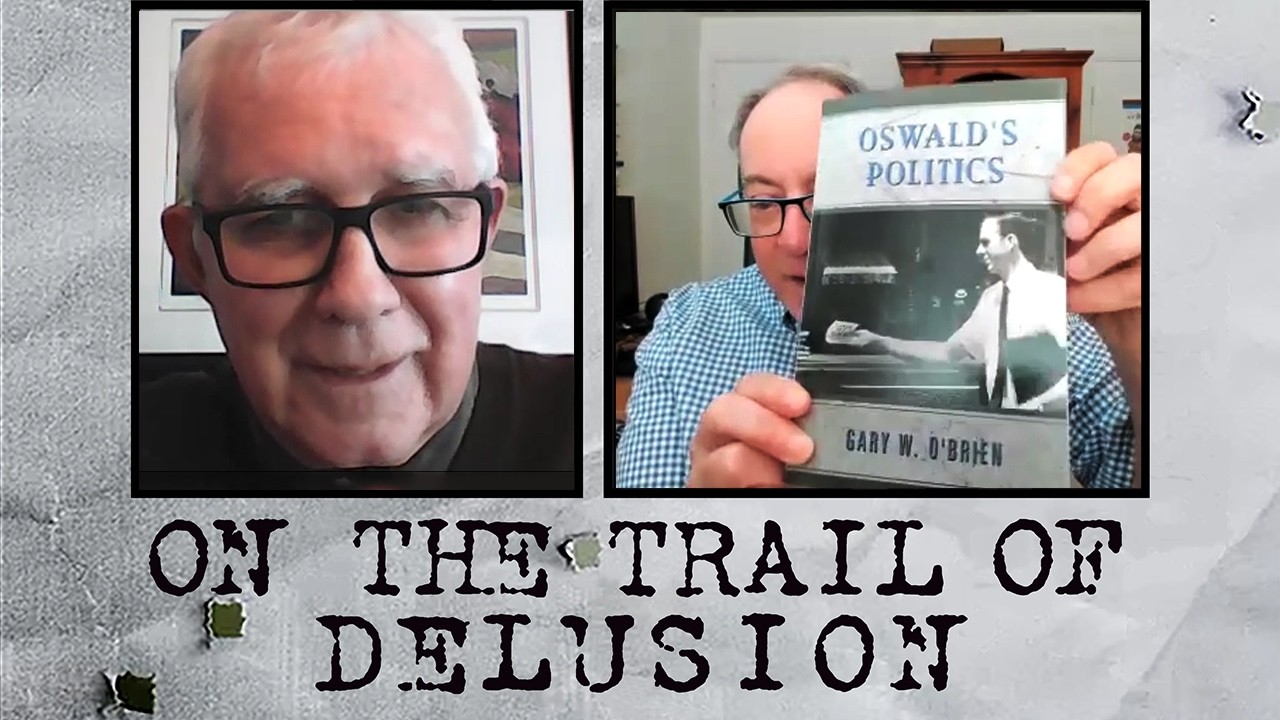
    I Was a Teenage JFK Conspiracy Freak Fred Litwin recounts how he became a JFK conspiracy freak at eighteen, and then slowly moved to believe that Lee Harvey Oswald was the lone assassin. This book demonstrates how the left and the right have used the JFK assassination to drive home myths about power in America. Buy on Amazon Conspiracy Freak: Image "As a young man growing up in the heyday of Kennedy assassination theorizing, Fred Litwin believed a conspiracy killed JFK. And then he grew, and he studied and he researched. The result is this volume, a thorough, cogent and meticulously argued case for a lone assassin. A seasoned conspiracy skeptic will learn new things here, and a conspiracy believer open to looking at the other side could do no better than this volume." John McAdams , Associate Professor of Political Science at Marquette University and author of JFK Assassination Logic: How to Think About Claims of Conspiracy “In Fred Litwin's marvelous book, he charts how he went from an early skeptic to someone dedicated to dissecting their arguments and carefully tearing them apart. He puts the final nail in the coffin of all the conspiracy theorists, who develop new ones as old theories are proven wrong. Everyone still concerned with JFK's death and thinks it's a mystery must read this book. They will be glad they did.” Ronald Radosh , Professor Emeritus of History at CUNY, opinion columnist for the Daily Beast and co-author of A Safe Haven: Harry S. Truman and the Founding of Israel “Mr. Litwin’s book is the best in many, many years in dealing with the truth about this horrendous piece of history…and exposing the fakirs, cons and opportunists who often call themselves ‘historians.’ A fine presentation!” Hugh Aynesworth , Author of November 22, 1963: Witness to History and JFK: Breaking the News "This is a great book for conspiracy buffs - and more important, for those who debunk such theories. Fred Litwin does a terrific job in blowing up the myriad JFK assassination scenarios, not least in demolishing The Fifth Estate's decades-long efforts to "uncover" the truth. The CBC's lead investigative show is revealed here to be more than slightly unhinged." J. L. Granatstein , Author of Who Killed Canadian History? Conspiracy Freak: Testimonials

  • About | On The Trail of Delusion

    A brief overview of "On The Trail of Delusion, Jim Garrison: The Great Accuser" and something about Fred Litwin Fred Litwin A Heritage of Nonsense: Jim Garrison's Tales of Mystery & Imagination is Fred Litwin's fourth book on the JFK assassination. His previous three books include Oliver Stone's Film-Flam: The Demagogue of Dealey Plaza, published in 2023, which examined his documentary series JFK Revisited. In 2020, he published On the Trail of Delusion -- Jim Garrison: The Great Accuser , which examined one of the great miscarriages of American jurisprudence. In 2018, he published I Was a Teenage JFK Conspiracy Freak , detailing his journey from believing in a JFK conspiracy at eighteen to slowly moving to believe that Lee Harvey Oswald was the lone assassin. Fred has also written articles for the National Post , the Ottawa Citizen , the Toronto Sun , C2C Journal , iPolitics , and the Dorchester Review , and is often a panelist on the CTV News Channel . In 2000, he founded NorthernBlues Music, a cutting-edge blues label that has released over 70 CDs and has garnered 12 Juno Award and more than 40 Blues Music Award nominations – three of which were for Album of the Year. In 2007, Fred started the Free Thinking Film Society to showcase films on liberty, freedom and democracy. The Society has shown over 100 events which include films, book launches and panel discussions. About: About

  • Documents | On The Trail of Delusion

    Actual documents from the Garrison Investigation; many online for the first time. Buy! Documents ARRB Interview with Fletcher Prouty Beckham HSCA interview Summary of Prouty ARRB Interview Sources for Oliver Stone's Film-Flam PDF Garrison's First Memo on Propinquity Leander D'avy HSCA Testimony Buy! Garrison's Second Memo on Propinquity Raymond Broshears HSCA Testimony Buy! Krulak Interview with Livingstone 00:00 / 10:04 McMaines Deposition First David Lifton article in Open City Second David Lifton article in Open City Complete Bethell-Billings Diaries, PDF Complete Bethell-Billings Diaries, Word format Thomas Beckham HSCA Deposition Nagell v. United States 1982 Garrison's Lead File November 1967 Bethell & Billings Diaries Documents: Files Thomas Edward Beckham Oct 9 1977 HSCA interview Beckham HSCA Oct/1977 00:00 / 15:47

View All

Subscribe Form

Thanks for submitting!

  • Facebook
  • Twitter

©2020 by On The Trail of Delusion. Proudly created with Wix.com

bottom of page