Search Results
Search this site
1274 results found with an empty search
- Ruth Paine, R.I.P. (1932 - 2025)
From left to right: Thomas Mallon, Fred Litwin, Ruth Paine, Matt Kordelski (behind Ruth) and Frank Badalson.at the Ruth Paine house in Irving. It was very sad news to hear that Ruth Paine died last Sunday at the age of 92, just a few days shy of her 93rd birthday. She was a very fine woman who was only guilty of being a good samaritan. Ruth took in Marina Oswald and helped raise her two children. It was a very good situation for both women -- Ruth got Russian language lessons, and Marina got some needed help. Conspiracy theorists unfortunately paint Ruth Paine as some sort of CIA asset. These baseless accusations are an incredible embarrassment -- this is yet another case of a good person besmirched by the conspiracy industry. Her Wikipedia page has this paragraph : Paine has expressed her belief in the official conclusion that Oswald acted alone and has denied conspiracy theorists' suggestions to connect her and Michael to their relatives and ancestors holding important government and business positions, such as her sister, Sylvia Hyde Hoke, being listed as an employee o f CIA . It's all complete nonsense. Who cares if her sister worked for the CIA? Tracy Parnell has done some excellent work in debunking the allegations about Ruth Paine. Greg Doudna has written a nice essay on Ruth Paine's work with ProNica in Nicaragua. David Von Pein has also defended Ruth Paine. I was very fortunate in November 2023 to hang out with Ruth and others at our annual get together in Dallas. It was the first time for her son Chris to see all the sights in Dallas, and Ruth had a great time leading the tour. She was in terrific shape and in very good spirits. It was an uplifting experience for all of us. Ruth at the Sixth Floor Museum with Stephen Fagin leading the group. Next to Ruth is her son Chris. On the right are Bill Brown and Ed Murray. Here is the gang at a dinner in Dallas. On the far right is her son Chris. Others in the top row are Mark Wright, Bill Brown, Freda Dillard, Scott Maudsley, David Morley and myself. On the bottom row are Ed Murray, Joe Alesi, Frank Badalson, Ruth, Matt Kordelski and Les Parson. And here we all are at Ruth's talk at the Irving Arts Center. One day I might write a book about the many victims of the conspiracy industry -- Ruth Paine, Clay Shaw, David Ferrie, Kerry Thornley, J.D. Tippit, Larry Crafard, Edgar Eugene Bradley, Breck Wall, Carlos Bringuier, Carlos Quiroga, Louis Bloomfield, Dr. George Burkley, Allen Dulles, E. Howard Hunt, Sergio Arcacha Smith, Howard Brennan, Perry Russo, George Mantello, Roger Craig, and Dean Andrews. Let me know if I have left anybody off the list. R.I.P., Ruth Paine. Update This photo was taken after a talk Ruth gave at the Sixth Floor Museum in November 2019. Previous Relevant Blog Posts A Question for Max Good from Burt Griffin Here is a letter from Burt Griffin, counsel for the Warren Commission, to Max Good, producer of a film about Ruth Paine. The CIA's Dinner in Dallas Guess who sponsored our dinner in Dallas?
- Yet Another Morley Nothingburger
Once again, Jefferson Morley has come up with another nothingburger. But it sure sounds good! Angleton vetted assassins in late 1963? This is typical Morley overreach. Morley has long been interested in Herminio Diaz, who was accused by Dick Russell of being one of the gunmen on the grassy knoll. I warned back in July that more nothingburgers were on the way . This what I wrote back then on Diaz: CIA File of Herminio Diaz Garcia Some conspiracy theorists believe that Garcia was a grassy knoll assassin. I have discussed this in a few blog posts: Jefferson Morley asks why "what the CIA knew about Herminio Diaz is still off limits." Was Herminio Diaz a Grassy Knoll Assassin? There is absolutely no evidence to tie Diaz to the assassination, except for some propaganda from Fabian Escalante who ran Cuban intelligence. The file that Morley wants is not in the JFK collection, and I see no reason for it to be released. Well, Morley convinced Luna to get CIA Ratcliffe to release the Diaz file . It must be nice to have a private funnel for documents, and to have first crack at getting out your narrative. Here is a somewhat larger file from the CIA website. It appears to have been released on June 11, 2025. And guess what? There's nothing that can link Diaz to the JFK assassination. Even Morley realizes that: The file does not contain any evidence to support the claim (made most recently in Rob Reiner and Soledad O’Brien’s popular 2023 podcast, “Who Killed JFK?”) that Diaz was involved in JFK’s assassination. The allegation was based on previously reported statements of two friends of Diaz and the former chief of Cuban counterintelligence who interrogated one of th em. Here is some basic biographic details on Diaz from the file: He was killed in May 1966, trying to infiltrate Cuba: The only way that Morley can make any of this sound suspicious is to put Diaz's name in the same paragraph as Oswald: On Oct. 4, 1963, Angleton aide Jane Roman signed for an FBI report on Oswald’s recent arrest for fighting with CIA-backed Cubans in New Orleans (who were handled by Joannides). Four days later, Angleton’s staff received a cable from the Mexico City station saying a wiretap had picked up an American named Lee Oswald calling the Soviet Embassy. What did headquarters know about him? An extraordinary and revealing coincidence occurred on October 10, 1963. On that day, one known assassin, Herminio Diaz, was interrogated in Miami while Angleton’s aides at CIA headquarters in Langley, Virginia, studied the file of a future accused assassin, Lee Oswald. Add Angleton's name into the mix and you really get something suspicious. As usual, Morley make other unjustified leaps in logic. For instance, he discusses Oswald and believes that some of his behavior should have been cause for concern: He had contacted a presumed KGB officer in Mexico City (a potentially treasonous act). But Oswald had not contacted Kostikov. He just went to the Soviet Embassy and Kostikov was on duty. Morley makes it sound like Oswald wanted to meet with a KGB agent. What's next? I guess the Bill Harvey travel records will be next. And that will prove to be yet another Morley nothingburger. Stay tuned. Previous Relevant Blogs Posts on Jefferson Morley's Congressional Testimony Jefferson Morley's Congressional NothingBurger An analysis of Congresswoman Luna's Congressional Hearings In Search of the Oswald Operation, Part One An FBI memo that quoted James Angleton is used by Morley to reach an unwarranted conclusion. In Search of the Oswald Operation, Part Two Morley misreads Angleton's testimony before the HSCA. In Search of an Oswald Operation, Part Three Morley believes a document proves the CIA did not believe that a lone gunman killed JFK. Update on the Heath Memo Additional documents relevant to Part Three. In Search of an Oswald Operation, Part Four Morley claims that there is some connection between the suicides of Gary Underhill, Charles Thomas, George de Mohrenschildt, and the overdose death of Dorothy Kilgallen. In Search of an Oswald Operation, Part Five Morley believes that Agustin Guitart was spying on pro-Castro forces in New Orleans Previous Relevant Blog Posts on Jefferson Morley Richard Russell and the Warren Report Richard Russell always believed that Oswald was the lone gunman. Was Hoover's Warren Commission Testimony Altered? An article by Chad Nagle, on Morley's Substack, gets it wrong on Hoover's testimony. My Quillette Article on Morley's Nothingburger My latest article for Quillette.com CBS Practices Stenography The recent segment on CBS about Morley and JFK documents was not journalism. Lee Harvey Oswald was not under Surveillance Morley's list of six CIA operations do not prove that Oswald was under surveillance. The CIA's Pro Bono Lawyers Morley claims the SpyTalk authors are working as pro bono lawyers for the CIA. Did the CIA Know Oswald's State of Mind? The CIA was just quoting from a State Department memo. SpyTalk on the Joannides' File, Part Two SpyTalks replies to Jefferson Morley. The Illusion of a Smoking Gun Gerald Posner on the Joannides' file. Fact Checking Morley's Fact Check Morley's Fact Check on SpyTalk needs a fact check. SpyTalk on Morley's Nothingburger Gus Russo and Michael Isikoff on the Joannides' personnel file. Jefferson Morley's Unbearable Lightness of Being Now that the entire personnel file of George Joannides has been released, Jefferson Morley has now published his unified theory of nothingness. More Morley Nothingburgers on the way Morley is requesting more documents -- they will reveal nothing about the assassination. Morley's Non-Story Hits the Press Morley got the headlines he wanted to a complete non-story. George Joannides and the HSCA Joannides did not come out of retirement to work with the HSCA. There Was No "Oswald Operation" There is no mention of an "Oswald Operation" in the Joannides' personnel file. The Parkland Doctors, Part Six Morley believes that Dr. Robert McClelland's recollections provides proof of a shot from the front. Here is the truth about McClelland. On the Loss of Occam’s Razor in the JFK Case A reply by Nicholas Nalli to Jefferson Morley. A Case Study in Redaction: The CIA's LIFEAT File Morley suspected a redacted file would reveal major secrets. It didn't. The Schlesinger Memo Unredacted! Several months ago, I posted an article, in association with several researchers, that showed what was contained in the redacted section of Schlesinger's memo. Jefferson Morley's Clairvoyance Morley somehow knows what is in the supposed 2,400 recently-discovered FBI files. Was Israel Behind the JFK Assassination? Morley discusses Israel with Tucker Carlson. Morley's Bad History Lesson Morley believes that the United States can never be great unless it solves the JFK assassination. Morley's List of 13 Documents Will Tell Us Little An analysis of the 13 documents Morley wants to see. The Schlesinger Memo, Again! Morley claims I am a CIA apologist and then misquotes me. For The Sake of Our Sanity - Release the Joannides File It would be worthwhile for the CIA to release the Joannides file just to stop the incessant posts from Jefferson Morley. Did Oswald Stay at a Luxury Hotel in Helsinki? Actually, Oswald stayed at two budget-priced hotels in Helsinki. Morley Keeps Asking the Same Questions He keeps asking the same questions, and we keep posting the same answers. The JFK Assassination and Truth Conspiracy authors are playing fast and loose with the facts. Was Herminio Diaz a Grassy Knoll Assassin? There is no evidence that Diaz was involved in the JFK assassination. Morley Misleads on Arthur Schlesinger's Memo on the CIA There are clues as to what is in a redacted section of Schlesinger's memo. Jefferson Morley's Podcast on New Orleans Lays an Egg Chad Nagle and Dan Storper's article on New Orleans gets everything wrong. Chad Nagle and Dan Storper Lay an Egg Believing Michael Kurtz is problematic. Is Jefferson Morley Seeing Double? Morley wrote that there are two redacted memos on CIA reorganization, but there is only one. He wrote about Goodwin's copy as if it was a different memo, rather than a copy of the Schlesinger memo. Jefferson Morley is wrong about "Who Shot John?" The phrase 'who shot John' does not refer to the JFK assassination. Jefferson Morley is Wrong on William Harvey, Again! Only one word is redacted in Harvey's deposition. Jefferson Morley is Wrong about Operation Northwoods, Again! There are no redactions in the Operation Northwoods document. Did Dorothy Kilgallen Have any Special Knowledge about the JFK Assassination? Kilgallen had nothing to tell. Morley's Interview of Marina Oswald Porter Fizzles! An underwhelming interview of Marina Oswald. Jefferson Morley: Able to Leap Intellectual Chasms in a Single Bound Morley often repeats stories and changes their meanings. There was NO Assassination Plot in Chicago Chad Nagle claims there was an assassination plot against JFK in Chicago in November 1963. One problem: There is no evidence of such a plot. Fred Litwin, CIA Apologist? A response to Morley's Substack post alleging that I am a CIA apologist. A Reply to Jefferson Morley on Bill Harvey A rebuttal to Morley's response to my post Was Bill Harvey in Dallas in November of 1963? Was Bill Harvey in Dallas in November of 1963? There is no credible evidence Harvey was in Dallas in November of 1963. Does it Matter Where Allen Dulles was on November 22, 1963? Morley repeats the claim that Dulles was at a CIA training center during the weekend of the JFK assassination. He wasn't. Jefferson Morley's Claims about Reuben Efron Morley's claims about Efron are all wrong. A Reply to Jefferson Morley regarding Operation Northwoods Morley responded to my article "The Truth about Operation Northwoods." Here is my reply. W. Tracy Parnell on Jefferson Morley W. Tracy Parnell is one of the best JFK assassination researchers out there. Here is his look at Jefferson Morley with several important articles. The Truth about Operation Northwoods Operation Northwoods can only be understood as part of the Kennedys' war against Cuba and Operation Mongoose. Jefferson Morley Responds to my Post on MK-Ultra and Jack Ruby And a response from me. Did Dr. Louis Jolyon West Ask to Examine Jack Ruby in November 1963? There is no evidence that Dr. West petitioned the court to examine Jack Ruby before his trial. Did the CIA use a MK-Ultra Psychiatrist to Interfere with Jack Ruby's Case? There is absolutely no evidence that Dr. Louis Jolyon West interfered with Jack Ruby's case. "JFK: Destiny Betrayed" Misleads Viewers on Oswald's "Hands Off Cuba!" Handbills, Part Four Jefferson Morley used a fake Oswald handbill in his press conference for the Mary Ferrell Foundation. Redactions, Redactions, Redactions... An examination of redactions in the JFK collection of documents. Jefferson Morley Doesn't Understand Jim Garrison's Homophobic Prosecution of Clay Shaw Morley doesn't understand Alecia Long's arguments about homophobia and Jim Garrison. Jefferson Morley asks why "what the CIA knew about Herminio Diaz is still off limits." Morley misses that a lot of redactions are actually available. Belief in a JFK Conspiracy Drops! Jefferson Morley's press conference presents evidence that belief in a conspiracy has dropped.
- Robert Reynolds on Accusations the CIA Tried to Obstruct the Release of Records
Robert Reynolds is THE expert on the JFK assassination records collection, and his latest article on his terrific blog debunks the notion that the CIA tried to do an end-run around the ARRB. jfkarc.info is the best source of information about JFK assassination records. The allegation is contained in a letter that Mark Adamczyk wrote to Congresswoman Luna: The hidden pocket that can and should be investigated going forward is the conduct of and obstruction by the National Archives with respect to JFK assassination records. On May 20, we heard Judge John Tunheim testify that the Assassination Records and Review Board (ARRB) never saw or had the opportunity to review many assassination records that were supposed to be at the National Archives for ARRB review and declassification decisions. Judge Tunheim also confirmed what he perceived to be the plan of agencies to “wait out” the ARRB, and then selectively turn over assassination records to the National Archives “at a later time.” As you are probably aware, these acts of obstruction of the ARRB mandate are and were a direct and flagrant violation of the JFK Act, and it is the chief reason why there is still not a complete and reliable collection of assassination records, despite President Trump’s recent Executive Order dated January 23, 2025. Reynolds finds six flaws in Adamczyk's argument. First, his claim suffers from weak documentation and poor research. The HSCA-CIA Segregated Collection constitutes the bulk of CIA records in the ARC. There is thus a huge amount of information on the handling of these records in the ARC itself. Beyond ARC records, there were also multiple Congressional hearings and extensive testimony on the Act, and the status of the records at the agencies and at NARA both before and after the passage of the Act. Yet the only ARC record, in fact the only document, that Adamczyk cites to support his theory is the survey memo. Second, Adamczyk makes illogical assumptions. Bibliographic confusion is a minor problem compared to the basic illogic of Adamczyk’s theory, which takes the standard complaint about access to CIA records and turns it on its head. The standard complaint is that CIA refuses to transfer its records outside their own storage vaults, keeping them out of the hands of researchers. When laws are passed or regulatory deadlines are set to make records more accessible, CIA delays for years, decades. Adamczyk, however, believes the CIA transferred documents ahead of schedule, and placed them in the non-CIA vaults of the National Archives, a place where CIA had carefully avoided storing its classified records in the past. It does this in order to somehow HIDE them. Third, his account of the JFK Records Act is flawed. The ARRB Final Report gives a brief survey of the legislative history of the JFK Act. The first proposals in Congress for record releases came in January. They did not spell out either the records to be released or the mechanisms for releasing them. Support built for a broad and systematic release throughout February, and the Act was introduced as a joint House-Senate resolution by Representative Louis Stokes and Senator David Boren on March 26. There was NO legislative proposal for an ARRB and for record by record review and release prior to this. Clearly Adamczyk did not bother to do any research at all on the history of the JFK Act. instead, he simply regards CIA and McDonald as clairvoyant. Clairvoyance is a common feature of conspiracy theories, with the conspirators KNOWING how events will take place long before they happen. This is an obvious flaw in Adamczyk’s claim. Fourth, Adamczyk ignores CIA decisions on the segregated collection of documents. McDonald recommended that CIA transfer the Segregated Collection to NARA. He gives a number of reasons for this, which Adamczyk describes in HIGHLY selective and tendentious terms. Whatever the reason for it, this was still only a recommendation from McDonald. Did Gates accept the recommendation? Adamczyk says nothing about this. He theorizes that NARA reached some sort of agreement with CIA to accept the HSCA records in a manner inconsistent with the JFK Act, so it seems he believes Gates DID accept McDonald’s recommendation, which was intended to defeat the Act. If one looks at the documentation available, however, it is clear Gates did NOT accept McDonald’s recommendation. Instead, in a public speech on February 21, Gates announced that he was “transferring custody of all documents CIA possesses relating to the assassination of President Kennedy to the Historical Review Program.” (See ARC 104-10427-10000). Fifth, there is no point to his theory. Logic and history aside, Adamczyk’s theory has another problem. He believes that “a massive trove of CIA assassination records from its HSCA collection was shipped to the National Archives before the ARRB could start its work. Assuming that is true, these records were not assigned Record Identification Form (RIF) numbers and properly catalogued for mandatory ARRB review.” Forget about WHEN the records were transferred. Assume that some records were not assigned RIF numbers. Assume that some records were not reviewed by the ARRB. What was the point of arranging this? If this “strategy” has any purpose, it is to conceal information the CIA does not wish to release. Concealing the information means concealing the records. So how were the records concealed? Sixth, Adamczyk's account of what happened is just not true. We can be sure, however, that in at least one case which matches Adamczyk’s hypothesis, NONE of these things happened. This is the case of the Oswald 201 file. Work on declassifying this file began early in 1992. When Gates addressed Senate and House committees on the JFK Act in May 1992, he presented the “pre-assassination” version of the file as an earnest of his intentions to open CIA records. Work on the Oswald 201 file continued after the release of pre-assassination records, and by September 1992 the first half of the 201 file was transferred to NARA. These records were NOT released in full, and they were released PRIOR to the signing of the JFK Act. Did this early transfer, lacking RIF sheets, interfere with the ARRB review of these records? It did not. The ARRB requested and received RIFfed versions of the records, reviewed them, and opened most of the redactions. ALL of these records are available today at NARA, all open in full. I've just given you a taste of what Robert has written. Please read his entire article. He's the real expert on the files. And check his blog regularly for important updates. Previous Relevant Blog Posts about Robert Reynolds A Case Study in Redaction: The CIA's LIFEAT File Robert Reynolds debunks a Jefferson Morley allegation. On the Trail of Delusion, Episode 16, Panel Discussion on the Document Releases A panel discussion with Robert Reynolds, Gus Russo, Larry Haapanen, Mark Allen, and Steve Roe. On the Trail of Delusion, Episode 15, Robert Reynolds on the Upcoming Document Releases Robert's second appearance on my podcast. Robert Reynolds on CIA Redactions in the JFK Collection Robert explains CIA redactions. Release of the JFK Redactions Will Tell Us Little The release of the redactions told us little about the JFK assassination. Don't Hold Your Breath about the Release of JFK Documents! Anybody expecting massive disclosures about the JFK assassination in the release of documents will be disappointed. Morley Misleads on Arthur Schlesinger's Memo on the CIA Robert Reynolds determined that it was the Department of State and not the CIA that wanted this memo redacted. Robert Reynolds Presentation on the JFK Assassination Files My first podcast with Robert. A Response to Matt Douthit Robert replies to Douthit's criticism of our podcast.
- Richard Russell and the Warren Report
A standard line from conspiracy theorists is that Warren Commission member Richard Russell was a skeptic of the Warren Report. Jefferson Morley published a short podcast on Warren Commission member Richard Russell. This week, as the 60th anniversary of the Warren Commission report on the assassination of President John F. Kennedy nears, JFK Facts presents original archival audio in which Warren Commission member Senator Richard Russell tells President Lyndon Johnson that he did not believe the commission’s “single bullet theory,” and did not rule out a possible conspiracy. The phone call between Johnson and Russell shows how frustrated Russell had grown with the Commission and the failure of his effort to include a dissent on the commission’s forensic findings. Johnson said privately he didn’t believe in the single-bullet theory either, but publicly, he would endorse the commission’s findings. Johnson wanted to get the Warren Commission investigation over and done with. By the end of the call, Johnson directed the conversation to a new subject: escalating the war in Vietnam. Richard Russell, despite his misgivings, signed the Warren Report. But his issues with the Report points to one of its weaknesses -- the failure to adequately explain the single-bullet theory. You can see this in Russell's written dissent : Had the Commission included proper trajectory diagrams showing the positioning of Kennedy and Connally, Russell might have been convinced. Had he noticed Connally's lapel flip, he might have been even more comfortable. And had the Warren Commission properly isolated the key frames from the Zapruder film, he might have noticed both Kennedy and Connally reacting to the same bullet. Frames Z223 - Z224: The Connally lapel flip. Frames Z225 - Z226: Kennedy and Connally react at the same time. The entire single-bullet sequence: And lastly, had he understood that Connally thought the single-bullet theory was compatible with his recollection, he might have felt differently. Have a look at what Connally said during the CBS News Inquiry on the Warren Report in 1967: (51:50) John Connally : "The only way that I could ever reconcile my memory of what happened, and what occurred, with respect to the one-bullet theory is that it had to be the second bullet that might have hit us both. Interviewer : Do you believe Governor Connally, that the first bullet could have missed, the second one hit both of you, and the third one hit President Kennedy? John Connally : That's possible. That's possible. Now the best witness I know doesn't believe that. The documentary interviews Nellie Connally who believes that Connally and JFK were hit by separate bullets. John Connally returns at 53:34: John Connally : Beyond any question, and I'll never change my opinion. The first bullet did not hit me. The second bullet did hit me. The third bullet did not hit me. Now, so far as I'm concerned, all I can say, with any finality, is that if there is, if the single bullet theory is correct, then it had to be the second bullet that hit President Kennedy and me. Walter Cronkite : The Governor insists that he heard a shot before he was struck, and that therefore he could not have been struck by the first bullet as the Warren Commission supposes. Despite his misgivings, Russell thought the Warren Report was "pretty good." Here is an excerpt from a telephone call between Russell and President Johnson from September 18, 1964: (page 250 in The Kennedy Assassination Tapes by Max Holland) Russell : Well, they were tryin' to prove that [the] same bullet that hit Kennedy first was the one that hit Connally ... went through him and through his hand, [and] his bone, into his leg and everything else. Just a lot of stuff there ... I hadn't ... couldn't didn't hear all the evidence, and cross-examine all of 'em. But I did read the record. So I just, ah ... I don't know, I was the only fella [commissioner] there that even ... practically, that suggested any change whatever in what the staff had got up. This staff business always scares me. I like to put my own views down. But we got a pretty good report. Johnson : Well, what difference does it make which bullet got Connally? Russell : Well, it don't make much difference. But they said they believe ... that the Commission believe[s] that the same bullet that hit Kennedy hit Connally. Well, I don't believe it. Note that Russell tells Johnson that "we got a pretty good report." Russell never deviated from his belief that Oswald killed JFK. Indeed the Warren Report notes that "there is no question in the mind of any member of the Commission that all the shots which caused the President's and Governor Connally's wounds were fired from the sixth floor window of the Texas School Book Depository." And have a look at what Richard Russell actually wrote about the Warren Report : Money Quote : There are several bits of evidence that have raised questions in my mind that are not answered by any evidence the Commission could procure. Among these are the extent of Oswald’s associations with the large number of Cuban nationals who were students in the educational institutions in Minsk during his residence there; the nature and extent of his relationship with foreign nationals who may have had a purpose in wishing to kill the President of the United States; the scope and number of communications he may have had with such persons after his return to the United States, and a detailed account of all of Oswald’s movements, contacts and associations on his secret visit to Mexico a few weeks before the assassination of the President. The inability to gather all evidence in these areas as well as a number of suspicious circumstances, deduced from the record as made, to my mind preclude the conclusive determination that Oswald and Oswald alone, without the knowledge, encouragement or assistance of any other person, planned and perpetrated the assassination. Does Morley and other conspiracy theorists support what Russell has written? That perhaps Oswald, the sole shooter, might have had encouragement or assistance? Somehow, I think the answer is no. Vincent Bugliosi, in his book Reclaiming History , notes that Richard Russell had the worst attendance record of any Warren Commissioner: (page 3580) Maybe if Russell had acted like a responsible public official, he would have learned the answers to his questions. But he did not. As indicated earlier in the text, his attendance at the hearings where ninety-four witnesses testified before the Commission was nothing short of disgraceful, Russell only attending the testimony of six witnesses (Meagher, Accessories after the Fact , p. xxx). Russell talked to the press in 1970: January 19, 1970 Money Quote : Russell appeared to agree with the commission's conclusions that Oswald was the man who fired the shots at Kennedy, and that he acted alone. "I think that any other commission you might appoint today would arrive at that conclusion," he said. A bad transcription of the Russell-Johnson phone call has led some to believe that Warren threatened Russell to sign the Warren Report. Max Holland has a pertinent article on this supposed theory: The first minutes of this telephone conversation between Johnson and his mentor, Senator Richard B. Russell, concern the latter's participation on the Warren Commission, which was created to investigate the Kennedy assassination. That very day, after 10 arduous months, the panel had put the finishing touches on what would become known as the Warren Report. Johnson asked Russell if the commission's findings were unanimous. Russell replied, according to Beschloss's transcript, “Yes, sir. I tried my best to get in a dissent, but they'd come 'round and trade me out of it by giving me a little old threat.” The implication is that the senior senator from Georgia, one of Washington's most powerful men, signed the Warren Report under duress; that he was in fundamental disagreement with one or more of the commission's key findings, but bowed to an unspecified threat. There's something wrong here. A Southern Democrat and staunch opponent of civil rights, Russell detested Chief Justice Earl Warren and the kind of jurisprudence the Warren Supreme Court practiced. In fact, Russell protested long and vigorously when Johnson informed the Georgian, on November 29, 1963, that he had been appointed to serve on the commission. It wasn't because Russell thought the duty unimportant; it was primarily because he didn't want to work with Warren on any matter. But Johnson insisted. “I don't give a damn if you have to serve with a Republican; if you have to serve with a Communist; if you have to serve with a Negro; if you have to serve with a thug,” he stated. So Russell did serve. Still, the notion that a grudging participant like Russell would ever bow to a threat from a panel headed by Warren is astounding. Listening to the tape, it becomes clear that Beschloss's transcription is incorrect. What Russell actually said is: “I tried my best to get in a dissent, but they'd come 'round and trade me out of it by giving me a little old thread of it.” Suddenly, the conversation makes sense. Russell came to the commission's last meeting on September 18 determined to register his opinion on two pivotal issues: whether a foreign conspiracy existed, and the sequence of the bullets that struck Kennedy and Texas Governor John B. Connally in Dallas's Dealey Plaza. Far from threatening the Georgian, Warren had labored that day to oblige him. The chief justice believed it was inordinately important for the commission to deliver a unanimous decision to the American people. If complete agreement proved elusive, Russell, of all the members, could not be the lone dissenter. Russell was to conservative opinion what Warren was to liberal: a standard bearer and powerful influence. So along with the other panel members, Warren kept massaging the final language until it incorporated Russell's views. Finally, the senator could only assent. Presenting Richard Russell as a dissenter to the Warren Report is a big disingenuous. A little more diligence by the Warren Commission might have answered his questions. And his objections to the single-bullet theory have now all been answered. Previous Relevant Blog Posts Paul Bleau Chokes, Part 12 Alfredda Scobey worked for Richard Russell and conspiracy theorists misinterpret what she has written and said. Alfredda Scobey's TV Appearance James DiEugenio doesn't understand her 1965 article. Paul Bleau Chokes, Part 9 Senator John Sherman Cooper is also presented as a dissenter, but that would not really be fair.
- Jim Garrison and the Media
Newsweek, March 17, 1969 Money Quote: The papers -- and in particular, the States-Item (circulation: 134,707) -- constantly trumpeted Garrison's charges (headlines above). On Feb. 9 The Times-Picayune (circulation: 196,345) ran one story on Charles I. Spiesel, a state witness, who led the jury to the French Quarter in search of a building he contended was the site of a party hosted by Shaw in 1963. It was not until the 28th paragraph on page 10 that readers learned Spiesel believed himself to be the target of a conspiracy whose members had hypnotized him, tapped his phone, and disguised themselves as his relatives. Here is the advertisement mentioned above that ran in the New Orleans newspapers on August 29, 1967: Previous Relevant Blog Posts Two States-Item Reporters were also working for Garrison! Hoke May and Ross Yockey were writing memos for Garrison while working for the States-Item . Clay Shaw's Acquittal Front page editorials against Garrison in the New Orleans newspapers. An Inside View of Jim Garrison's Office Charles Ward ran against Garrison for D.A. in 1969. Here is a speech in which he discussed the inner workings of Garrison's office.
- Art Kevin on Dean Andrews' Testimony in the Clay Shaw Trial
Dean Andrews outside the New Orleans Courthouse. His lawyer Monk Zelden is to his left. Art Kevin reported on the Garrison case for the L. A. Free Press . Art Kevin Looks Back at the Garrison Investigation An article from 1997 on the trial. Here are his immediate impressions of the case and the verdict, with some important observations about Dean Andrews: Money Quote : Now, back to the courtroom, and Dean Andrews is on the witness stand, under oath and under cross-examination by Alcock. After telling the court that Shaw was not Bertrand, Andrews refused to answer most questions put to him by Alcock, claiming self-incrimination or lawyer-client privilege. Ultimately, Judge Haggerty had to decide that Andrews had to answer Alcock, that he could not show "only one side of the coin", as he put it. And then Dean Andrews cracked. This peculiar little man bared his soul to a hushed courtroom. Andrews testified that he'd lied to the Warren Commission about a man calling him up and wanting to defend Oswald. He said he'd plucked the name Clay Bertrand from a party joke. Andrews said he was just a little man who always wanted to be a big man and wanted to be remembered -- but not as a perjurer. On Dean Andrews testimony, the entire Garrison case fell apart. Garrison himself had often said that it was Andrews' testimony before the Warren Commission that first put him onto the mysterious Clay Bertrand, who he would eventually claim was Clay Shaw. If there was no Clay Bertrand, then how could there be a case? The jury answered that question when they declared Shaw innocent. And it should be noted here that Andrews even blew the case for Garrison's chief prosecutor, James Alcock. At day's end, Alcock sat down with me on a bench and asked me haltingly if I believed Andrews. His head hung low as we spoke. Eventually, he got up and walked away saying, "I wish to God that Garrison had never read the Andrews' testimony." You can read Dean Andrews' testimony here. The search for Clay Bertrand in 1963 - 1964 reached into Garrison's office. The FBI and the Secret Service could not find him and everybody felt it was a figment of Dean Andrew's imagination. I believe that when Jim Garrison read Harold Weisberg's Whitewash in the fall of 1966, he was shocked to learn that Andrews repeated the story to the Warren Commission. That's why he immediately called Andrews for lunch -- to find out just who Clay Bertrand was. Previous Relevant Blog Posts The Search for Clay Bertrand A detailed look at the search for Clay Bertrand. Was Jim Garrison Searching for Clay Bertrand in 1963? Even more details on the initial search for Bertrand. Did Dean Andrews admit that Clay Shaw was Clay Bertrand? Conspiracy authors read too much into Weisberg's reporting of something Andrews told him.
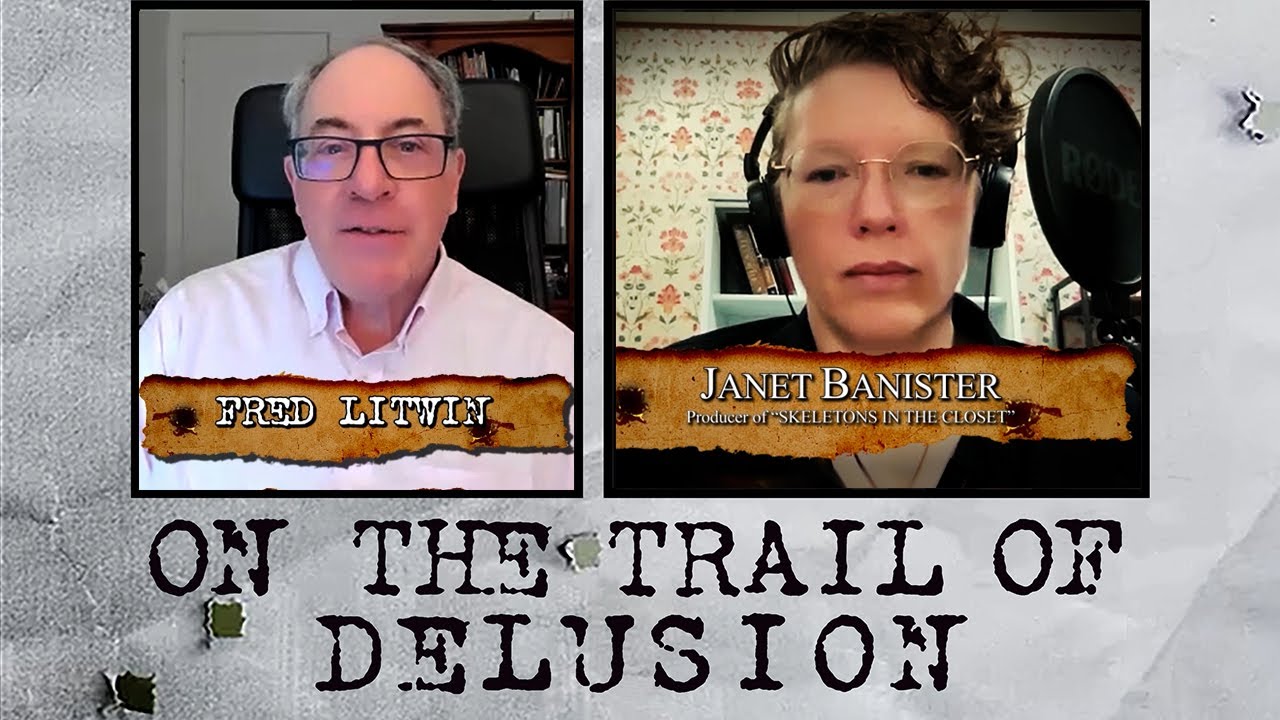
- On the Trail of Delusion, Episode 19 with Janet Banister
I was very pleased to be able to interview Janet Banister -- Guy Banister was her great-uncle. Here is her bio : Janet Banister is a choir and general music teacher by day and a podcast detective by night, unearthing long-buried family secrets and captivating historical true crime. As the creator of Skeletons in the Closet: Family Secrets, she weaves deep research, layered storytelling, and a love for all things mysterious. Janet has a podcast about Guy Banister who was one of Jim Garrison's many suspects in his "investigation" of the JFK assassination. Here is a link to her podcast about Guy: Skeletons in the Closet: Family Secrets. My books are available in Janet's bookshop! Please have a listen and buy a book! Previous Episodes of On the Trail of Delusion : Episode 1 My first guest was Robert Reynolds who is an expert on the JFK assassination files . Episode 2 Robert A. Wagner discusses his new book, JFK Assassinated. Episode 3 Gerald Posner discusses the JFK assassination and conspiracy theories. Episode 4 Dr. Martin Kelly, Jr., discusses conspiracy theories and the medical evidence in the JFK assassination. Episode 5 Steve Roe discusses the life of General Edwin Walker and Oswald's attempt to kill him. Episode 6 Gus Russo discusses his participation in the PBS Frontline documentary on Lee Harvey Oswald. Episode 7 Dave Perry tells some great stories about debunking JFK conspiracy nonsense. Episode 8 Nick Nalli explains some of the science behind the assassination. Episode 9 Alecia Long discusses Jim Garrison and his non-existent case against Clay Shaw. Episode 10 Don Carpenter discusses the life of Clay Shaw. Episode 11 Bill Brown discusses the murder of Officer J. D. Tippit. Episode 12 Eric Dezenhall discusses the relationship between the mob and JFK. Episode 13 Nick Nalli discusses the acoustics evidence and the Zapruder Film. Episode 14 Scott Maudsley discusses Lee Harvey Oswald's antisocial personality disorder. Episode 15 Document expert Robert Reynolds discusses what to expect in the upcoming JFK assassination file releases. Episode 16 A panel discussion on the document releases with Fred Litwin, Gus Russo, Robert Reynolds, Larry Haapanen, Mark Allen, and Steve Roe. Episode 17 An interview with author Michel Gagné about conspiracy theories. Episode 18 An interview with Phil Tinline about his book, Ghosts of Iron Mountain . Previous Relevant Blog Posts on Guy Banister The Decline of Guy Banister Banister's mental health was in decline in 1964. Was Guy Banister's Office at 544 Camp Street? Guy Banister's office was at 531 Lafayette and his office was not connected to the office at 544 Camp Street. Was Guy Banister a CIA/FBI Mastermind? Guy Banister couldn't pay his rent in 1964 and was evicted. Mancuso's Restaurant Some pictures of Camp and Lafayette streets. "JFK Revisited" Misleads on Guy Banister Oliver Stone's so-called documentary, JFK Revisited: Through the Looking Glass , makes the claim that Guy Banister gave Lee Harvey Oswald an office at 544 Camp Street in New Orleans. Did Delphine Roberts see Oswald in Banister's Office? Roberts was interviewed by Garrison's office in 1967 and she said nothing about seeing Oswald in Banister's office. Did Delphine Roberts See Lee Harvey Oswald in Banister's Office? (Part Two) Mary Brengel worked for Banister for a few months, and she also did not see Oswald in the office. Did David Ferrie Speak to Clay Shaw on the Telephone from Guy Banister's Office? Joseph Newbrough, who worked for Banister, told PBS Frontline that Banister's office was not connected to 544 Camp Street. Did David Ferrie Introduce Jack Martin to Lee Harvey Oswald in Banister's office? Jack Martin loved to tell stories. He said nothing about Oswald being in Banister's office when he blabbing to the FBI and the Secret Service in 1963 and 1964. Exclusive: Garrison Tells the HSCA about Guy Banister Garrison told the HSCA some ridiculous stories about Banister. Why did Guy Banister Pistol-Whip Jack Martin? The film JFK explanation is not right. Exclusive: Jim Garrison Talks to Jack Martin Jim Garrison interviewed Jack Martin in his office on December 14, 1966. Here is a link to a tape recording of that interview and a transcript. Martin talks about seeing Oswald in Banister's office with Sergio Arcacha Smith. But there are problems with his story.
- Victor Navasky Reviews Mark Lane's "A Citizen's Dissent"
Victor Navasky would go on to become editor of The Nation. This review is from the New York Times of July 14, 1968: Money Quote: One could, I suspect, go on ad infinitum. I know that honest men differ over where context stops and distortion begins: I know that many authors miss deadlines and aren't penalized; and I know that producers' assistants (even wives) have been known to tell disappointed guests one thing and their boss another. Therefore the main moral I would urge on Mark Lane is a heightened sensitivity to the unreliability of so-called eyewitnesses, even when the witness is the victim and the victim is oneself. Previous Relevant Blog Posts on Mark Lane Mark Lane and Jonestown A New York Times profile of Lane and his involvement with Jonestown. New York Times Profile of Mark Lane An apt profile. Nightmare Brought to Life An opinion piece by Anthony Lewis in the New York Times on Mark Lane and Jonestown. Mark Lane, Again An opinion piece from the Washington Post Mark Lane: A Bent for the Macabre Side A good opinion piece from the Philadelphia Bulletin . Sylvia Meagher Corresponds with Philippe Labro Meagher tells Labro a story about Mark Lane. Mark Lane and The Progressive Even a left-wing magazine like The Progressive found Mark Lane hard to take. Mark Lane on Clay Shaw Mark Lane's addition to the 1992 edition of Rush to Judgment is eye opening. Mark Lane on the Joe Dolan Show Lane tells Dolan about Garrison's amazing evidence. Did the CIA Try to Kill Mark Lane? Lane makes a startling allegation. Mark Lane: The Left's Leading Hearse-Chaser A profile from Mother Jones magazine. Mark Lane vs. Sylvia Meagher Lane and Meagher feuded about a blurb for her book. The Case Against Mark Lane A profile from Esquire Magazine . Mark Lane saw a conspiracy - as usual An article from the Tampa Bay Times . The Mark of Zorro An Anthony Lewis column on Mark Lane from 1978. Mark Lane's Scholarship! Howard Roffman finds that Mark Lane's scholarship is lacking. Mark Lane, Conspiracy Addict A profile of Mark Lane in Newsweek . Mark Lane offers to introduce Jim Garrison to "Mr. Candy" Mark Lane offers to introduce Jim Garrison to a witness that, for $25,000, would tie Jack Ruby with Clay Shaw. Redactions, Redactions, Redactions... This post has a good case study of how Mark Lane exploited a redaction in a document.
- Dr. Edwin Weinstein's Letter to the Army about Richard Case Nagell
In 1973, Richard Case Nagell was trying to get a full disability pension from the government, and he had Dr. Edwin Weinstein, who had examined him in 1955, write a letter on his behalf: Nagell got nowhere with the Army Board for the Correction of Military Records and he sued the military for retirement disability. Here is his fourth amended petition from that case: Here is how he described his wounds and condition: You can read the rest. Here is the military's response to Nagell's petition. The military's position was that Nagell returned to duty after his injuries and had some positive reviews. There was no need to declare him disabled from the time of his plane crash. Nagell eventually won this case and was awarded twenty thousand dollars. Additional Posts on Richard Case Nagell Richard Case Nagell's Stasi File Here is the complete Stasi file on Nagell along with a translation. A Wrap-Up of the Richard Case Nagell Story A good overview of the Nagell story. Why do People Believe the Richard Case Nagell Story? John Barbour, an unabashed fan of Jim Garrison, goes on a rant about Richard Case Nagell. Why does he believe Nagell's story? Was Richard Case Nagell Questioned in Moscow? Nagell claimed that the East Germans sent him to Moscow for questioning. There is no evidence in the Stasi files that the did that. The Importance of Richard Case Nagell to Some Conspiracy Theorists Was Richard Case Nagell the "Most Important Witness There Is"? Jim Garrison and a few conspiracy theorists think Nagell is a very important witness. But is he really? Genesis of the Richard Case Nagell story Did David Kroman Crack the JFK Assassination Conspiracy? David Kroman met Richard Case Nagell at the Springfield Medical Center for Federal Prisoners. Stephen Jaffe, a Garrison volunteer, wrote a memo, relating Nagell's story through the eyes and ears of David Kroman. Richard Case Nagell Shoots Up the State National Bank in El Paso... Nagell was convicted of armed robbery and was sentenced to ten years, but his conviction was overturned because of startling new evidence. Richard Case Nagell and the JFK Assassination Did Richard Case Nagell Have Foreknowledge of Oswald and the JFK Assassination? There is no credible evidence that Nagell had any foreknowledge of either Lee Harvey Oswald or the JFK assassination. Did Richard Case Nagell Meet Lee Harvey Oswald? Nagell claims he met Oswald in Japan, Texas, Mexico City, and New Orleans. There is no credible evidence that he ever met Oswald. Did Richard Case Nagell Warn Fidel Castro about the Assassination? Nagell went to Cuba and met with Fidel Castro and even played ping-pong with the man. Insane Conspiracy Theories about Richard Case Nagell Who was Leon Oswald? Richard Case Nagell said that he knew the two Oswalds - Lee Harvey and Leon. Some conspiracy theorists believe this madness. Richard Popkin Melds the Second Oswald Theory with the Richard Case Nagell Story Combine one part crazy and one part ridiculous and what do you come up with? An early attempt at a unified conspiracy theory of the JFK assassination. Paul Bleau's Plots Was there a plot in Los Angeles against JFK? Two Smoking Guns of the Richard Case Nagell Story Is this Document the Smoking Gun on the Richard Case Nagell Story? Nagell sent conspiracy theorist Dick Russell one page of a military intelligence file which seemed to indicate that he was monitoring Oswald and his wife on behalf of the CIA. But does the whole document really show that? Dick Russell's Second Smoking Gun on the Richard Case Nagell Story Did Richard Case Nagell have an Oswald Military ID in his possession when he was arrested in September 1963? Richard Case Nagell and Jim Garrison Why Didn't Richard Case Nagell Testify at Clay Shaw's Trial? Richard Case Nagell believes that he wasn't called to testify at Clay Shaw's trial because his testimony would have blown up Jim Garrison's case. Jim Garrison Discusses Richard Case Nagell At a conference in September 1968, Garrison and his investigators discuss his face-to-face meeting with Nagell in New York City. Richard Case Nagell Sends Jim Garrison on a Wild-Goose Chase William Martin, an Assistant District Attorney working for Jim Garrison, tried to retrieve a tape that Nagell said contained the voices of three JFK assassination conspirators. Richard Popkin Writes Garrison About Richard Case Nagell Richard Popkin, author of "The Second Oswald," writes Jim Garrison about Richard Case Nagell. Garrison staffer Tom Bethell thought the Nagell lead was useless. Richard Case Nagell's Mental Health Richard Case Nagell's Letter to JFK Nagell wrote to JFK in 1963 looking for help. Richard Case Nagell's Lawsuit A lawsuit by Nagell proves his mental issues. Richard Case Nagell's Fight for a Disability Pension Nagell won a full disability pension in 1982 and the 60+ page court case provides complete details on his mental problems. Why Did Richard Case Nagell Shoot Up the First National Bank of El Paso? Richard Case Nagell told a psychiatrist why he shot up the bank in El Paso in 1963. Richard Case Nagell's Family Speaks about his Mental Health The FBI spoke to Nagell's ex-wife, his mother, his sister, and one of his friends. They all agreed that Nagell had significant mental health problems. Richard Case Nagell Visits Europe in 1969... Nagell visited the American consulates in Zurich and Barcelona in 1969. He was a deeply disturbed man. Richard Case Nagell in Europe, 1970 Edition More shenanigans in Europe in 1970. Richard Case Nagell Visits Zurich His mental issues were apparent during this visit. Richard Case Nagell's Evidence Richard Case Nagell's Nonexistent Evidence None of the so-called evidence that Nagell promised would materialize on his death has shown up. Did this evidence ever exist? Thomas Samoluk on Richard Case Nagell Samoluk was Deputy Director of the ARRB and he doesn't think much of the Nagell story. You can read the whole Nagell story in my book, A Heritage of Nonsense: Jim Garrison's Tales of Mystery and Imagination .
- A Vincent Salandria - Sylvia Meagher Exchange on Jim Garrison
Vincent Salandria I've written before about Sylvia Meagher's falling out with Vincent Salandria because of his support of Jim Garrison. Well, just before the Clay Shaw trial, Salandria had a proposition: Here is Sylvia Meagher's reply: When Sylvia Meagher mentions "the code" she is referring to Garrison's cryptologic abilities. Jim Garrison's Code and Sylvia Meagher A complete look at the code nonsense. Jim Garrison, the Cryptologist Garrison's codes and a nice spoof on Garrison. Was Oswald's Alias a Code for a Jack Ruby Stripper? An hilarious look at another Garrison code, one which was ridiculed by Sylvia Meagher. Jim Garrison wasn't the only master decoder A spoof of Garrison's silly beliefs on codes. And here is a link about Meagher's reference to "emissaries from RFK." Did RFK Tell Garrison that there were guns between him and the White House? Did RFK send a message to Jim Garrison? To her credit, Meagher understood what Garrison was all about. Previous Relevant Blog Posts regarding Sylvia Meagher and Jim Garrison Sylvia Meagher Corresponds with Philippe Labro Philippe Labro was a French journalist who covered the JFK Assassination for France-Soir . Sylvia Meagher writes Bud Fensterwald Fensterwald invites Meagher to join his organization. She refuses because of Jim Garrison. Sylvia Meagher's Review of "The Kennedy Conspiracy" by Paris Flammonde A scathing review of Flammonde's book about the Garrison investigation. Mary Ferrell and Sylvia Meagher Discuss Jim Garrison An exchange of letters about Jim Garrison. Jim Garrison's Code and Sylvia Meagher Garrison comes up with a crazy code and Sylvia Meagher calls him out. Sylvia Meagher's Ode to the District Attorney of New Orleans Meagher also wrote poetry. Sylvia Meagher Writes Clay Shaw with an Idea Meagher's very good idea shows that Garrison didn't care to learn the truth. Kerry Thornley Writes Sylvia Meagher in 1970 Thornley tells Meagher about an article illustrating Garrison's pre-occupation with the JFK assassination. Tom Bethell Writes Sylvia Meagher about the Shaw Trial Bethell wrote Meagher about Charles Spiesel and his ridiculous testimony at the Clay Shaw trial. Sylvia Meagher's Letter to Look Magazine Sylvia Meagher's terrific letter to Look Magazine in response to their article "The Persecution of Clay Shaw." Sylvia Meagher Congratulates Clay Shaw On His Acquittal She was very pleased with his acquittal. Sylvia Meagher and Jim Garrison, Part One Meagher writes Clay Shaw a letter and his response is just terrific. Sylvia Meagher and Dr. Cyril Wecht Discuss Jim Garrison Dr. Wecht didn't think too much of Garrison, either. Mike Farrell, of M*A*S*H fame, and Sylvia Meagher Meagher educates Farrell on Jim Garrison. When will Oliver Stone Admit he was Wrong about Clay Shaw? A plea to Oliver Stone with a compilation of Meagher's writings about Jim Garrison. Sylvia Meagher on the Clay Shaw Case Howard Roffman writes a letter to Harold Weisberg about Sylvia Meagher. Penn Jones' Phone Call with Sylvia Meagher This phone call broke their relationship. Sylvia Meagher and Jim Garrison, Part Two An unpublished Meagher memo on the trial of Clay Shaw. Sylvia Meagher and Jim Garrison, Part Three - a never before published article by Meagher Another unpublished Meagher memo on the Garrison investigation and Warren Report critics. Garrison's Playboy Interview - What Couldn't Be Printed Sylvia Meagher's letter to the Editor regarding Garrison's interview in Playboy Magazine. Sylvia Meagher's Reaction to the Verdict in the Shaw Trial Meagher writes Harold Weisberg with her comments on the verdict. Two Letters to Jim Garrison about "A Heritage of Stone" James Phelan and Sylvia Meagher write Garrison letters about his book. Kerry Thornley writes Sylvia Meagher An exchange of letters between Thornley and Meagher. Did RFK Tell Garrison that there were guns between him and the White House? Meagher writes Thornley about Lane's comment on RFK. Was Jim Garrison Napoleon or Rasputin? Meagher writes Thornley with an opinion. M. S. Arnoni and Sylvia Meagher Take On Jim Garrison... Exchange of letters between Meagher, Arnoni and Garrison. Jim Garrison Blows His Top Meagher writes Weisberg about the damage Garrison is doing to critics of the Warren Report. James Phelan Writes to Richard Popkin Meagher replies to the New York Review of Books regarding Popkin's article on Garrison. Sylvia Meagher Replies to Richard Popkin An exchange of letters between Popkin and Meagher.
- Was Hoover's Warren Commission Testimony Altered?
J. Edgar Hoover Jefferson Morley's Substack just featured an article by Chad Nagle about J. Edgar Hoover's testimony before the Warren Commission . Nagle links to this document, which is an edited version of Hoover's Warren Commission testimony . FBI Director J. Edgar Hoover’s testimony to the Warren Commission on May 14, 1964, has long been available publicly . But thanks to President Donald Trump’s Executive Order 14176 on Jan. 23, 2025, combined with the efforts of the House Oversight Committee’s Task Force on the Declassification of Federal Secrets , led by Rep. Anna Paulina Luna (R-Fla.), we now know that someone altered Hoover’s sworn statement to fit the “lone gunman” verdict of the Commission for publication in its final report in September 1964. Mary Ferrell Foundation (MFF) President Rex Bradford ran across the relevant page while preparing it for presentation on the MFF website and brought it to the attention of JFK Facts. The newly released file, in a section pertaining to the nature of President John F. Kennedy’s head wounds, shows the word “portions” penciled in before “of the skull,” while the typewritten words “the back” are crossed out. The document is available here . (Scroll down to the page numbered “6521” in the pdf.) Nagle's headline asks "who altered the FBI Director's testimony ...?" By the way, he doesn't mention that the autopsy pathologists did NOT say that "the back of the skull had been practically shot off." But, nothing of probative or evidentiary value was altered. Hoover's testimony was edited by several people for spelling, grammatical errors, and for a variety of misstatements. The first page of the document spells out exactly who was editing his testimony: There is nothing nefarious about this at all. After all, the FBI or the Warren Commission could have fixed Hoover's testimony without keeping this document, and allowing us to see exactly what was edited. You can see all sort of typos that had to be corrected. J. Edgar Hoover was the Director of the FBI. He frequently didn't know all the details of the JFK assassination case, and it's not unusual for people at the top to make factual mistakes. Jesse Curry was head of the Dallas Police force but he didn't know all the details. J. Lee Rankin discussed the edits with Belmont and Malley : They even inserted a paragraph into Hoover's testimony. Hoover was given a lot of deference in regards to his testimony. But the above memo has been out there for years and had the FBI been really nefarious, you'd never be reading about the edits and additions. In terms of the medical evidence, this is similar to the one about Gerald Ford "changing" the location of JFK's neck wound. And Nagle brings up the supposed confession by Gerald Ford that there was a conspiracy to assassinate JFK. Perhaps Nagle is not aware that Morley himself was a tad skeptical about this story . "Perhaps Giscard simply misunderstood what Ford said. As Giscard showed in a 2016 appearance, his command of the language is decent but he is not entirely comfortable speaking English." Morley's JFK Facts is grasping at straws. The best evidence for the location of JFK's wounds are the autopsy X-rays and photographs, and they conclusively show that JFK was only shot from behind. Previous Relevant Blog Posts on the Medical Evidence The Parkland Doctors, Part Six A look at Dr. McClelland's recollections over the years. Marilyn Sitzman on JFK's Head Wound Sitzman, who was standing right behind Abraham Zapruder, thoughts the shots came from the TSBD and that she clearly saw Kennedy's head wound over the right ear. John Stringer on JFK's Wounds and his Autopsy Photographs Stringer was very clear that he took the photographs of JFK's brain. The Parkland Doctors, Part One Attending physicians often make mistakes in determining the nature of gunshot wounds. Should we care what the Parkland doctors think? The Parkland Doctors, Part Two A look at what the Parkland doctors wrote and what they said. The Parkland Doctors, Part Three The Boston Globe interviewed some of the Parkland doctors in 1981. The Parkland Doctors, Part Four A 1992 article in the Journal of the American Medical Association has some interesting comments from a few of the Parkland doctors. The Parkland Doctors, Part Five An interesting interview with Dr. Robert McClelland. Why Autopsies are Needed The doctor treating John Lennon was mistaken about his wounds. Dr. Cyril Wecht Complains Wecht complains about the HSCA's forensic pathology panel. Dr. Cyril Wecht writes to Dr. Michael Baden Wecht has a suggestion for Dr. Baden. The Wecht Conclusion that Dare Not Speak Its Name, Part Two Wecht's memoir mentions his examination of the autopsy materials in 1972 but neglects to talk about his conclusion that the fatal head shot came from behind. The Wecht Conclusion that Dare Not Speak its Name James DiEugenio's obituary of Dr. Wecht leaves out his conclusion that the fatal head shot came from behind. Dr. Cyril Wecht (1931 - 2024) זיכ רונו לברכה My obituary for Dr. Cyril Wecht. Dr. Cyril Wecht Rules Out a Head Shot From the Front A letter from Dr. Wecht to Thomas Stamm on the head shot. Sylvia Meagher and Dr. Cyril Wecht Discuss the Head Shot A letter from Dr. Wecht to Sylvia Meagher on the head shot. "JFK Revisited" Misleads on JFK's Throat Wound Dr. Wecht believes that JFK's throat wound was one of exit. "JFK Revisited" Misleads on JFK's Brain, Again... Dr. Robert Kirschner's consultation with the ARRB explains a mystery in the documentary. "JFK Revisited" Misleads on the Weight of JFK's Brain JFK Revisited makes a big deal about the weight of JFK's brain and ignores a non-conspiratorial explanation. JFK Revisited Distorts John Stringer's Testimony Oliver Stone's so-called documentary makes it sound like the autopsy photographer said that he did not take the photos of JFK's brain that are in the current inventory, "JFK: Destiny Betrayed" Misleads on Dr. Charles Crenshaw Oliver Stone's so-called documentary series, JFK: Destiny Betrayed , features Dr. Charles Crenshaw to bolster its claim that President Kennedy was shot from the front. Viewers are not informed of Dr. Crenshaw's credibility problems. "JFK: Destiny Betrayed" Misleads on JFK's Head Wound, Part Three Oliver Stone's so-called documentary, JFK: Destiny Betrayed , misleads viewers on the opinions of Parkland Hospital doctors and Bethesda witnesses regarding JFK's head wound. "JFK: Destiny Betrayed" Misleads on the Harper Fragment Oliver Stone's so-called documentary series, JFK: Destiny Betrayed , misleads viewers into thinking the Harper fragment was occipital bone that came from the back of Kennedy's head. Dr. Joseph Dolce: Another Problematic Witness from "JFK: Destiny Betrayed" Have a look at Dr. Joseph Dolce's bad judgment "JFK: Destiny Betrayed" Misleads on JFK's Head Wound, Part One Oliver Stone's so-called documentary series JFK: Destiny Betrayed uses a variety of supposed witnesses to allege that the wound in the back of Kennedy's head was one of exit. Audrey Bell is one such witness and she doesn't have much credibility. "JFK: Destiny Betrayed" Misleads on JFK's Head Wound, Part Two Oliver Stone's so-called documentary series, JFK: Destiny Betrayed , tries to make the case that because Parkland Hospital doctors saw cerebellum extruding from Kennedy's head wound, that it indicated an exit wound. "JFK Revisited" Misleads on Kennedy's Back Wound While Gerald Ford edited some language in the Warren Report, he did not change the location of the back wound. Autopsy photographs show exactly the location of the back wound. "JFK: Destiny Betrayed" Misleads on JFK's Autopsy Oliver Stone's so-called documentary series, JFK: Destiny Betrayed , alleges that autopsy pathologists were told to fit the wounds to a presupposed conclusion. On the Trail of Delusion, Episode 2 with Robert A. Wagner A podcast with Robert Wagner who has written an important book on the medical evidence.
- David Lifton's Camouflage Theory
This was an early theory of David Lifton's and has to rank among the craziest. Here is an excerpt from the May 1967 issue of Esquire Magazine: I can't find much that Lifton has actually written about this theory, but here is a memo that Sylvia Meagher wrote about a telephone call with Lifton on October 30, 1965 : Meagher was disturbed by Lifton's theory and she sent him this letter the next day: A few days later, Meagher wrote Lifton again : David Lifton took Meagher's advice and stopped talking about camouflage. However, he still thought there was some merit to the story. Here is an excerpt from a letter to Sylvia Meagher from March 21, 1969 : At some point, Lifton jettisoned this theory. There are some conspiracy theorists today who cling to theories, every bit as ridiculous as the Lifton's camouflage scenario. For instance, some people believe that JFK's brain was switched at Bethesda; that General Curtis LeMay was at the autopsy; that Clay Shaw conspired to kill JFK; and that there were multiple plots and multiple patsies after JFK in November of 1963. No amount of reasoning will change their minds. Update Hat Tip to Gus Russo -- the book The Scavengers and Critics of the Warren Report by Richard Warren Lewis (based on an investigation by Lawrence Schiller) mentions Lifton's theory: (page 172 - 173) Lane, however, has steered clear of a related survey undertaken by David Lifton, a twenty-five-year-old graduate student in engineering at UCLA. His census of the trees visible on the grassy knoll on the day of the assassination conflicts with the number of trees existing today.. According to LIfton, one tree is missing. He theorizes that an artificial tree was installed on Dealey Plaza, prior to the assassination, and that camouflaged snipers who might have hit Kennedy were concealed beneath it. To further document this amazing find, he enlarged, up to twenty times their original size, sections of photographs taken from the twenty-six volumes and various periodicals. The photographs have been blown up completely beyond reality In the shrubbery of the grassy knoll he has located several forms which he interprets as assassins firing at the motorcade. One of them looks as if he is wearing a Kaiser Wilhelm helmet. Others wear electronic headsets and man periscopes and machine guns on a platform operated by hydraulic lifts. One of his imagined finds resembles General Douglas MacArthur. None of these illusions is visible on the original prints Update 2 Here is an excerpt from a letter that Sylvia Meagher sent to Maggie Field on August 26, 1965: Update 3 Here is a CBS memo on David Lifton: Previous Blog Posts on David Lifton David Lifton Writes to Oliver Stone Lifton writes to Oliver Stone about Jim Garrison. David Lifton (1939-2022), R.I.P. My obituary for David Lifton