Search Results
Search this site
1274 results found with an empty search
- Was Lee Harvey Oswald Clairvoyant?
Hat tip: Jerry Shinley and Paul Hoch provided the research for this blog post. One of the problems in the debate on the JFK assassination is that some people move right to conspiratorial explanations before exploring more mundane solutions. Just crack open the latest conspiracy book and you'll see this principle in action over and over again. For instance, any redaction in a document can only be explained by something that is nefarious. If you don't like the Sixth Floor Museum, that can only be because it is a false flag operation. The "back and to the left" movement of JFK's head can only be explained by a shot from the front. The George Joannides file clearly contains evidence of an "Oswald operation." I am sure that you that come up with many other examples. Here is one that many people aren't aware of. James DiEugenio, in his 2012 book Destiny Betrayed, alleges that Oswald's leafletting in New Orleans was some sort of "set-up." On August 9, Bringuier and two cohorts angrily confronted Oswald while he was acting pro-Castro. This is when he was passing out his Fair Play for Cuba literature on Canal Street. This created a minor fracas. And arrests were made for disturbing the peace. The arresting officer, Lieutenant Frances Martello described it as saying that Oswald “seemed to have set them up, so to speak, to create an incident, but when the incident occurred he seemed absolutely peaceful and gentle.” The idea that this incident was “set up” is fortified by the fact that Oswald described the incident to the national office of the FPCC on August 4, five days before it happened. In this letter he described being attacked by Cuban exiles in the street and then being approached by the police. He then added, “The incident robbed me of what support I had, leaving me alone.” Further evidence it was stage managed is that when he was booked, Oswald turned over the out of print Corliss Lamont pamphlet from 1961. In other words, the evidence more than suggests that Oswald was acting out a scene he had written five days in advance, with props furnished to him by either Banister or Phillips. Here is Oswald's letter: Here is a typed copy of the letter: The book Chokeholds also mentioned this letter: The problem with this letter was that the incident Oswald seems to be referring to occurred on August 9th, more than a week after he first wrote about it. Was Oswald describing a scenario for the upcoming theatrics on Canal Street over which he would be arrested and arraigned in court? So, how could Oswald have described what happened in a letter to V. T. Lee before it actually happened? Well, it turns out that Oswald had an encounter in June, and he was writing about that incident in his letter to Lee. In June 1963, Rafael Aznarez wrote the FBI about some trouble he had on Canal Street. Here is the pamphlet: Right after the assassination, Aznarez wrote the FBI, and here is a typed copy: Here is the original letter in his handwriting: Here is the enclosure he sent the FBI: Hoover wrote back to Aznarez: Corroboration that Aznarez did encounter Oswald comes in the fact that policeman Girod Ray confiscated the same FPCC handbill when Oswald was leafletting at the U.S.S. Wasp on June 16, 1963. And that Lee Harvey Oswald sometimes paraded around with a homemade placard reading "Hands Off Cuba." Original here. And Carlos Bringuier described the placard: And I should add that the Aznarez affair was included in David Kaiser's 2008 book, The Road to Dallas. (page 214) Kaiser's footnote says the letter from Bringuier to Hoover was dated February 14, 1967, and here is his letter: Bringuier enclosed with his letter to Hoover a five-page memo he wrote to Jim Garrison, and he briefly mentioned Aznarez: He recommended that Garrison question Aznarez: I have not seen any evidence that Garrison talked to Aznarez. The ARRB tried to locate Aznarez in 1995: Here is a follow-up letter: It doesn't appear that they found him. DiEugenio's thesis that the incident with Bringuier was a "set-up" is false. Perhaps DiEugenio will issue a correction in the third edition of Destiny Betrayed, but I am not going to hold my breath. Blog Posts on the Fake Oswald Handbill James DiEugenio Refuses to Admit He Used Fake Handbills in "JFK: Destiny Betrayed" This was discussed on the Education Forum. Paul Bleau and the Fake Oswald Handbill Conspiracy theorist Paul Bleau featured a fake Oswald handbill in a podcast. "JFK: Destiny Betrayed" Misleads Viewers on Oswald's "Hands Off Cuba!" Handbills An analysis of the handbill used in Oliver Stone's so-called documentary, JFK: Destiny Betrayed. "JFK: Destiny Betrayed" Misleads Viewers on Oswald's "Hands Off Cuba!" Handbills, Part Two An examination of where the fake handbill came from. "JFK: Destiny Betrayed" Misleads Viewers on Oswald's "Hands Off Cuba!" Handbills, Part Three A look at James DiEugenio's use of the fake handbill. "JFK: Destiny Betrayed" Misleads Viewers on Oswald's "Hands Off Cuba!" Handbills, Part Four Jefferson Morley is the latest researcher to use a fake Oswald handbill. Previous Relevant Blog Posts on James DiEugenio James DiEugenio's Factoids about Howard Brennan DiEugenio gets the Brennan story wrong. James DiEugenio on Permindex: A Case Study, Part Three Was there a link between Ferenc Nagy and the OAS? James DiEugenio on Permindex: A Case Study, Part Two Information in a Time-Life memo originated from Paese Sera. James DiEugenio on Permindex: A Case Study A purported CIA memo is actually the notes of an HSCA researcher. The Sad Story of Ralph Yates DiEugenio repeats the story of Ralph Yates as told in James Douglass' s book JFK and the Unspeakable. Did Larry Crafard Impersonate Lee Harvey Oswald? DiEugenio misquotes a Warren Commission memo. James DiEugenio Refuses to Admit He Used Fake Handbills in "JFK: Destiny Betrayed" DiEugenio runs away from the evidence. James DiEugenio's Fanciful Tale about Hugh Aynesworth DiEugenio cites a Joan Mellen story about Aynesworth that has no documentation. The "Protector and Defender of the Garrison Faith" Strikes Again! James DiEugenio attacks another article about Oliver Stone. Was Oswald an Agent of the CIA? James DiEugenio is unaware that an HSCA report on Oswald and the CIA was actually published. Was Oswald an Agent of the CIA, Part Two Dan Hardway rebuts James DiEugenio. Just who does James DiEugenio work for? Why does James DiEugenio write for one of the major agents of Russian disinformation? My So-Called Libel of James DiEugenio Mr. DiEugenio thinks that I libeled him, but his accusations are all over the map. Anatomy of a James DiEugenio Citation Was Lee Harvey Oswald at an anti-Castro training camp in the summer of 1963? Anatomy of a James DiEugenio Citation, Part Two Was David Ferrie at an anti-Castro training camp in the summer of 1963? Anatomy of a James DiEugenio Citation, Part Three James DiEugenio accepts a phony story as fact. Fact Checking James DiEugenio, Part Two Bill Boxley was not a CIA plant. Fact Checking James DiEugenio Clay Shaw was not Clay Bertrand. Fred Litwin's Follies! A response to James DiEugenio about my writings. James DiEugenio's Lame Excuses for Fletcher Prouty Prouty couldn't back up any of his allegations when he was interviewed by the ARRB. You wouldn't believe the lame excuse offered up by DiEugenio. James DiEugenio's Lame Excuse for Oliver Stone Why does Oliver Stone support so many dictators? James DiEugenio Gets it all Wrong on Permindex/CMC DiEugenio has no understanding of Permindex/CMC The Scholarship of James DiEugenio - A Case Study DiEugenio gets it all wrong on the Mannlicher-Carcano The Scholarship of James DiEugenio, Part Two The conclusion on the Mannlicher-Carcano The Scholarship of James DiEugenio Over the past ten months, I have debunked every witness cited by DiEugenio regarding Clay Shaw and David Ferrie. Previous Relevant Blog Posts on Paul Bleau Death by Org Chart Paul Bleau finds a conspiracy in an organizational chart. Hale Boggs and the Warren Report Hale Boggs always supported the Warren Report. Did the Second Oswald Fly to Roswell? A rather insane story. Chokeholds Uses a Fake Story The book treats a Mort Sahl quote as if it was correct. Paul Bleau Chokes, Part 18 Chokeholds leaves out a lot of information about Aloysius Habighorst. Paul Bleau Chokes, Part 17 Bleau doesn't tell his readers about Roger Craig's credibility problems. Paul Bleau Chokes, Part 16 Bleau believes the Rose Cherami story. Paul Bleau Chokes, Part 15 Bleau claims the Shaw jury believed there was a conspiracy in the JFK assassination. This is just not true. Paul Bleau Chokes, Part 14 Bleau doesn't tell you everything about Lyndon Johnson's feelings towards the Warren Report. Paul Bleau Chokes, Part 13 Bleau leaves out some important details about the beliefs of Burt Griffin. Paul Bleau Chokes, Part 12 Bleau leaves out an important paragraph from Alfredda Scobey's article on the Warren Commission. Paul Bleau Chokes, Part 11 Bleau misleads readers on the testimony of John Moss Whitten. Paul Bleau Chokes, Part 10 Bleau gets it all wrong on Dr. George Burkley. Paul Bleau Chokes, Part 9 Bleau doesn't tell the whole story about John Sherman Cooper. Paul Bleau Chokes, Part 8 Bleau claims that J. Lee Rankin questioned the findings of the Warren Report. This is just not true. Paul Bleau Chokes, Part 7 Bleau tries to make it appear that Dallas policeman James Leavelle had doubts that Oswald could be found guilty at a trial. Paul Bleau Chokes, Part 6 Bleau gets it all wrong on the FBI Summary Report. Paul Bleau Chokes, Part 5 Bleau discusses the conclusions of the HSCA but leaves out it most important finding. Paul Bleau Chokes, Part 4 Bleau leaves out some important details about a Warren Commission staffer. Paul Bleau Chokes, Part 3 Was Oswald a loner? Bleau says no, and then says yes. Paul Bleau Chokes, Part 2 Bleau leaves out some important details about Malcolm Kilduff. Paul Bleau Chokes An introduction to Paul Bleau's new book, Chokeholds.
- On the Trail of Delusion, Episode 49, Mark Stench Interviews Fred Litwin
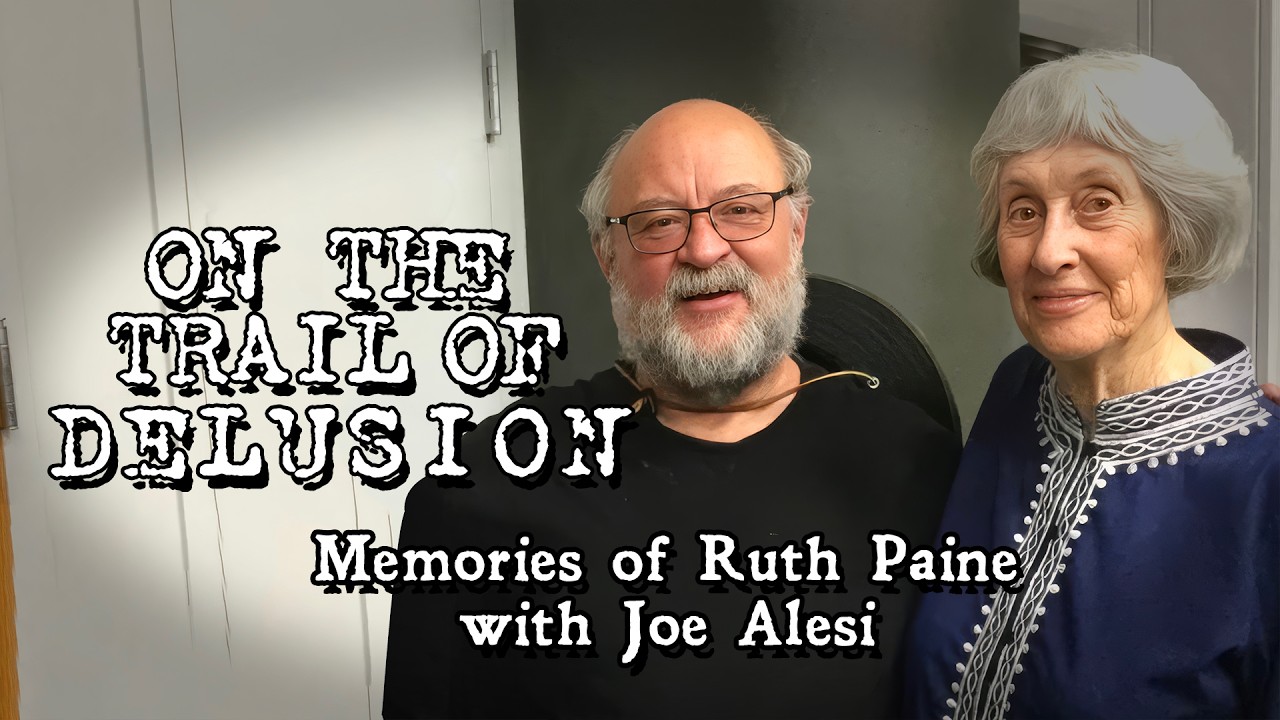
Mark Stench, a Sergeant First Class (SFC) in the American military, is currently working on his PhD thesis on conspiracy theories, and he interviewed me for his research. Executive Summary In this episode of On the Trail of Delusion, author and researcher Fred Litwin has his usual show format flipped: Mark Stench, a PhD student in history and 20-year military veteran, interviews Litwin about his evolution from a teenage JFK conspiracy believer to a proponent of the lone-gunman conclusion, as well as the broader impact of JFK conspiracy theories. Key Takeaways & Topics Covered Litwin’s Journey to the "Lone Gunman" Conclusion The Turning Point: Litwin became interested in the JFK assassination at age 18 in 1975 after seeing the Zapruder film on Geraldo Rivera's show and devouring Mark Lane's Rush to Judgment. The Shift: Over time—after taking a break during graduate school and re-engaging with research in the UK—he reviewed the House Select Committee on Assassinations (HSCA) trajectory diagrams, forensic pathology reports, and Gerald Posner's Case Closed. He realized the physical evidence, autopsy reports, and single-bullet trajectory consistently pointed to Lee Harvey Oswald acting alone from the sixth floor of the Texas School Book Depository. Evaluating Evidence & The Single Bullet Theory Single Bullet Theory: Litwin and Stench discuss why the single-bullet trajectory is the only coherent framework that aligns with the physical evidence, injury patterns, and timing, rejecting alternative multi-shooter models. Research Methodology: Litwin shares his approach to dissecting conspiracy claims: finding the "origin story" of a rumor, tracing footnotes back to primary documents, and identifying bad information. Jim Garrison, Oliver Stone, and Clay Shaw Jim Garrison's Prosecution: Litwin describes Garrison's prosecution of Clay Shaw as one of the worst miscarriages of justice in American legal history. Oliver Stone’s JFK: While acknowledging the film's cinematic craft, Litwin strongly criticizes Oliver Stone for relying on Garrison’s narrative, which victimized Clay Shaw a second time and misdirected public perception. The Human Cost of Conspiracy Theories Real Victims: Litwin highlights how conspiracy theories harm real people and their families, citing figures like Ruth Paine, Louis Bloomfield, Buell Wesley Frazier, and the Tippit family, whose lives were disrupted by baseless allegations of CIA or government involvement. Declassified Documents & KGB Disinformation Recent Document Releases: Litwin notes that recent releases by the Trump and Biden administrations revealed little new information because the core Assassination Records Review Board (ARRB) files were already known. Foreign Intelligence: He emphasizes that the most interesting missing archives lie in Moscow, Minsk, Havana, and Mexico City, detailing documented KGB disinformation efforts (such as funding Mark Lane or fabricating the "Dear Mr. Hunt" letter) designed to promote CIA conspiracy narratives in America. Previous Episodes of On the Trail of Delusion: Episode 1 My first guest was Robert Reynolds who is an expert on the JFK assassination files. Episode 2 Robert A. Wagner discusses his new book, JFK Assassinated. Episode 3 Gerald Posner discusses the JFK assassination and conspiracy theories. Episode 4 Dr. Martin J. Kelly, Jr. discusses conspiracy theories and the medical evidence in the JFK assassination. Episode 5 Steve Roe discusses the life of General Edwin Walker and Oswald's attempt to kill him. Episode 6 Gus Russo discusses his participation in the PBS Frontline documentary on Lee Harvey Oswald. Episode 7 Dave Perry tells some great stories about debunking JFK conspiracy nonsense. Episode 8 Nick Nalli explains some of the science behind the assassination. Episode 9 Alecia Long discusses Jim Garrison and his non-existent case against Clay Shaw. Episode 10 Don Carpenter discusses the life of Clay Shaw. Episode 11 Bill Brown discusses the murder of Officer J. D. Tippit. Episode 12 Eric Dezenhall discusses the relationship between the mob and JFK. Episode 13 Nick Nalli discusses the acoustics evidence and the Zapruder Film. Episode 14 Scott Maudsley discusses Lee Harvey Oswald's antisocial personality disorder. Episode 15 Document expert Robert Reynolds discusses what to expect in the upcoming JFK assassination file releases. Episode 16 A panel discussion on the document releases with Fred Litwin, Gus Russo, Robert Reynolds, Larry Haapanen, Mark Allen, and Steve Roe. Episode 17 An interview with author Michel Gagné about conspiracy theories. Episode 18 An interview with Phil Tinline about his book, Ghosts of Iron Mountain. Episode 19 An interview with Janet Banister, grand-niece of Guy Banister. Episode 20 The Marina Oswald Tapes. Episode 21 Dr. Chad Zimmerman discusses JFK's autopsy X-rays and photographs. Episode 22 Tour guide Daniel Evans talks about his years of researching the JFK assassination. Episode 23 Adam Gorightly discusses Fred Crisman, Thomas Beckham, Raymond Broshears and Kerry Thornley. Episode 24 A fun interview with Larry Haapanen who discusses the Garrison investigation, and his involvement with Project Blue Book. Episode 25 Dale Myers discusses the Tippit shooting and shows us some nifty animation. Episode 26 Brian Roselle discusses the timing of the first shot. Episode 27 Dr. Martin J. Kelly, Jr. talks about the psychology of Lee Harvey Oswald and Jack Ruby. Episode 28 Gus Russo talks about what happened to Lee Harvey Oswald in Mexico City. Episode 29 John-Paul Pagano discusses conspiracy theories, conspiracism and antisemitism. Episode 30 Dr. Robert Vitt talks about conspiracy theories, the early JFK researchers, and how to evaluate evidence. Episode 31 Josh Sundloff discusses conspiracy theories and his TikTok channel. Episode 32 A panel discussion of the single-bullet theory with Dr. Martin Kelly, Dr. Nick Nalli, Fred James and Scott Maudsley. Episode 33 Ernest Kearney discusses conspiracy theories and how to evaluate evidence. Episode 34 Steve Barber discusses the acoustics evidence and his visits with Robert Groden. Episode 35 Assassination researcher John Corbett stops in to talk about the case. Episode 36 Fred Litwin teaches Professor Robert Vitt's class at Long Beach City College. Episode 37 Steve Roe goes over the chain of custody of CE399. Episode 38 Todd Kwait discusses his documentary on the Warren Commission. Episode 39 Bill Brown gives us a tour of the Tippit murder scene. Episode 40 Fred Litwin reviews Sylvia Meagher's book Accessories After the Fact. Episode 41 Judge Burt Griffin talks about the Warren Commission and Jack Ruby. Episode 42 Journalist Terry Glavin drops in to talk about current events. Episode 43 Dr. Robert Vitt and I discuss how Sylvia Meagher treats Vincent Bugliosi's 53 pieces of evidence against Lee Harvey Oswald. Episode 44 I review Josiah Thompson's book, Six Seconds in Dallas. Episode 45 Jerry Dealey explains why he is sitting on the fence when it comes to the question of conspiracy. Episode 46 Jerry Dealey explains the ups and downs of the Texas School Book Depository. Episode 47 Joe Alesi presents from photos and letters from Ruth Paine. Episode 48 Robert Reynolds updates us on the JFK assassination records collection.
- On the Trail of Delusion, Episode 48, Robert Reynolds on the JFK Assassination Records Collection
No one knows more about the JFK assassination records collection than Robert Reynolds. I have recorded two interviews with Robert and it was time for a third to catch up on the latest news on JFK documents. Here is an AI summary: Summary Key Topics & Takeaways Overview of the ARRB (Assassination Records Review Board) Creation & Mandate: Formed under the JFK Act of 1992, the ARRB consisted of five board members (Chair Jack Tunheim, along with historians Bill Joyce, Henry Graff, Kermit Hall, and Anna Nelson) charged with declassifying and collecting records. Timeline Delays: Due to delays by the Clinton administration in making nominations, staff and operations only got running fully in 1994–1995. Scope: They processed roughly 60,000 records (with over 27,000 voted on directly and another 33,000 voluntarily released by agencies seeing the declassification push). Database & Indexing Problems at NARA Indexed vs. Unindexed Records: The collection consists of indexed records (having a Record Information Form / RIF) and unindexed records (such as ~800,000 pages of Warren Commission files). Data Loss from 1990s Floppy Disks: In the early 1990s, agencies submitted metadata on 5.25-inch floppy disks, many of which corrupted upon receipt by NARA. As a result, 10,000–20,000 records (including entire agency sets like Secret Service index forms) lack electronic database entries. Outdated Public Database: The main public JFK Excel database has not been updated since 2021, leaving thousands of updated release statuses unreflected. Digitization & Technical Hurdles Excessive File Sizes: NARA archivists scan documents at extreme resolutions (resulting in uncompressed TIFF files as large as 140 GB per page) and scan both sides of every page—even blank ones. Audio Quality Settings: Audio tapes are digitized as maximum bitrate MP3s (320 kbps), creating unnecessarily large files for simple speech. Impact on Researchers: Downloading terabytes of data causes crashes and severe bandwidth issues for independent researchers relying on home internet hardware. Agency Specifics: FBI & CIA Files FBI Files: Represent about 45% of the indexed collection. While organized crime files are largely available via Mary Ferrell Foundation, many core FBI headquarters files on Oswald, Jack Ruby, and the investigation require better digital access. CIA Files & "Operation Tilt": The CIA collection stems largely from HSCA (House Select Committee on Assassinations) requests. Reynolds highlights the complete, now-unredacted file on Operation Tilt (the William Pawley / Eddie Bayo raid in Cuba involving Russian defectors and weapons) as a valuable historic release. Mexico City Station History: Covers 25+ years (1947–1969). Reynolds clarifies that G. Robert Blakey (HSCA Chief Counsel) personally read the entire unredacted history, refuting claims by Prof. Pearcy that the HSCA was deceived or denied full access. Redacted Station Names: Minor redactions (such as stations in Helsinki or Stockholm) were kept back to protect diplomatic relationships with semi-neutral nations during the Cold War, most of which were unredacted around 2022. Addressing Conspiracy Myths & Missing Records Final Determination Forms (FDFs): Reynolds refutes claims that missing FDF forms mean the CIA is illegally hiding files. The ARRB’s official determinations were published in the Federal Register. Discrepancies in Record Counts: Mismatches in document counts (8,000–9,000 unaccounted files) stem from administrative liaison files, NBR ("Not Believed Relevant") records, and extensive file duplicates that were never individually indexed. The "Smoking Gun" Fallacy: Reynolds criticizes the obsession with finding a single "magic piece of paper" that proves a conspiracy, emphasizing that historical truth comes from analyzing millions of pages of detailed context. Reynolds’ Recommendations for NARA Release Oswald’s 201 File Microfilm: Prioritize scanning and uploading the 30,000-page microfilm copy of Oswald’s CIA 201 file, which contains crucial marginalia and notes. Prioritize HSCA Documents over Warren Commission: NARA should focus on digitizing the 20% of the collection belonging to the HSCA (much of which is only accessible in person at NARA) rather than re-scanning already published Warren Commission volumes. As noted above in #4, Robert and I discussed the history of the Mexico City Station. Here are some relevant links to the claims of Thomas Pearcy. Previous Relevant Blog Posts on Thomas Pearcy Professor Pearcy's Bad History Lesson An analysis of his recent lecture in Indiana. Is Thomas Pearcy Just Another Buff? An analysis of Pearcy's interview on Indiana radio. The Incurious Dr. Pearcy A supposed CIA whistleblower wasn't very curious. Don't miss these two prior interviews with Robert: Episode 1 My first guest was Robert Reynolds who is an expert on the JFK assassination files. Episode 15 Document expert Robert Reynolds discusses what to expect in the upcoming JFK assassination file releases. Robert was also part of a panel discussion on the documents: Episode 16 A panel discussion on the document releases with Fred Litwin, Gus Russo, Robert Reynolds, Larry Haapanen, Mark Allen, and Steve Roe. In addition, Robert has supplied research for several blog posts: Jefferson Morley's Latest William Harvey Nothingburger A look at William Harvey and his possession of a firearm. Robert Reynolds on Accusations the CIA Tried to Obstruct the Release of Records The CIA did not do an end-run around the ARRB. A Case Study in Redaction: The CIA's LIFEAT File Reynolds analyzes the redactions in the LIFEAT file. Robert Reynolds on CIA Redactions in the JFK Collection Reynolds explains what material has been redacted. Release of the JFK Redactions Will Tell Us Little A lot of the redactions are quite mundane. Morley Misleads on Arthur Schlesinger's Memo on the CIA It wasn't hard to figure out what the redactions were about before the document was released. A Response to Matt Douthit Robert replies to some silly complaints. And please don't miss Robert's excellent website. Previous Episodes of On the Trail of Delusion: Episode 1 My first guest was Robert Reynolds who is an expert on the JFK assassination files. Episode 2 Robert A. Wagner discusses his new book, JFK Assassinated. Episode 3 Gerald Posner discusses the JFK assassination and conspiracy theories. Episode 4 Dr. Martin J. Kelly, Jr. discusses conspiracy theories and the medical evidence in the JFK assassination. Episode 5 Steve Roe discusses the life of General Edwin Walker and Oswald's attempt to kill him. Episode 6 Gus Russo discusses his participation in the PBS Frontline documentary on Lee Harvey Oswald. Episode 7 Dave Perry tells some great stories about debunking JFK conspiracy nonsense. Episode 8 Nick Nalli explains some of the science behind the assassination. Episode 9 Alecia Long discusses Jim Garrison and his non-existent case against Clay Shaw. Episode 10 Don Carpenter discusses the life of Clay Shaw. Episode 11 Bill Brown discusses the murder of Officer J. D. Tippit. Episode 12 Eric Dezenhall discusses the relationship between the mob and JFK. Episode 13 Nick Nalli discusses the acoustics evidence and the Zapruder Film. Episode 14 Scott Maudsley discusses Lee Harvey Oswald's antisocial personality disorder. Episode 15 Document expert Robert Reynolds discusses what to expect in the upcoming JFK assassination file releases. Episode 16 A panel discussion on the document releases with Fred Litwin, Gus Russo, Robert Reynolds, Larry Haapanen, Mark Allen, and Steve Roe. Episode 17 An interview with author Michel Gagné about conspiracy theories. Episode 18 An interview with Phil Tinline about his book, Ghosts of Iron Mountain. Episode 19 An interview with Janet Banister, grand-niece of Guy Banister. Episode 20 The Marina Oswald Tapes. Episode 21 Dr. Chad Zimmerman discusses JFK's autopsy X-rays and photographs. Episode 22 Tour guide Daniel Evans talks about his years of researching the JFK assassination. Episode 23 Adam Gorightly discusses Fred Crisman, Thomas Beckham, Raymond Broshears and Kerry Thornley. Episode 24 A fun interview with Larry Haapanen who discusses the Garrison investigation, and his involvement with Project Blue Book. Episode 25 Dale Myers discusses the Tippit shooting and shows us some nifty animation. Episode 26 Brian Roselle discusses the timing of the first shot. Episode 27 Dr. Martin J. Kelly, Jr. talks about the psychology of Lee Harvey Oswald and Jack Ruby. Episode 28 Gus Russo talks about what happened to Lee Harvey Oswald in Mexico City. Episode 29 John-Paul Pagano discusses conspiracy theories, conspiracism and antisemitism. Episode 30 Dr. Robert Vitt talks about conspiracy theories, the early JFK researchers, and how to evaluate evidence. Episode 31 Josh Sundloff discusses conspiracy theories and his TikTok channel. Episode 32 A panel discussion of the single-bullet theory with Dr. Martin Kelly, Dr. Nick Nalli, Fred James and Scott Maudsley. Episode 33 Ernest Kearney discusses conspiracy theories and how to evaluate evidence. Episode 34 Steve Barber discusses the acoustics evidence and his visits with Robert Groden. Episode 35 Assassination researcher John Corbett stops in to talk about the case. Episode 36 Fred Litwin teaches Professor Robert Vitt's class at Long Beach City College. Episode 37 Steve Roe goes over the chain of custody of CE399. Episode 38 Todd Kwait discusses his documentary on the Warren Commission. Episode 39 Bill Brown gives us a tour of the Tippit murder scene. Episode 40 Fred Litwin reviews Sylvia Meagher's book Accessories After the Fact. Episode 41 Judge Burt Griffin talks about the Warren Commission and Jack Ruby. Episode 42 Journalist Terry Glavin drops in to talk about current events. Episode 43 Dr. Robert Vitt and I discuss how Sylvia Meagher treats Vincent Bugliosi's 53 pieces of evidence against Lee Harvey Oswald. Episode 44 I review Josiah Thompson's book, Six Seconds in Dallas. Episode 45 Jerry Dealey explains why he is sitting on the fence when it comes to the question of conspiracy. Episode 46 Jerry Dealey explains the ups and downs of the Texas School Book Depository. Episode 47 Joe Alesi presents from photos and letters from Ruth Paine.
- Richard Case Nagell's Visit to a VA Hospital in 1969
Richard Case Nagell was in and out of VA hospitals after he left the military. He never got the help he deserved. Additional Posts on Richard Case Nagell The Unraveling of Richard Case Nagell An AI video I made about the Nagell case. Richard Case Nagell's Stasi File Here is the complete Stasi file on Nagell along with a translation. A Wrap-Up of the Richard Case Nagell Story A good overview of the Nagell story. Why do People Believe the Richard Case Nagell Story? John Barbour, an unabashed fan of Jim Garrison, goes on a rant about Richard Case Nagell. Why does he believe Nagell's story? Was Richard Case Nagell Questioned in Moscow? Nagell claimed that the East Germans sent him to Moscow for questioning. There is no evidence in the Stasi files that the did that. The Importance of Richard Case Nagell to Some Conspiracy Theorists Was Richard Case Nagell the "Most Important Witness There Is"? Jim Garrison and a few conspiracy theorists think Nagell is a very important witness. But is he really? Genesis of the Richard Case Nagell story Did David Kroman Crack the JFK Assassination Conspiracy? David Kroman met Richard Case Nagell at the Springfield Medical Center for Federal Prisoners. Stephen Jaffe, a Garrison volunteer, wrote a memo, relating Nagell's story through the eyes and ears of David Kroman. Richard Case Nagell Shoots Up the State National Bank in El Paso... Nagell was convicted of armed robbery and was sentenced to ten years, but his conviction was overturned because of startling new evidence. Richard Case Nagell and the JFK Assassination Did Richard Case Nagell Have Foreknowledge of Oswald and the JFK Assassination? There is no credible evidence that Nagell had any foreknowledge of either Lee Harvey Oswald or the JFK assassination. Did Richard Case Nagell Meet Lee Harvey Oswald? Nagell claims he met Oswald in Japan, Texas, Mexico City, and New Orleans. There is no credible evidence that he ever met Oswald. Did Richard Case Nagell Warn Fidel Castro about the Assassination? Nagell went to Cuba and met with Fidel Castro and even played ping-pong with the man. Insane Conspiracy Theories about Richard Case Nagell Who was Leon Oswald? Richard Case Nagell said that he knew the two Oswalds - Lee Harvey and Leon. Some conspiracy theorists believe this madness. Richard Popkin Melds the Second Oswald Theory with the Richard Case Nagell Story Combine one part crazy and one part ridiculous and what do you come up with? An early attempt at a unified conspiracy theory of the JFK assassination. Paul Bleau's Plots Was there a plot in Los Angeles against JFK? Two Smoking Guns of the Richard Case Nagell Story Is this Document the Smoking Gun on the Richard Case Nagell Story? Nagell sent conspiracy theorist Dick Russell one page of a military intelligence file which seemed to indicate that he was monitoring Oswald and his wife on behalf of the CIA. But does the whole document really show that? Dick Russell's Second Smoking Gun on the Richard Case Nagell Story Did Richard Case Nagell have an Oswald Military ID in his possession when he was arrested in September 1963? Richard Case Nagell and Jim Garrison Why Didn't Richard Case Nagell Testify at Clay Shaw's Trial? Richard Case Nagell believes that he wasn't called to testify at Clay Shaw's trial because his testimony would have blown up Jim Garrison's case. Jim Garrison Discusses Richard Case Nagell At a conference in September 1968, Garrison and his investigators discuss his face-to-face meeting with Nagell in New York City. Richard Case Nagell Sends Jim Garrison on a Wild-Goose Chase William Martin, an Assistant District Attorney working for Jim Garrison, tried to retrieve a tape that Nagell said contained the voices of three JFK assassination conspirators. Richard Popkin Writes Garrison About Richard Case Nagell Richard Popkin, author of "The Second Oswald," writes Jim Garrison about Richard Case Nagell. Garrison staffer Tom Bethell thought the Nagell lead was useless. Richard Case Nagell's Mental Health Dr. Edwin Weinstein's Letter to the Army about Richard Case Nagell In 1973, Richard Case Nagell was trying to get a full disability pension from the government, and he had Dr. Edwin Weinstein, who had examined him in 1955, write a letter on his behalf. Richard Case Nagell's Letter to JFK Nagell wrote to JFK in 1963 looking for help. Richard Case Nagell's Lawsuit A lawsuit by Nagell proves his mental issues. Richard Case Nagell's Fight for a Disability Pension Nagell won a full disability pension in 1982 and the 60+ page court case provides complete details on his mental problems. Why Did Richard Case Nagell Shoot Up the First National Bank of El Paso? Richard Case Nagell told a psychiatrist why he shot up the bank in El Paso in 1963. Richard Case Nagell's Family Speaks about his Mental Health The FBI spoke to Nagell's ex-wife, his mother, his sister, and one of his friends. They all agreed that Nagell had significant mental health problems. Richard Case Nagell Visits Europe in 1969... Nagell visited the American consulates in Zurich and Barcelona in 1969. He was a deeply disturbed man. Richard Case Nagell in Europe, 1970 Edition More shenanigans in Europe in 1970. Richard Case Nagell Visits Zurich His mental issues were apparent during this visit. Richard Case Nagell's Evidence Richard Case Nagell's Nonexistent Evidence None of the so-called evidence that Nagell promised would materialize on his death has shown up. Did this evidence ever exist? Thomas Samoluk on Richard Case Nagell Samoluk was Deputy Director of the ARRB and he doesn't think much of the Nagell story. You can read the whole Nagell story in my book, A Heritage of Nonsense: Jim Garrison's Tales of Mystery and Imagination.
- Luna Talks to Rogan about Interdimensional Beings and the Ark of the Covenant
Congresswoman Anna Paulina Luna was just interviewed by Joe Rogan, and there were some incredible moments. Interdimensional Beings and Alien Technology The discussion started off on the topic of interdimensional beings and alien technology: (0:13) Rogan: What did you think about the whole UFO thing before you got into office? Luna: So, I actually had, when I was stationed at Portland Air National Guard, my job there was an airfield manager, so I would interface and work a lot with the F-15 pilots at the unit. And so there had been an airspace incursion that had taken place when I was still at the time of the guard, and I remember kind of talking to some of the pilots about it, and I was like, what was that? And they're like, we can't really talk about it. No one really wanted to address it. And so from what I had gathered that had been likely a UAP, and so that kind of was my perspective. Granted, I also grew up in the generation of The X Files. And, you know, I don't know if you remember '94 Independence Day, so like, for me specifically, I didn't look at it with, like, a crazy lens of perspective. I'm like, you know, you never know if we're the only ones out there, essentially. Rogan: Why did you assume that, if it's a top-secret incursion, that he couldn't talk about, that it wasn't just a military craft from another country? Luna: Because of the way that he was discussing it. Rogan: How, what did he say? Luna: So, he had been, he didn't want to, from what I gather, get taken off flight status, and he's like, I really can't discuss it. We couldn't really, like, identify it essentially, and it had outperformed them. And so that was my first, from a military perspective, kind of experience with someone who basically, you know, there's a stigma within the flight community. Do you want to lose your security clearance? What, you know -- is there this level of crazy that people kind of brand that will stick with you and kind of ruin your career. Rogan: But doesn't he have instrumentation on his jet? Luna: Well at the time, right? So an older platform, but he really didn't want to even talk about it. And I bring that up because now, with our investigation and the task force that I run, actually the reason why the task force was formed was because of an event that happened at Eglin Air Force Base, where both myself, Representative Matt Gaetz and Representative Tim Burchett actually had responded and gone to investigate multiple Air Force pilots that had come forward in regards to UAP incidences that had occurred, they were alleging that the Air Force was covering it up. Rogan: Interesting. Luna: Yeah, so that was that, and like, I'm happy to go into detail on that one. But what I will tell you is the stuff that I saw Eglin, how the military responded me being, you know, a former service member, and then ultimately, what I saw with the pushback of the military, not even wanting to share with Congress information, which is a big problem, because when you have Congress that's supposed to be the advocate and voice for the American people, the oversight body, and you're being denied access, not just from a base commander, but high level up at the Pentagon, even Secretary of Defense. It's a problem. Rogan: Do you think that it's possible that these are US vehicles that are top secret? Luna: I definitely think that there's a level of advanced technology that the US government has, and I think that that that tech can be housed within the defense contractor realm. And of course, some information is going to be classified. But I can also tell you, and this might sound crazy, but based on our investigations and stuff that we've seen, okay, there is definitely something that I think would rival what we know currently, with physics and a tech that potentially is out there that we don't have the ability to reproduce, because it would basically be like dropping a cell phone, cell phone, right off back during the time of maybe caveman. So, like, we just don't have the tech to develop it yet. What I can also tell you is based on our interviews, and this has been something that you can go back and watch with the congressional hearings, but I was actually able able to ask some of the witnesses, you know, what are these things? And they keep saying interdimensional. And then, when you talk about the dimensional aspect of, you know, are these things pre existing, maybe outside of what we currently know as our own dimension, that stuff can kind of all sound crazy, but at the end of the day, you know, my job as an investigator is to receive all the information, decipher it, and then, ultimately, from a congressional aspect, if you do have contractors that are withholding information or operating outside of the purview of the federal government. I mean, there's budgetary issues, but there's definitely something that I can tell you with confidence that exists that we don't know how to explain currently. Rogan: So when you say that it operates outside our understanding of physics, what specifically are you saying? Like, what, what happened? Luna: To, I guess, break it down in simple terms, is that I think that some of the tech that exists, that whatever these things have, these energy things have.. Rogan: Energy things, what do you mean? Luna: Well, they call them inter interdimensional beings. I think that they can actually operate through the time spaces that we currently have. And that's not something that I came up with on my own, that's based on stuff that we've seen, that's based on information that we've been told. And then also, too, I think that there's this historical aspect of, you know, this gets into the deeper theories and concepts of religion, and I think the history that we currently know. And that kind of spins off into another topic. Of you know, you have the modern-day Bible. You have this aspect of Bibles -- books of the Bible that have been removed, that explain and kind of touch on these topics. And I think that we're in a time and age where you have such a vast amount of information that we have access to via social media, via your cell phone, via the internet, and so it's really changing the way that we understand, you know, the origins of life and the spiritual reality that we know, Rogan: When you say interdimensional beings, that they know that these are interdimensional beings. How do they know that? Luna: That, so based on testimony, would be based on witnesses that have come forward. But what I can tell you .. Rogan: So, witnesses just were told that they were interdimensional? Luna: ... that they've seen things. And what I can tell you, without getting into classified conversations, is that there have been incidences that I believe, where very credible people have reported that there have been movement outside of time and space. Rogan: That's very vague. Luna: Yeah, so look ... Rogan: unfortunately, Luna: Yeah, look, have I seen a portal, but no, have I seen a spaceship personally? No, have I've seen evidence of this? Yes. Have I seen photo documentation of aircraft that I believe were not made by mankind. Yes. Is there historical significance to this? Yes. Is there multiple events that go back to, I would argue, maybe even before the time of Christ, that have documented this in text? Yes. So do I believe that the government has access to certain technology? Yes, to an extent, and I believe that certain contractors potentially have back-engineered this tech. I think that that's what can explain the advancements that we're seeing. But I also believe that this is a dangerous level of hidden information from the American people, because if you have an aspect of the federal government, which I can tell you, I, with two other members of Congress, were denied access to information at Eglin Air Force Base pertaining to whistleblowers because of the fact, and we can get into that story of what happened at Eglin in a second, but we were denied access and told that we don't have security clearance or the read-in authority on a special access program. That's a problem, because I'm supposed to represent and be an investigative body, and you have then people who are unelected that are operating basically in secrecy, and that's a problem. That's a big problem. Rogan: And so how do these people have the authority to do that? Luna: I think it's been decades of classified secret information, then also this aspect of the intelligence community that's been empowered, and it's kind of serendipitous with timing, because when you talk about the intelligence communities and what they've done essentially to the trust in this country with the American people, I think this goes all the way back even into JFK, with how they basically have operated outside of the purview of Congress, and basically, to an extent, have gone rogue. Up until recently, you're seeing a big push and pull to try to rein in these intelligence agencies currently. Rogan: Yeah. So what I want to bring it back to evidence. You said that you've seen evidence. Like, what kind of evidence Have you seen? Luna: I have seen photos. I have seen ... Rogan: what have you seen photos of? Luna: So I was in a SCIF, and I can't discuss all that was in a SCIF, but what I can tell you is, based on the photos that I've seen, I'm very confident that there's things out there that have not been created by mankind. Rogan: It seems crazy that people have access to information that shows that there's something outside of us that is more intelligent, at least more capable than we are, and they hide it from everybody else. Luna: What I can tell you is that when you have thousands upon thousands of people around the planet throughout time that have reported something.. Rogan: Right. Luna: ... to say that those people are crazy, to say that, you know, the whole concept of even just asking the question that you might not necessarily be psychologically sound, that in itself, you know, that's a disinformation campaign to get people to shut up about it. And that's a problem. We know that the US government has not exactly been clean, and a lot of what they've done with the American people specifically to the topic of UFOs ... Rogan: which makes you think that it's probably because there's something there. Interdimensional beings? Alien technology? Photographs in a SCIF? Luna is going to have to wear these remarks for years. The Ark of the Covenant Luna also thinks that a "remote viewer" has actually found the Ark of the Covenant: (38:37) Rogan:. I think these stories, especially when you get to stories like Noah and the Ark, that these stories exist in basically every religion, they're real similar, they're real similar. I think all of these people are trying to document a truth. It's just what is that truth is where it gets weird and when it gets to like other gods and giants and giants created man ... Luna: Well Enoch talks about that, Rogan: Yeah? Oh, I know. Luna: it's crazy. Rogan: It's wild stuff. It's with ... if its legitimate it's wild stuff. And then, do you know anything about the Ethiopian church that supposedly has the Ark of the Covenant in it? Luna: Yeah, I've looked into that. Actually wanted to, and again ... Rogan: You're in the government, you can like ... Luna: Yeah. So I actually wanted to do a (unclear)... just to, of course, like we're focusing on other things right now. Rogan: Seven seals, find that fucking thing. Luna: I need to pay for this for myself, so we're not using taxpayer dollars. But just go check it out. What's interesting is the CIA allegedly located the Ark of the Covenant. I think the ... Rogan: remote viewed. Luna: They remote viewed it. You can actually find that you should actually ... Rogan: Ethiopia? Luna: No, not in Ethiopia, but was in a Middle Eastern country. They weren't able to locate the actual, I think the New York Post did an article on it, where they actually have the handwritten notes on the Ark of the Covenant location, and they remote viewed it. You should ask them to come on up. Yeah, I'm serious about it. Rogan: Did they go there and see if they ... Luna: I don't know. This is like Indiana Jones ... Rogan: "Decades old CIA documents on Ark of the Covenant resurfaced amid classified group text." What? Luna: Laughing ... Yeah... Rogan: How did a group text arguably cause this stuff ... Luna: Check it out. Pull up the New York Post one, because they actually have the handwritten notes from the remote viewer that actually documents it. Rogan: Okay. Luna: It should be, like the New York Post. Rogan: That's so funny. Luna: Oh, there we go. That one. This is wild, because it actually goes into descriptions of angels too. And so actually, if so, in Enoch, it talks about, well, if you, if you scroll down, now that's that you can probably click on the Scribd, because it'll show you all the documents from the actual declassified file. This is also on CIA.dot.com. Rogan: What year was this? Luna: This happened recently. This was, like a couple months ago that this just kind of came all out, Rogan: Right? But What year was this project? Luna: 1988. Rogan: '88. Luna: Five, December 1988. Rogan: Wow ... Luna: So, scroll down. Rogan: So, in '88, they found the Ark of the Covenant? Luna: Allegedly, allegedly, they remote viewed it. We don't know .. Rogan: Who was President back then? Reagan? Luna: Go down. Rogan: Bush? Luna: Senior. Okay, so scroll down, and then you'll see that. So this is, like there, so they're going through in the notes. You have to read it, but you can scroll down. This is kind of, Rogan: This is he's like drawing where the ... Luna: ... the remote viewer, so you have, like, the different things that are describing it. And if you keep going, you'll see, like a cherubim. Keep going. Rogan: It's like showing the peak. Luna: Sorry, go up a little bit. So that's interesting, because if you look into actual, so, there's like a wheel text, if you look into Enoch, subscription of angels, and Ezekial, to, I think that kind of ties it, go down more so, but yeah, you have, like the actual here, purpose of container. They should have, like a cherubin drawing somewhere down here. Oh, yeah, see. So that would be the seraphim. Rogan: That would be he what? Luna: The seraphim ... Rogan: How it's open. Luna: Yeah. So basically, when they describe the arc, and so he's going through describing, so these are the hand notes for and then actually says that it's in a Middle Eastern country. The remote viewer describes the clothing in which individuals are in the area. I feel like I'm described like an Indiana Jones movie. But this is actually from the CIA. Rogan: This, this image. Scroll back to where that, what is that thing? Is that the corner of the box? Luna: Of the covenant? Yeah, he's describing, if you go up and these are actually the handwritten notes on what was described by the remote viewer, and you have to go through the entire document, but yeah, that's what's described surrounding the Ark. Rogan: Do you know what they asked him to find? Luna: Well, yeah, the Ark of the Covenant. Rogan: They asked him to go look for the Ark of the Covenant? Luna: Yeah, if you go higher up in the documents, it's over there. Rogan: Right, but if you ask me to go look for the Ark of the Covenant, like, I'd know what I'm looking for, right? Luna: Well, apparently, these are remote viewers... Rogan: ... draw what I think ... show me that they fucking found it. Luna: I know. I don't know if they did. Rogan: I don't know if they did either, but it's interesting, but it's not as interesting, because you're saying, show me the Ark of the Covenant, right? So he's drawing what we all saw in Indiana Jones. Luna: Or can you locate it? Rogan: What year was that? That was before Indiana Jones, Jimmy: It was the same time period. Rogan: When did Indiana Jones come out? Luna: The 90s, right? Rogan: I don't know. I'm thinking. Luna: And like, the first two are the best. Rogan: Raiders of the Lost Ark was the first one. That's the one. What year was that? Luna: 1981. Rogan: Okay, so ... Luna: Precursor. Rogan: So, that's seven years earlier. Everybody saw that movie 100 times. You know what it looks like. You know what the Ark looks like. So if I tell you, go draw me the ark. Where's it at? You think all we have is some scribbles on. paper, unless they actually went there and found it. Luna: Well, what's interesting, I should probably ask Radcliffe, like Radcliffe, can you tell me ... Rogan: What did you say Jimmy? Jimmy: It says the mission is to access and describe the target, identified by coordinate. And then there's coordinates. The task being is to see mission statement -- training target is the Ark of the Covenant. Rogan: So they did say, go find us the Ark of the Covenant. And then this dude apparently said, Keep AOL to a minimum. What is that? I have to be careful with editing, though this does not seem to be a problem at this time, just something to watch for. Attained, excellent site contact, okay, Luna: Definitely interesting. Rogan: What's weird that they're talking about it like it's a real talent, like some can actually do it. Jimmy: Mosque domes, yeah. Rogan: Target is in a container. This containers in another container. It has another container inside of it. The target is fashioned of wood, gold and silver. The target is similar in shape to AOL. So that's that, something of location, right? Is that what it means? Area of location? Area? Yeah, that's it coffin. It is decorated with the seraphim -- see sketch. This target is located somewhere in the Middle East, as the language spoken by individuals present seem to be Arabic. Well, wouldn't you want someone who could fucking decipher Arabic to do this? Luna: We don't know how far it went, and I definitely have questions. But this would not be the first time that a government would have looked for something, especially because people theorize that the Ark of the Covenant had these abilities as a super weapon. Rogan: I know what I'm saying, like the remote viewer is limited by his ability to understand the language. Stop, scroll back up, please. There, right there. So somewhere in the Middle East, visuals of surrounding buildings indicated that the area that the presence of mosque domes. Individuals in the area were clothed in virtually all white. Had black hair and dark eyes. One figure I honed it on wore a mustache. The target is hidden underground, dark and wet, where all aspects of the location of the target. See, the only problem I over have with these things is if these places are all controlled by terrorists, and it's all, you know, dictators and crazy people over there, if they found out that the ark was there, they would fucking take it. Luna: Well, I think there's this aspect of, if you look at from a biblical perspective, no one would be able to access it anyways, because it would be protected, right? That's what the Bible says. Jimmy: Cannot be opened until the time is deemed correct. Rogan: Oh, Jesus. [laughing] What's the time to open the container? The mechanisms of lock systems will be found to be fairly simple. Individuals opening the container by prying or striking are destroyed by the containers protectors. Luna: Well, it's interesting is, remember, in the Bible always talks about there had to be .. Rogan: ... through the use of a power unknown to us, Luna: They had to go through the special, special process of being considered, you know, holy, basically, to access it. So all that to say that there's something out there, right? I think that obviously God's real, and this job has definitely, you know, put me in a position to where we're able to help get other truths out there, if you will. Rogan: We need to get the truth of that thing out there. The conversation continues. There actually was a Defense Intelligence Agency (DIA) program called Project Sun Streak in which they investigated remote viewing. Here is an evaluation of the remote viewing projects: Here is the CIA document about the remote viewing of the Ark. Here is a link to the New York Post article about Project Sun Streak and the Ark of the Covenant. Why didn't Luna or Joe Rogan read this part of the article on the air? Legendary remote viewer #1 Joe McGoneagle does not believe that this remote viewing is worth the paper it’s written on. “Using remote viewing against any target for which ground truth does not exist or is impossible to obtain, such as UFOs, UAPs, the surface of Mars, or the locations of historical relics, is a waste of time and resources,” McGoneagle told The Post. “If someone claims that remote viewing proves the existence of something, such as the Ark of the Covenant, they must produce the Ark to substantiate their claim.” Of course, the entire concept of remote viewing is nonsense. These experiments remind me of the time when the Amazing Randi fooled scientists when testing for ESP. It's not hard to fool scientists -- much harder to fool magicians with this stuff. The RFK Assassination Luna believes that the State Department knew about the RFK assassination before it happened: (1:05:00) Luna: And I think I saw recently, Tulsi [Gabbard] had actually talked about some of the State Department wires that had been found that and I think through the same ones that had talked about the assassination of RFK, there were wires going up the State Department prior to his assassination, which is interesting. So our next investigation, so we've done ... Rogan: What do you what do you mean by that, like, what? How did they specifically discuss it? Luna: Well, that's, I haven't seen the actual wires themselves yet, but what that would imply is that the State Department knew about the assassination before it took place. Rogan: Oh, geez. So, Luna hasn't seen the State Department wires! You would think that before making such an allegation, you would want to see the evidence. Here is a link to a blog post about Gabbard's allegation about the State Department and the RFK assassination. The KGB and the JFK Assassination Luna says the CIA destroyed a KGB report on the JFK Assassination: (51:58) Luna: I actually had a really groundbreaking conversation. So, like, the way I'll describe Congress is, you ever have, like, a job where 80% of it, 90% of it, just, like, really eating shit, and then, like, the 10% is, like, really cool, Rogan: Yeah. Luna: And it makes up for that, like, 80, 90% there, you're just, Rogan: That when I hosted Fear Factor. Luna: Okay, so that aspect of I think, really exists in politics, if you like, actually here, and I had a meeting recently where I was with two other members of Congress that were helping me with the JFK investigation. And we actually met for the first time since 1990 with the Ambassador to the Russian government. And I bring that up because, at the time of the JFK assassination, the KGB had actually come forward with their own independent investigation, and they actually gave it at Kennedy's funeral to U.S. officials. We never got those documents. And it's my belief that the CIA actually destroyed that information and evidence because it would have confirmed what the KGB ... And mind you, at the time, JFK was actually in talks with the President of Russia at that time, and his perspective is that he actually wanted to do a joint mission between the U.S. government and the Russian government to the moon. And there are aspects and divisions within the intelligence community. You obviously saw the Cold War was happening. They wanted war in Cuba. They wanted war with Russia. So for them to be able to say that Kennedy, who was not a communist, but that he was a communist sympathizer. And how dare he talk to these dirty communists? I mean that, in itself, would have given them any ammunition to turn a blind eye, or at least not fully figure out who assassinated Kennedy. I guess Luna doesn't realize that JFK and his brother were at war with Castro. They were the one directing the CIA and the rest of the government to go after Cuba. Does she really believe the CIA destroyed a KGB report? Why would the Russians give the report to the CIA rather than to the State Department or directly to President Johnson. Committee Report on the JFK Assassination. Luna says that her committee will be writing a report on the JFK assassination (1:33:52) Luna: I did say recently, so, the MLK documents just came out, and we're wrapping up our JFK investigation. So after we finalize the JFK investigation, we're putting out an official congressional report on our findings, and people can read it and decide for themselves, and then we have RFK, and then MLK, but I think a lot of the MLK family was actually very concerned that we were going to go into extracurricular, and that's not the objective. I can't wait to read her report. It's going to be a regurgitation of talking points from Jefferson Morley along with a smattering of nonsense from her hearings. The good news? It will be a field day for my blog. Previous Relevant Blog Posts about Congresswoman Luna Luna Comes up with a Bombshell! Luna says the Russians will be giving us their JFK files in the fall. The MAGA Crowd Gets The JFK Assassination Conspiracy They Need Luna, Bannon, and Tucker believe some crazy things about the assassination. Luna's Ridiculous Hearing Luna's second hearing -- I don't know what was worse - the silly testimony of the witnesses or the brainless questions of the committee members. Jefferson Morley's Congressional NothingBurger An analysis of Congresswoman Luna's Congressional Hearings Is Congresswoman Luna a Luna-tic? Congresswoman Luna doesn't really know much about the JFK assassination. Is Congresswoman Luna a Luna-tic? Part Two Have a look at the book on Luna's desk Anna Luna's JFK Conspiracy Circus A link to an excellent article by Michael Isikoff. Congresswoman Luna Finds a New Witness Here is the conspiracy witness who knows the truth.
- George Mantello, Founder of Permindex, was a Hero!
I recently found this article on George Mantello and am reproducing most of it here. His story is important and it is very unfortunate that so many conspiracy books paint him as a villain. Here is a link to the original article. There are more documents about George Mantello in this blog post. by Yehudis Litvak, July 26, 2026 He forged thousands of passports and risked his life to save Jews from the Nazis, then exposed Auschwitz to the world In 1944, a wealthy Transylvanian businessman turned Salvadoran consulate’s First Secretary in Switzerland, typed up thousands of fake citizenship papers by hand, smuggled himself across enemy lines disguised as an airplane co-pilot, and forced 384 Swiss newspapers to print the truth about Auschwitz, breaking his adopted country's censorship laws in the process. His name was George Mandl (later Mantello), and his one-man campaign helped stop the deportation trains and save over 100,000 Hungarian Jews. Yet for decades, almost no one knew his name. Born into a well-to-do Jewish family in Transylvania in 1901, Mantello attended a commercial high school in Budapest, followed by military school during World War I. One of his instructors was the Romanian military hero General Dragenescu. This general would help him escape the Nazis. A brilliant businessman, by the outbreak of World War II Mantello was a wealthy man. He could have retired from business and enjoyed leisure. Instead, he used his time, talent, and considerable resources to rescue his fellow Jews. In 1928, Mantello married Irene Berger, a descendant of Transylvanian Sabbatarians who had converted to Judaism. The couple settled in Cluj, Romania, and had one son, Enrico. Later, the family moved to Budapest, Hungary. Mantello continued to travel throughout central Europe on business, building relationships with influential people. He worked closely with his brother, Joseph. Due to his frequent travels, Mantello saw first-hand the treatment accorded to Jews under Nazi rule. Escaping Hungary Among Mantello's business connections was Colonel Jose Arturo Castellanos, the Consul General of the Latin American country of El Salvador, based in Geneva, Switzerland. Before the war, Mantello had helped Castellanos acquire goods for El Salvador at competitive rates. In 1939, Castellanos appointed Mantello El Salvador's honorary consul for Czechoslovakia, Yugoslavia, and Romania. At the time, it was common for small countries to appoint local businessmen to consulate positions. But for Mantello, fully aware of the political developments and approaching Nazi danger, the position, which came with a diplomatic passport, was his ticket to safety. At the same time, he changed his last name from the typically Jewish Mandl to the Spanish-sounding Mantello. In 1940, Romania aligned itself with the Axis powers. In 1941, Mantello decided to leave Romania for Switzerland. He began liquidating his Romanian assets and settling his business affairs. When the U.S. entered World War II in December 1941, Latin American countries, including El Salvador, aligned themselves with the Allies and declared war against the Axis. As a Salvadorian diplomat, Mantello was now in enemy territory. Switzerland extended protection to foreign diplomats in Romania, and Mantello boarded a train headed there with other diplomats. But Mantello was detained by the Nazis at the Swiss-Italian-Yugoslav border, likely suspected of being Jewish. The Nazis might have confused him with a French Jewish minister, George Mandel. Mantello was taken to Zagreb and brought before a German diplomat. He tried to threaten him1, "The Salvador government is keeping track of my whereabouts. If you make any problems for me, I assure you that my government will bar Germans from leaving El Salvador." The Germans treated Mantello with some respect but kept him under constant surveillance in a hotel for a few months. A Romanian business partner found him in Zagreb and proposed smuggling him out to Bucharest disguised as a Romanian plane's co-pilot. Mantello readily agreed. The pilot brought a co-pilot's uniform to the hotel. Mantello put it on and walked out with him. By the time they got to the airport, the guards had discovered that Mantello had escaped. Soldiers stopped him at the airport. Thinking he was a pilot, they asked him where Mantello was. He pointed to two young Germans standing nearby. While the soldiers confronted the Germans, who responded with a fistfight, Mantello and the pilot slipped away. Several days later, they left Zagreb. Back in Romania, Mantello made his next attempt to reach Switzerland. He met with General Dragenescu and his brother-in-law, Captain Vasilescu, also one of Mantello's business partners. They arranged for Mantello to travel to Switzerland via Yugoslavia disguised as Vasilescu. In a Romanian officer's uniform, Mantello traveled first class to Switzerland. The train passed through Budapest. Unable to get off, Mantello could only wave to his wife, son, and in-laws, who caught a glimpse of him from the platform. Eventually, Mantello arrived in Geneva with his fortune largely intact. There, he reunited with his brother, Joseph. A year later, Castellanos helped Mantello bring his teenage son from Budapest to Switzerland. His wife stayed behind, unwilling to leave her parents. Later, Mantello recalled2, "Although I felt safe in Switzerland, I always saw before me heartrending scenes of the terrible Jewish martyrdom in Nazi-occupied Vienna and Prague. The moment that, with the help of God, I had escaped this fate, I promised myself to do everything to save my fellow Jews from their fate and to improve their lives." Jose Arturo Castellanos Rescue Efforts Mantello's first attempt at rescue work failed. The Jewish organizations in Switzerland, spanning the religious and political spectrum, couldn't work together. He couldn't even get them in the same room. So he shifted to a smaller scale. Mantello founded the Swiss Rabbis Committee, giving local rabbis a united voice to lobby the Swiss and foreign governments. The Committee also built relationships with Christian clergy, which proved instrumental later in the war. Mantello cultivated other relationships too. As a diplomat, he got to know the British commercial attaché and found ways to help the Allies: accepting mail at the Salvadoran consulate to keep it away from Nazi spies, extending interest-free loans to the British, and once even supplying chronometers, watches, and other instruments to the Royal Air Force. Six months after arriving in Geneva, Mantello found another way to help Jews under Nazi occupation. He discovered that other Latin American countries were selling their citizenship papers for large sums to desperate Jews on the black market. Furious that others were profiting from the tragedy, he committed to supplying as many Salvadoran papers as he could to Jewish refugees, free of charge. The scheme wasn't his invention. Swiss Jewish rescuers, the Sternbuch family, had pioneered it in 1941. They'd learned that a Warsaw Jew holding a foreign passport had been allowed to stay outside the ghetto, exempt from wearing a yellow star. So they began buying foreign citizenship papers from Latin American countries and sending them to friends and family in Poland. George Mandel-Mantello greets the Satmar Rebbe, Joel Teitelbaum, when his arrival in Switzerland on the Kasztner transport from Bergen-Belsen. —US Holocaust Memorial Museum, The Nazis weren't sure what to make of these certificates, but they hesitated to deport foreign citizens. With no centralized policy on Jewish Latin American citizens, the certificates' impact varied by country, proving especially effective in Belgium, the Netherlands, and Hungary. After the war, Jonas Tiefenbrunner, who ran a Jewish orphanage in Belgium and received Salvadoran certificates for himself and the children in his care, wrote3: [T]he holders of these papers were covered and could not officially be deported. If they were taken in a round-up while holding Salvadoran papers, they could only be interned as enemy aliens... Anyone who was still in Belgium when they received the papers was saved. In Denmark, while most Jews were deported to Auschwitz or Sobibor, several holders of Salvadoran certificates were instead interned at Bergen-Belsen and later exchanged for German prisoners of war in a 1944 swap with the United States4. Realizing how many lives these certificates could save, Mantello threw himself into producing as many as possible. With Castellanos's approval, and using his own funds, he set up a dedicated space and hired college students to type them up, personally stamping and sealing each one. Altogether, he produced thousands of certificates, sent to 12 European countries by regular mail, private courier, or diplomatic pouch. Since each certificate covered an entire family, every one sent multiplied the lives it could save. Entrance to the courtyard, marked with a Star of David, of a building designated for Jews. Entrance to the courtyard, marked with a Star of David, of a building designated for Jews. Budapest, Hungary, after April 2, 1944. (United States Holocaust Museum) When the Nazis occupied Hungary in March 1944, the mission turned personal. Mantello's wife was still in Budapest, and his parents and extended family were in Hungarian-controlled Transylvania. Desperate to save them, Mantello and his brother Joseph sent Salvadoran certificates to their parents via Florian Manoliu, a Romanian diplomat and Joseph's business associate, who wasn't Jewish. Manoliu was held up at the border and arrived in Transylvania just days too late. Mantello's parents and extended family had already been deported to Auschwitz. Manoliu continued on to Budapest, where he delivered a certificate to Mantello's wife, Irene. It saved her life. She avoided deportation and survived the war. While in Budapest, Manoliu met with Carl Lutz, the Swiss diplomat famous for his own rescue efforts. Lutz introduced him to Moshe Kraus, a leader of Hungary's Zionist movement who was hiding in the Swiss consulate under Lutz's protection. At that meeting, Kraus handed Manoliu a copy of the Auschwitz Protocols. Compiled in Slovakia from interviews with Rudolf Vrba and Alfred Wetzler, two men who had escaped Auschwitz, the document laid out the camp's machinery of death in detail, complete with maps of the gas chambers and crematoria. It was the first eyewitness account of the genocide to reach Jewish community leaders. Four weeks after leaving Geneva, Manoliu finally made it back. He went straight to the Mantello brothers with the news: their parents were gone, and in his hands, the Auschwitz Protocols, written in Hungarian. The brothers tore their clothes in keriah, the traditional Jewish expression of mourning. But within an hour, grief turned to resolve. Despite wartime censorship, they would get the Auschwitz Protocols out to the world. Unauthorized Salvadoran citizenship certificate made out to Rabbi Akiba Glasner (b. April 19, 1885 in Cluj), his wife Hermine (nee Blum) Glasner (b. January 20, 1895 in Sarospatak) and daughter Sulamith (b. June 10, 1928). Copyright: United States Holocaust Memorial Museum. Provenance: Enrico Mandel-Mantello Getting Information Out The Mantello brothers received the Protocols on June 21, 1944. By then, many religious and political leaders, both Jewish and non-Jewish, already had copies. For various reasons, they hesitated to make the information public5. Mantello's first move was to get the Protocols translated into English, French, and Spanish. He turned to a group of Hungarian students in Switzerland he'd cultivated relationships with over the years, mostly children of Hungarian nobility who had fled to Switzerland during the short-lived communist revolution of 1919. Mantello had subsidized their studies and sponsored their club. Now he hired them to do the translations. He added a few lines of his own, urging that the information be spread as widely as possible to spur rescue efforts, then made multiple copies in each language. The next day, Mantello called an emergency meeting of the Swiss Rabbis Committee, which he'd helped establish earlier, along with the Swiss Hungarian Committee. He presented the Protocols and drove home the urgency of the moment, then issued instructions: Committee members were to contact clergy and the American representative of the War Refugee Board. Mantello himself went to see the British military attaché and the Switzerland-based representative of U.S. intelligence. With the Allies and the clergy alerted, Mantello wanted to reach further still. He hoped to get the mainstream Swiss press involved, but they operated under strict government censorship. To protect its neutrality, Switzerland had made it illegal to publish anything negative about either the Allies or the Axis. So Mantello traveled to Zurich to meet with Walter Garett, a reporter for the British Exchange Telegraph, an independent news agency exempt from Swiss censorship. He persuaded Garett to send telegrams to Western news agencies, legations, and embassies. The telegrams read6: FOLLOWING DRAMATIC ACCOUNT ONE DARKEST CHAPTERS MODERN HISTORY REVEALING HOW ONE MILLION 715 THOUSAND JEWS PUT DEATH IN ANNIHILIATION CAMP AUSCHWITZ BIRKENAU Press releases based on the Protocols went out to hundreds of news outlets. The next day, 384 Swiss newspapers ran front-page articles on the genocide at Auschwitz7. The news was out, and it could no longer be suppressed. Deportation of Jews from the Jozsefvarosi train station in Budapest. Hungary, November 1944. (United States Holocaust Museum) Mantello also met with Christian clergy and circulated a letter signed by four prominent Swiss theologians. It worked. Religious leaders across Switzerland spoke about the Holocaust from the pulpit, urging their congregants to take to the streets in protest. Swiss authorities detained Mantello, but by then it was too late. Under mounting public pressure, governments, monarchs, and the Vatican condemned the Holocaust. The Pope wrote to Admiral Horthy, the Hungarian regent, demanding an end to the deportations. President Roosevelt and the King of Sweden issued their own stern warnings. British bombers dropped bombs over Budapest as a warning. Under this international pressure, Admiral Horthy halted the deportations on July 7, 1944. The Nazis hadn't given up; they went on to send tens of thousands of Jews on death marches. But they could no longer murder hundreds of thousands within weeks. Over 100,000 Hungarian Jews were saved. Abridged version of the Auschwitz Protocol sent by Miklos Kraus in Budapest to George Mantello in Switzerland. The document was translated into English by students hired by George Mandel-Mantello. Copyright: United States Holocaust Memorial Museum. Provenance: Enrico Mandel-Mantello You can see Mantello's complete report here. You can read the rest of the article at the link above. ****************************************************************************************************************************** David Kranzler. The Man Who Stopped the Trains to Auschwitz: George Mantello, El Salvador and Switzerland's Finest Hour. Syracuse University Press, 2000. Cited in ibid. Judith Cohen. The Mantello Rescue Mission. PRISM Journal, Volume 4, Spring 2012. Ibid. For an analysis, see Zoltán Tibori Szabó. The Auschwitz Reports: Who Got Them, and When? The Auschwitz Reports and the Holocaust in Hungary, Randolph L. Braham and William J. Vander Heuvel (eds.). Columbia University Press, New York, 2011, pp. 85-120. Baron, Frank. "The Auschwitz Report." Hungarian Cultural Studies. Journal of the American Hungarian Educators Association, Volume 16 (2023): http://ahea.pitt.edu DOI: 10.5195/ahea.2023.502. Ibid. The WWII Hero Who Rescued Budapest's Jews. History for the Curious podcast, episode #196. Available at: https://rabbiaubreyhersh.podbean.com/e/196-the-wwii-hero-who-rescued-budapests-jews/. Judith Cohen. The Mantello Rescue Mission. PRISM Journal, Volume 4, Spring 2012. Sources: David Kranzler. The Man Who Stopped the Trains to Auschwitz: George Mantello, El Salvador and Switzerland's Finest Hour. Syracuse, University Press, 2000. The WWII Hero Who Rescued Budapest’s Jews. History for the Curious podcast, episode # 196. Judith Cohen. The Mantello Rescue Mission. PRISM Journal, Volume 4, Spring 2012. George Mandel-Mantello. Jewish Virtual Library. The United States Holocaust Memorial Museum website Previous Relevant Blog Posts James DiEugenio on Permindex: A Case Study, Part Three Was there a relationship between Permindex and the OAS? James DiEugenio on Permindex: A Case Study, Part Two Information in a Time-Life memo originated from Paese Sera. James DiEugenio on Permindex: A Case Study A purported CIA memo is actually the notes of an HSCA researcher. The Eviction of Permindex (CMC) CMC evicted in early 1962 because they couldn't pay rent. Did Permindex Move to South Africa After it was 'Forced' to Leave Italy? Many conspiracy books claim that Permindex moved to South Africa. There is no evidence that it did. Was Permindex Involved in Plotting the Assassination of French President Charles de Gaulle? There is no evidence that Permindex plotted against de Gaulle. State Department Documents on Permindex The complete set of State Department documents on Permindex. Permindex Was Not a CIA Front Chris Peeks interviews me about Permindex. James DiEugenio Gets it all Wrong on Permindex/CMC Conspiracy theorists mislead people on Permindex/CMC. "Coup in Dallas" - The Story of a Factoid Many books maintain that the President of Permindex, Ferenc Nagy, lived in Dallas in 1963. He actually lived in Herndon, Virginia. "Coup in Dallas" - More Conspiracy Nonsense! The book Coup in Dallas gets Permindex all wrong, and with no footnotes. Was Permindex Running an Assassination Bureau? Was Montreal lawyer Louis Bloomfield running an assassination bureau? Conspiracy Nonsense Snared a Canadian Louis Bloomfield was a good man who raised a lot of money for Canadian charities. Unfortunately, conspiracy theorists have linked him to the JFK assassination. Did a Life Magazine Memo Say that Clay Shaw was in Rome? The memo only quotes from Pease Sera. Did the FBI's Regis Kennedy Know that Clay Shaw worked for the CIA? The information that Shaw lived in Rome and worked for the CIA originated with Paese Sera. Clay Shaw's Permindex File Clay Shaw was on the Board of Directors of Permindex. Here is his file. Why Didn't Jim Garrison Go to Montreal? If Jim Garrison wanted to learn more about Louis Bloomfield, all he had to do was pick up the phone or go to Montreal. Exclusive - Louis Bloomfield's Secret Correspondence with George H. W. Bush... Revealed for the first time. Did The Umbrella Man Have Links to Clay Shaw? Yes, a conspiracy book actually makes this claim. Exposed! Louis Bloomfield's Letters to Baron Edmund de Rothschild... Revealed for the first time. Exposed! Bloomfield's Letters about David Rockefeller! They were involved! The Founder of Permindex, George Mantello, Saved Thousands of Jews during the Holocaust... George Mantello was a hero. Fred Litwin's Follies! James DiEugenio gets many things wrong including writing about Permindex.
- Did RFK Send a Telegram Supporting Mark Lane's Work?
This story all started with a telephone conversation between Vincent Salandria and Sylvia Meagher in late August 1966. Here is an excerpt from her notes: Lane says re RFK "certainly interested and has been -- Tr-R [Hugh Trevor-Roper] personally visited by K man." Professor Hugh Trevor-Roper wrote the introduction to Mark Lane's book, Rush to Judgment. The October 7, 1966 issue of Peace News featured an interview of Mark Lane by Roger Barnard. Lane was asked if he had received any response from any members of the Kennedy family: Here is an excerpt from an article in the New York Times from November 21, 1966: This wouldn't be the last time lies were told about Robert Kennedy by Mark Lane. Did RFK Tell Garrison that there were guns between him and the White House? Mark Lane made up a story right after RFK was assassinated. Previous Relevant Blog Posts on Mark Lane Unmasking of phantom-fighter Lane An opinion piece from the Boston Herald. Richard Dudman Writes Mark Lane A reporter tells Lane to stop spreading misinformation. Was Jim Garrison a Prophet of the American People? Lane discusses Jim Garrison on television in New Orleans. Mark Lane and J. C. Price Lane cuts out a scene in which Price says the man he saw might have been carrying a hat. Mark Lane: The Rush to Publication An excellent article from the Dallas Morning News on Lane's witnesses. Mark Lane and Warren Reynolds Lane cuts out a few of Reynolds' answers. Mark Lane and Napoleon Daniels Sylvia Meagher was incensed at Lane's inclusion of this story in his film. Mark Lane and Charles Brehm A good case study in Lane's intellectual dishonesty. G. Robert Blakey on Mark Lane Robert Blakey and the HSCA were very critical of Mark Lane. George Lardner on Mark Lane Mark Lane and the HSCA. When Mort Sahl Kicked Mark Lane Out of his House An interesting anecdote from Mort Sahl's book, Heartland. Should We Blame Mark Lane? Some ads for Lane's film Rush to Judgment. In Defense of the Warren Commission A Garry Wills opinion piece on Mark Lane. Victor Navasky Reviews Mark Lane's "A Citizen's Dissent" Navasky tests Lane's book and finds it wanting. Mark Lane and Jonestown A New York Times profile of Lane and his involvement with Jonestown. New York Times Profile of Mark Lane An apt profile. Nightmare Brought to Life An opinion piece by Anthony Lewis in the New York Times on Mark Lane and Jonestown. Mark Lane, Again An opinion piece from the Washington Post Mark Lane: A Bent for the Macabre Side A good opinion piece from the Philadelphia Bulletin. Sylvia Meagher Corresponds with Philippe Labro Meagher tells Labro a story about Mark Lane. Mark Lane and The Progressive Even a left-wing magazine like The Progressive found Mark Lane hard to take. Mark Lane on Clay Shaw Mark Lane's addition to the 1992 edition of Rush to Judgment is eye opening. Mark Lane on the Joe Dolan Show Lane tells Dolan about Garrison's amazing evidence. Did the CIA Try to Kill Mark Lane? Lane makes a startling allegation. Mark Lane: The Left's Leading Hearse-Chaser A profile from Mother Jones magazine. Mark Lane vs. Sylvia Meagher Lane and Meagher feuded about a blurb for her book. The Case Against Mark Lane A profile from Esquire Magazine. Mark Lane saw a conspiracy - as usual An article from the Tampa Bay Times. The Mark of Zorro An Anthony Lewis column on Mark Lane from 1978. Mark Lane's Scholarship! Howard Roffman finds that Mark Lane's scholarship is lacking. Mark Lane, Conspiracy Addict A profile of Mark Lane in Newsweek. Mark Lane offers to introduce Jim Garrison to "Mr. Candy" Mark Lane offers to introduce Jim Garrison to a witness that, for $25,000, would tie Jack Ruby with Clay Shaw. Redactions, Redactions, Redactions... This post has a good case study of how Mark Lane exploited a redaction in a document. "I Know Who Killed JFK," Part Three Lane tells the Danish press he knows who killed JFK. Mark Lane Said that Clay Shaw Was a "Powerful, Domestic Force in the Assassination." Lane speaks at the Louisiana State Bar Association. "I Know Who Killed JFK," Part Two Mark Lanes speaks at a business luncheon in New Orleans.
- The Oswald Archive -- Sean DeGrilla's New Website
My friend Sean DeGrilla has a new website, The Oswald Archive, that I think is quite important. His website contains a blog, and here is a link to his first article: Sean is the author of MALCONTENT: Lee Harvey Oswald's Confession by Conduct, a book which I strongly recommend. Sean has had a career in law enforcement and his analysis of Oswald's statements after this arrest is terrific. Sean has a new book, Communistic Tendencies: The Writings and Beliefs of Lee Harvey Oswald, coming out very shortly. I can't wait to buy a copy and I strongly urge everybody here to buy a copy as well. I look forward to having Sean on my podcast. Here I am with Sean in Irving, Texas on November 25, 2024. The camera angle makes it look like he is taller than me. Previous Relevant Blog Posts about Lee Harvey Oswald Was Oswald Incensed by this Article? He must have seen this article in the Dallas Times-Herald about a possible Cuban coup. Saint Lee Harvey was Good with Kids! Oswald liked kids, but does this matter? Was Lee Harvey Oswald on Acid? Was Oswald part of MK-Ultra? On the Trail of Delusion, Episode 14, Scott Maudsley on Oswald's Antisocial Personality Disorder A look at Oswald's motivations. Why Marina Was Interested in her Husband's Innocence She changed her views for her children. Did Lee Harvey Oswald Have a 'Crypto' Clearance? There is no evidence he had such a clearance. Was Oswald an Agent of the CIA, Part Two A look at the Lopez Report. Was Oswald an Agent of the CIA? James DiEugenio's does not read my posts. The Search for the Holy Grail Continues... James DiEugenio thinks erroneously that a CIA report on Oswald is secret. JFK Revisited: Were the Oswald Backyard Photographs Faked? Oliver Stone's so-called documentary gets it wrong. The Scholarship of James DiEugenio, Part Two The truth about the paraffin tests. The Scholarship of James DiEugenio - A Case Study What did Bill Turner actually write about the paraffin tests. Jim Garrison Claims Lee Harvey Oswald was a Victim I guess we should feel sorry for Oswald. Did David Ferrie Introduce Jack Martin to Lee Harvey Oswald in Banister's office? Garrison's office speaks to Jack Martin in December 1966. Did Delphine Roberts See Lee Harvey Oswald in Banister's Office? (Part Two) A look at Mary Brengel. Did Delphine Roberts see Oswald in Banister's Office? She didn't say so in 1967 Did David Ferrie Know Lee Harvey Oswald? They are in the same photo together but did they know each other?
- On the Trail of Delusion, Episode 47, Memories of Ruth Paine with Joe Alesi
Joe Alesi was a good friend with Ruth Paine and he shares some photos and letters with me. Previous Relevant Blog Posts on Ruth Paine My Trip to Dallas We visited the Ruth Paine House on our last visit. Oliver Stone's Ruth Paine He told the actress who played Ruth Paine to act conspiratorial. Ruth Paine's Mother Writes Vincent Salandria She was horrified by Salandria's nonsense. Jefferson Morley Platforms Max Good Morley allows Good to repeat some ridiculous allegations about Ruth Paine. Morley's Substack Goes After Ruth Paine My response to Peter Voskamp, author of the article on Morley's Substack. Ruth Paine, R.I.P. (1932 - 2025) Ruth Paine lived a meaningful life helping people. A Question for Max Good from Burt Griffin Here is a letter from Burt Griffin, counsel for the Warren Commission, to Max Good, producer of a film about Ruth Paine. The CIA's Dinner in Dallas Guess who sponsored our dinner in Dallas? Previous Episodes of On the Trail of Delusion: Episode 1 My first guest was Robert Reynolds who is an expert on the JFK assassination files. Episode 2 Robert A. Wagner discusses his new book, JFK Assassinated. Episode 3 Gerald Posner discusses the JFK assassination and conspiracy theories. Episode 4 Dr. Martin J. Kelly, Jr. discusses conspiracy theories and the medical evidence in the JFK assassination. Episode 5 Steve Roe discusses the life of General Edwin Walker and Oswald's attempt to kill him. Episode 6 Gus Russo discusses his participation in the PBS Frontline documentary on Lee Harvey Oswald. Episode 7 Dave Perry tells some great stories about debunking JFK conspiracy nonsense. Episode 8 Nick Nalli explains some of the science behind the assassination. Episode 9 Alecia Long discusses Jim Garrison and his non-existent case against Clay Shaw. Episode 10 Don Carpenter discusses the life of Clay Shaw. Episode 11 Bill Brown discusses the murder of Officer J. D. Tippit. Episode 12 Eric Dezenhall discusses the relationship between the mob and JFK. Episode 13 Nick Nalli discusses the acoustics evidence and the Zapruder Film. Episode 14 Scott Maudsley discusses Lee Harvey Oswald's antisocial personality disorder. Episode 15 Document expert Robert Reynolds discusses what to expect in the upcoming JFK assassination file releases. Episode 16 A panel discussion on the document releases with Fred Litwin, Gus Russo, Robert Reynolds, Larry Haapanen, Mark Allen, and Steve Roe. Episode 17 An interview with author Michel Gagné about conspiracy theories. Episode 18 An interview with Phil Tinline about his book, Ghosts of Iron Mountain. Episode 19 An interview with Janet Banister, grand-niece of Guy Banister. Episode 20 The Marina Oswald Tapes. Episode 21 Dr. Chad Zimmerman discusses JFK's autopsy X-rays and photographs. Episode 22 Tour guide Daniel Evans talks about his years of researching the JFK assassination. Episode 23 Adam Gorightly discusses Fred Crisman, Thomas Beckham, Raymond Broshears and Kerry Thornley. Episode 24 A fun interview with Larry Haapanen who discusses the Garrison investigation, and his involvement with Project Blue Book. Episode 25 Dale Myers discusses the Tippit shooting and shows us some nifty animation. Episode 26 Brian Roselle discusses the timing of the first shot. Episode 27 Dr. Martin J. Kelly, Jr. talks about the psychology of Lee Harvey Oswald and Jack Ruby. Episode 28 Gus Russo talks about what happened to Lee Harvey Oswald in Mexico City. Episode 29 John-Paul Pagano discusses conspiracy theories, conspiracism and antisemitism. Episode 30 Dr. Robert Vitt talks about conspiracy theories, the early JFK researchers, and how to evaluate evidence. Episode 31 Josh Sundloff discusses conspiracy theories and his TikTok channel. Episode 32 A panel discussion of the single-bullet theory with Dr. Martin Kelly, Dr. Nick Nalli, Fred James and Scott Maudsley. Episode 33 Ernest Kearney discusses conspiracy theories and how to evaluate evidence. Episode 34 Steve Barber discusses the acoustics evidence and his visits with Robert Groden. Episode 35 Assassination researcher John Corbett stops in to talk about the case. Episode 36 Fred Litwin teaches Professor Robert Vitt's class at Long Beach City College. Episode 37 Steve Roe goes over the chain of custody of CE399. Episode 38 Todd Kwait discusses his documentary on the Warren Commission. Episode 39 Bill Brown gives us a tour of the Tippit murder scene. Episode 40 Fred Litwin reviews Sylvia Meagher's book Accessories After the Fact. Episode 41 Judge Burt Griffin talks about the Warren Commission and Jack Ruby. Episode 42 Journalist Terry Glavin drops in to talk about current events. Episode 43 Dr. Robert Vitt and I discuss how Sylvia Meagher treats Vincent Bugliosi's 53 pieces of evidence against Lee Harvey Oswald. Episode 44 I review Josiah Thompson's book, Six Seconds in Dallas. Episode 45 Jerry Dealey explains why he is sitting on the fence when it comes to the question of conspiracy. Episode 46 Jerry Dealey explains the ups and downs of the Texas School Book Depository.
- Morley vs. Pease
Here is an interesting conversation from X yesterday. Lisa Pease calls everybody spooks or CIA disinformation agents. Insult of the Day: Lisa Pease Just another day for Pease. "Guilt by Orientation" - The CIA Strikes Again! Lisa Pease goes after James Kirchick. "Guilt by Orientation" - The CIA Strikes Again, Part Two A collection of Lisa Pease's tweets. It's ironic that Jefferson Morley complains. After all, he has called me the CIA's pro bono lawyer and an apologist for the CIA. Fred Litwin: The pro-CIA Troll I get under Morley's skin. I Am Now a Pro Bono Lawyer for the CIA! I don't even have law degree! The CIA's Pro Bono Lawyers Morley claims the SpyTalk authors are working as pro bono lawyers for the CIA. Fred Litwin, CIA Apologist? A response to Morley's Substack post alleging that I am a CIA apologist. A Response to My Post on Professor Pearcy More insults from Chad Nagle. And don't miss this post where JFK Facts author Chad Nagle calls me the "Face of Evil." I am the great unifier! Both Morley and Pease can agree how awful I am! Update: The discussion continues: Update 2 Perhaps Morley will now convince Anna Paulina Luna to not call Lisa Pease to testify at hearings in Washington after the mid-terms. Anna Paulina Luna Doubles Down on Mind Control Update 3 Lisa Pease has now blocked Jefferson Morley on X: Update 4 Pease goes after Paul Hoch: And there is this as well:
- James DiEugenio's Deflector Shields
James DiEugenio’s afterword to Matt Douthit’s review of my book, Oliver Stone’s Film-Flam: The Demagogue of Dealey Plaza, proves that he is a master of deflection. He is so anxious to avoid addressing problems with JFK: Destiny Betrayed that he has come up with a novel excuse: that there are “fundamental doubts about who they [Steve Roe and Fred Litwin] are,” and thus no one should pay any attention to our work. So, unless I ‘answer,’ to DiEugenio’s satisfaction, questions about my background, and unless Steve Roe ‘explains’ the name of his website, we can be ignored. Handy, no? As Greg Doudna noted “what a rhetorical method: filing an unproven suspicion, and lay it on the target as their burden to disprove! And if they don’t, that proves the content of their writing is not to be read!” A Penchant for the Smear? The most unaware part of DiEugenio’s afterword is when he writes that “he [Fred Litwin] has a penchant for the smear.” This is from a man who just called me an “agitprop artist.” On the Education Forum, he recently wrote that “Fred the Farceur is deeply into character smearing.” The moderators forced him to delete the word ‘farceur,’ although you can still see it being quoted. But have a look at these other insults: “He is the equivalent of a conman carnival barker.” “he really is like a cheap carnival barker who tries to get you to read his piece of crud book by click baiting it.” “Paul Hoch edited Fred’s piece of crud book on Garrison.” “Alecia Long tries to be the female Fred Litwin in this book.” “Fred is reeling because I so effectively neutered his soul sister's book about New Orleans, and in every way.” “I have also listed about ten questions for people to ask these two circus clowns at the upcoming book fair.” “As per Litwin, the guy is today exposed as a neocon clown.” “The Canadian clown then says that none of the new declassified documents has any impact on the case!!! LMAO.” “Anyone who argues against this today is just a hack or plain ignorant.” “You [Kirchick] did not dissect anything. I will be slicing up your moronic column very soon at http://Kennedysandking.com. If you don't know anything about a subject then just shut your mouth instead of playing the fool.” “Why does anyone even print this rubbish by Roe? (oh its Parnell, figures.)” “Oh, that is not in Fred's pile of rubbish either?” “Its [sic] in my review of Long's piece of crud book, which is also why Fred is using the fruity Lambert. “Wait until you see the new article on James Kirchick by me at K and K. Fred is a disgrace.” “The only thing ridiculous about this series of monomaniacal blog posts is Fred's myopia.” “Litwin is so incontinent to smear Garrison that he recites the whole mildewed rigamarole … ” “ … this author has shown in detail why the Canadian alt/right media maestro should never enter into any debate on the subject.” “But again, that does not matter to Fred or Paul Hoch. Like cheapjack cardsharps, they want to confuse the issue and they will use any trick in the book to do that.” “OMG, did he [Fred] really write this? "I wanted to see what he would write about my book?" LOL, ROTF, LMAO. Does Fred really believe his own BS? Then he is an even bigger phony than I thought he was.” Believe me, this is not a complete list. Have a look at the insults hurled at Paul Hoch, a first-generation researcher who is incredibly knowledgeable about the assassination. Matt Douthit seems to be learning from the master. Before his review at KennedysandKing was published, Matt submitted a one-star review to Amazon – check out this paragraph: Litwin also hilariously got real offended and butthurt about the straight-talk in the film— “I must question whether there was any need for Dr. Cyril Wecht to add that comment in about Gerald Ford. It's nasty.” (12/12/21 blog; Chapter 21) He clutched his pearls again when the film “dissed” the Sixth Floor Museum. (3/13/22 blog) Some people might consider that saying that a gay man was butthurt and then “clutched his pearls” is somewhat homophobic. I am wondering if perhaps it was a bridge too far for James DiEugenio. Here’s the same paragraph in his review: Litwin got offended and hurt about the straight-talk in the film— “I must question whether there was any need for Dr. Cyril Wecht to add that comment in about Gerald Ford. It's nasty.” (12/12/21 blog; Chapter 21) Wecht says in the film, “As I recall, they said about Gerald Ford that he could not chew gum and walk at the same time.” No longer am I butthurt and I am no longer clutching my pearls! Why be homophobic when standard insults are more than adequate? Aiming for the Capillaries Matt Douthit’s review of my book reminds me of Yale Law Professor Alexander Bickel’s quote about Mark Lane: “Great trial lawyers, like great detectives, have an instinct for the jugular; Mr. Lane has an instinct for the capillaries.” Let’s have a look at some of Douthit’s capillaries. JFK’s Brain JFK: Destiny Betrayed makes the fantastic claim that JFK’s brain was switched at Bethesda. They used three non-issues to support this allegation: John Stringer’s testimony. The weight of JFK’s brain. The appearance of the brain in photographs. These non-issues are all explained in those blogs posts of mine and in Oliver Stone’s Film-Flam. Unfortunately, Matt Douthit’s review ignores my major points. Douthit writes that “Is he [Fred Litwin] really saying what I think he is? That [autopsy photographer John] Stringer would have forgotten how he worked as a photographer over a period of decades, and on one of the most important cases of his life?” That’s not exactly my argument. If you happen to read John Stringer’s deposition before the ARRB, you cannot help but notice the issue of memory. I gave several examples in my book of instances where he just can’t remember details. He couldn’t remember if there were identification tags on JFK’s body. He couldn’t remember his past dealings with the HSCA. And he couldn’t remember if he used Kodachrome or Ektachrome film: Q: Do you recall the kind of color film that was used around 1963? Stringer: Kodachrome, it was. Kodachrome. Q: Kodachrome or Ektachrome? Stringer: I think it was Koda—I'm not sure, to tell the truth. I think it was Kodachrome, though. A few minutes later, there was this exchange: Q: Do you remember seeing an image of the entire—or the full length of the body of the President? Stringer: I don't remember. Q: Under sub–A on Exhibit 78, it refers to Ektachrome E3 film. Does that help refresh your recollection as the type of film— Stringer: Yes, it does. Q: —that was used? Stringer: Yes. Q: Earlier, if I recall correctly, you had said that you understood that it was Kodachrome. Stringer: Yeah. Q: It was Ektachrome E3. Stringer: I would say it was Ektachrome, yes. Read Stringer’s deposition for yourself and count how many times he had a memory issue. It’s not that he forgot “how he worked as a photographer,” but that his ability to remember details was limited. I should add that Stringer has written a book, MEDPHOTO, about his career as a Navy photographer. You would think that if he really thought the photographs of JFK’s brain were not taken by him that he would have mentioned it. In fact, he wrote that “the brain that was examined and photographed was the same specimen that was removed from the President during the autopsy.” (Page 78) Douthit’s review discusses the weight of JFK’s brain as if he had not read my chapter. He wrote that “Litwin’s argument about using too much formaldehyde shows a shocking ignorance of what happened that night at Bethesda.” Well, once again, that is not my argument. Any brain fixed in formalin will gain weight. My book has tables from two forensic pathology textbooks that indicate the range of brain weight increase by the percentage concentration of formalin. There can be up to a 30% increase in the weight of a brain. In addition, I quoted Dr. Michael Baden who told Vincent Bugliosi that “When the brain is injured this causes edema fluids to leak out of the blood vessels into the surrounding brain tissue, causing the brain to be swollen and increasing its weight. The increased weight to the president’s brain is from the swelling.” (Endnote 441) Douthit mentions none of this. It wasn’t just brain tissue that was spattered on motorcade participants, it was skull, scalp, blood, other brain fluids, and yes, some brain. The right hemisphere of JFK’s brain was disrupted but, according to Baden, “less than an ounce or two of his brain was actually missing.” Pat Speer, hardly a lone-nutter notes that: The fact remains, however, that a perfectly reasonable combination of a larger than average beginning weight for Kennedy's brain, a smaller than estimated 33% loss of brain matter from the shooting, and larger than expected weight increase from the formalin can be found, and that this combination of factors makes the 1500 gm weight provided for Kennedy's brain, well, perfectly reasonable. The photographs that John Stringer took of JFK’s brain are entirely consistent with a lone gunman firing from behind. The Limitations of Human Memory A major theme in Oliver Stone’s Film-Flam is the limitation of human memory, something that is not mentioned in JFK: Destiny Betrayed. Matt Douthit’s review ignores the issue as well. For instance, Douthit claims that I “cherry-picked certain witness statements to try to put the skull defect solely on the right side of the head.” This is simply not true – the whole point in my chapters on the head wound was to show that many people had very different memories. For instance, James Sibert, one of the FBI agents at the autopsy, drew diagrams of JFK’s head wound in 1977 for the HSCA and in 1997 for the ARRB. Guess what, his own diagrams were very different. To further illustrate the problems of memory, his partner Francis O’Neill drew an even different diagram for the HSCA: They were partners, and yet their memories differ. This is not out of the ordinary. Witnesses frequently give differing accounts. It is a good illustration of why we needn't rely on nonmedical witnesses for the evaluation of JFK's wounds when the autopsy X-rays and photographs are available for examination. While JFK: Destiny Betrayed emphasizes the importance of the ARRB, it ignores what their Final Report said about memory: The deposition transcripts and other medical evidence that were released by the Review Board should be evaluated cautiously by the public. Often the witnesses contradict not only each other, but sometimes themselves. For events that transpired almost 35 years ago, all persons are likely to have failures of memory. It would be more prudent to weigh all of the evidence, with due concern for human error, rather than take single statements as “proof” for one theory or another. Not Even in My Book There are a couple of things in Douthit’s review that are on my blog and not in my book. I debunked so much of JFK: Destiny Betrayed that I couldn’t include everything. For instance, Douthit is upset with my blog claim that Connally’s account of the shooting “is all consistent with the single bullet theory.” What he is not telling readers is that I quoted an interview Connally gave in 1991 in which he said that he was hit by the second bullet. In addition, during the 1967 CBS News Specials on the JFK assassination, Connally said it was “possible” that the second bullet could have hit both him and Kennedy. Douthit also claims that I exhibited “faux outrage” when JFK: Destiny Betrayed “dissed” the Sixth Floor Museum. I can assure you that there is nothing faux about my outrage. Here is an excerpt from a transcript (Episode 1, 47:57) Whoopi Goldberg (Narrator): The Sixth Floor Museum to this day insists that Oswald shot Kennedy from that (film clip of the TSBD building) sixth floor window and virtually everything in the museum is dedicated to that proposition. In fact, the Sixth Floor Museum has many oral histories of conspiracy advocates such as Josiah Thompson and Cyril Wecht. Their reading room is chock full of conspiracy books. The Sixth Floor Museum goes out of its way to be helpful to researchers, and Stephen Fagin, the Curator, plays it right down the middle. He never lets on what he believes about the JFK assassination. The charge that the Museum is “dedicated to preserving the myths in the Warren Report” is a false and reckless charge. Chain of Custody of CE 399 Douthit tries hard to criticize my chapter on the chain of custody of CE 399. He notes that O. P. Wright told Josiah Thompson that the bullet that was found was more pointed than CE 399. However, Thompson noted that “if Wright’s recollection is accurate …” But what if his recollection was not accurate? Interestingly, Douthit doesn’t mention Tomlinson’s interview with Raymond Marcus from 1966 in which he said that the bullet he found was “pretty clean”: Marcus: OK. Now do you recall when you saw that bullet, was there anything about it that struck you, was it, uh, was it, uh, banged up, or was it neat and clean, or do you remember that, was it mangled at all? Tomlinson: No, it wasn’t mangled, it was a pretty clean bullet. Marcus: Pretty clean shape? Tomlinson: Yep. He then told Marcus about the June 1964 meeting when FBI agent Odum questioned him about the bullet: Marcus: When Shanklin [sic; it was Odum] and Mr. Wright called you in at that time, did they show you the bullet? Tomlinson: Yes. Marcus: Did they ask you if it looked like the same one? Tomlinson: Yes, I believe they did. Marcus: And as far as you could tell—of course, you weren’t making a ballistics test of it—but as far as you could tell, did it look like the same one to you? Tomlinson: Yes, it appeared to be the same one. While it is true that Tomlinson and Wright could not “identify” the bullet, they did say that CE 399 “appears to be the same” and “looks like” the bullet found at Parkland. This is not all that surprising since neither marked the bullet with their identifying initials. They never said or implied that CE 399 was not the bullet they found. In April 1977, Tomlinson told Dallas Morning News reporter Earl Golz that some federal agents “came to the hospital with the bullet in a box and asked me if it was the one I found. I told him apparently it was, but I had not put a mark on it … If it wasn’t the bullet it was exactly like it.” As for FBI agent Bardwell Odum not remembering showing the bullet to people at Parkland, well, once again the issue of memory comes up. His 2001 comment (when he was 83 years old) came some thirty-seven years after the event. As Jeremy Gunn noted: And I can tell you something else that is even worse than eyewitness testimony and that is 35-year-old eyewitness testimony. While Odum might not remember it, the Parkland witnesses certainly remember being shown the bullet. And, as for the supposed missing 302 report, David Von Pein has conclusively shown that, in many instances, 302s were not always filed. The July 7, 1964 report “essentially COULD serve as the FD-302.” Even Pat Speer feels these suspicions are not warranted: So, there it is. Tomlinson told Marcus in 1966 that he thought the bullet he'd found looked like CE 399, was less certain on this point when talking to Thompson later that year, and then returned to telling reporters the bullets looked the same by the time he talked to Golz in 1977. Either he'd misled Marcus and Golz, or was momentarily confused by the bullet Wright provided Thompson. Wright was a former policeman. Perhaps Tomlinson had momentarily deferred to his expertise. In any event, Tomlinson's recollection of the bullet over the years did not support Wright's recollection, and supported instead that he'd been shown CE 399 by the FBI in 1964, had told them it appeared to be the same bullet as the one he'd found on the stretcher, and had nevertheless refused to identify it. This scenario was consistent, moreover, with the FBI's 6-20-64 memo and 7-7-64 letter to the Warren Commission. It seems hard to believe this was a coincidence. As a result, Tomlinson's recollections cast considerable doubt on Wright's ID of a pointed bullet, and the scenario subsequently pushed by Thompson and Aguilar--that the FBI had lied in its 6-20 memo and 7-7 letter about the bullet--appears to be inaccurate. As for the chain of custody, Douthit claims that “he [Fred Litwin] actually writes that Frazier wrote down 7:30 because that was the time that O. P. Wright at Parkland Hospital gave the bullet to Secret Service agent Richard Johnsen.” Here is what really happened. Secret Service agent Johnsen flew to Washington D.C. and gave CE 399 to Secret Service Chief James Rowley and noted on “White House Stationery” receiving the bullet from O.P. Wright. I wrote that “Frazier received CE 399 in an envelope attached to the Richard Johnsen note, which was typed or dictated at 7:30 PM.” Apparently DiEugenio and Douthit want the public to believe that the bullet was substituted in an elaborate cover-up of beyond mythical proportions. The Fourth Floor Douthit goes for the strawman jugular with my chapter on the women on the fourth floor of the Texas School Book Depository: In relation to the testimony of the secretaries on the fourth floor i.e. Sandra Styles and Victoria Adams, the author says “Oswald just simply beat Adams and Styles down the stairs.” (Chapter 23) I simply respond to this presupposing statement with, “How do you know there was anyone running down the stairs from the 6th floor in that time frame?” Litwin might say, “The rifle seen in the window and the rifle being found!” To which I will say, “That just means there was a shooter up there. But again, how do you know there was anyone running down the stairs from the 6th floor in that time frame?” Crickets. The point I was trying to make is that the recollections and testimony of Adams, Styles, and Garner do not constitute an alibi. There is a lot of ambiguity of how long the women lingered at the windows before heading downstairs. Styles told an interviewer that “he [Oswald] could have been behind us, he could have been ahead of us.” Matt Douthit forgets that JFK: Destiny Betrayed is trying to prove an alibi, not for just some gunman, but specifically for Lee Harvey Oswald. If I can show another viable alternative, consistent with Oswald as the gunman, as I have, then you do not have an alibi. The plain fact of the matter is that Lee Harvey Oswald could have just beaten Adams and Styles down the stairs. End of alibi. The Palm Print Douthit believes that one sentence from the Warren Report (“Nor was there any indication that the lift had been performed”) is proof that the Dallas Police had not lifted his palm print on the barrel of the Mannlicher-Carcano. He leaves out this sentence, “The print’s positive identity as having been lifted from the barrel was confirmed by FBI Laboratory tests which established that the adhesive material bearing the print also bore impressions of the same irregularities that appeared on the barrel of the rifle.” Douthit also maintains that “the only person to see this alleged print said it was an old print.” But doesn’t that disprove the allegation in JFK: Destiny Betrayed that this wasn’t Oswald’s gun? The Plot in Chicago? Matt Douthit’s review contains this amazing paragraph about the supposed plot in Chicago in early November 1963: Let us mention the Chicago Plot. Litwin says: “Now, of course memories fade over time…Might Bolden have been conflating the Vallee story with [a 1963] rumor?” (7/20/22 blog; Chapter 39) As Edwin Black (Chicago Independent, 11/75) and Jim Douglass (JFK and the Unspeakable, Chapter 5) have proven, at length and in depth, the Chicago plot was no rumor. But I will say this…when basically all you have left is the old shibboleth, “memories are unreliable” excuse—which is Litwin’s and many lone nutters’ constant M.O.—then you have no case. Douthit gives no indication here of actually reading my chapter. The allegations of a plot in Chicago stem from Abraham Bolden, and there is absolutely no corroborating evidence anywhere. As I show in my book, Bolden’s story has changed every time he has told it. Douthit claims that authors Edwin Black and Jim Douglas have proven that “the Chicago plot was no rumor.” Yet, the sole source of Black’s 1975 article was Abraham Bolden. If you check James Douglass' book, JFK and the Unspeakable, you find that his footnotes on the Chicago plot are either from Bolden's book, an interview with Abraham Bolden, or the Edwin Black article. But there is one citation that is interesting. Here is a quote from JFK and the Unspeakable: (page 201) "[Secret Service agent] Martineau set up a twenty-four hour surveillance of the men's boarding house. He passed out to his agents four photos of the men allegedly involved in the plots." His source about the photos is Sherman Skolnick's suit against the National Archives in 1970. Given the fact that Sherman Skolnick was a fabulist who made up all sorts of stuff, I doubt that there are actually photos. Skolnick was actually on to the story about the Chicago plot and Abraham Bolden before Edwin Black. He disseminated a lot of nonsense. Take this excerpt from an interview with Art Kevin in 1970: If Matt Douthit has any evidence of a plot in Chicago, then let’s have a look. If all he has is Abraham Bolden’s uncorroborated allegation, then perhaps it is time to move on. The Politics of JFK: Destiny Betrayed DiEugenio completely misquotes me on the politics of JFK: Destiny Betrayed. Here is what I said in Oliver Stone’s Film-Flam: The crux of JFK: Destiny Betrayed is a jejune political theory that JFK was going to withdraw from Vietnam and usher in an era of peace and detente. The CIA and the military-industrial establishment had to stop this, and the only way was to have JFK killed. Emerging from this erroneous reading of history is a nihilist prescription, that unless we unravel the JFK conspiracy, the United States can never fully realize the promise of democracy. Here is author David Talbot: (54:11 in Episode 4) I think there's a direct thread between the events of 1963, and the kind of horror show that America is having to endure right now. And I think once you kill a president in broad daylight on the streets of an American city, and everyone knows that powerful forces did it, and it can never be solved, that crime, that sends a signal, not only to the American people, but to the American media, to American future leaders. And if American really wants a democratic society, then we should get to the bottom of this traumatic crime that continues to reverberate throughout American history. What kind of message is this? Telling people that their actions are useless unless the supposed JFK conspiracy and cover-up are revealed? Is this not a nihilist recipe for inaction? Now, here is what DiEugenio writes: Litwin quotes David Talbot from the film saying that there is a thread between 1963 and the horror show of American politics today. (Litwin, p. 363) That is not Talbot saying that about himself. This is what the American public feels. And one can check author Larry Sabato’s book, The Kennedy Half-Century to certify it. In the focus groups he conducted, adults of all ages agreed that the assassination “changed America.” An astonishing 61% said Kennedy’s murder “changed the nation “a great deal’. Sabato observed that those alive at the time, testified to the “deep depression that set in across the country. Because the optimism that prevailed since WW2 seemed to evaporate”. (Sabato, p. 416) Kevin Phillips revealed the same in his book Arrogant Capital. In his introductory chapter he depicted a chart which showed the collapse of the public’s belief in the government. The percentage went from over 70% in 1960 to the teens by the nineties. And the collapse began in 1964, the issuance of the Warren Report. I don’t doubt that the assassination changed the country. And I never claimed that in my book that it didn’t. Indeed, Larry Sabato wrote that “respondents frequently used the word “unthinkable” to describe the assassination and that “it took away America’s innocence.” Nowhere does Sabato echo the feeling in JFK: Destiny Betrayed that the United States can’t move forward until it uncovers the conspiracy that killed JFK. And guess who retweeted my tweet about my book? James DiEugenio accuses me of ignoring all the evidence that JFK was determined to withdraw, no matter what, from Vietnam. However, the one voice he cannot answer is that of JFK. During the meeting with Robert McNamara, General Maxwell Taylor, and other senior advisors on October 2, 1963, Kennedy indicated that the 1965 date was not firm at all. Taylor: I will just say this: that we talked to 174 officers, Vietnamese and U.S., and in the case of the U.S., I always asked the question, “When can you finish this job in the sense that you will reduce this insurgency to little more than sporadic incidents?” Inevitably, except for the Delta, they would say, “ ’64 would be ample time.” I realize that’s not necessarily … I assume there’s no major new factors entering. I realize that— Kennedy: Well, let’s say it anyway. Then ’65, if it doesn’t work out, we’ll get a new date. Taylor: ’65, we’ll get another. Marc Selverstone, associate professor in presidential studies at the Miller Center, says that this conversation indicates that JFK would only withdraw from Vietnam “under propitious military circumstances.” The overthrow of Diem, approved by Kennedy, changed everything. South Vietnam went on a downward spiral and the hope that the United States could totally disengage evaporated. The problem with JFK: Destiny Betrayed is that it insists on a certainty – that no matter what JFK would totally withdraw from Vietnam – that is belied by the evidence. JFK Assassination Critics Have a Responsibility The storm of criticism that faced Oliver Stone’s film JFK in 1991–1992 caused him to spend a lot of time defending his work. He seems to have no interest in defending JFK: Destiny Betrayed. When I started blogging out my issues with the documentary series, James DiEugenio blocked me on Facebook. Oliver Stone had previously blocked me on Twitter. Do they have any responsibility to answer criticism of their work? James DiEugenio wrote in his Afterword that “This will be the last article Kenendysandking will ever publish on Fred Litwin.” This leaves him off the hook for some very important questions. For instance: Why does JFK: Destiny Betrayed use a fake Oswald handbill? Oliver Stone used a fake Oswald handbill in his film JFK. One can perhaps excuse that because it is a fictional film, but JFK: Destiny Betrayed purports to be a documentary, and there is no reason to use a fake document. See the four-part series, linked below, on the fake handbill. Oliver Stone and James DiEugenio owe us an explanation. Why did James DiEugenio rely on the word of John Hunt and Dr. David Mantik regarding the supposed non-presence of Elmer Todd’s initials on CE 399? Ultra hi-res photographs had been put online by NARA/NIST, but they were never checked by DiEugenio. These photographs provided firm proof that Todd’s initials were there. When will James DiEugenio address the fact that my book provides firm proof that General Curtis LeMay did not disobey orders on November 22nd when he flew into National Airport? Will James DiEugenio admit that Lee Harvey Oswald was paid for service in the U.S. Marines for the 3rd quarter of 1959? When will Oliver Stone and James DiEugenio admit they are wrong about Clay Shaw? When will they apologize for their continued smearing of a good man? When will they answer for their slanderous treatment of Dr. George Burkley? For some reason Oliver Stone and James DiEugenio believe they have no obligation to defend their documentary series. Or is it just indefensible? I want to acknowledge that Paul Hoch and Steve Roe assisted with this response. Blog Posts on the Fake Oswald Handbill "JFK: Destiny Betrayed" Misleads Viewers on Oswald's "Hands Off Cuba!" Handbills An analysis of the handbill used in Oliver Stone's so-called documentary, JFK: Destiny Betrayed. "JFK: Destiny Betrayed" Misleads Viewers on Oswald's "Hands Off Cuba!" Handbills, Part Two An examination of where the fake handbill came from. "JFK: Destiny Betrayed" Misleads Viewers on Oswald's "Hands Off Cuba!" Handbills, Part Three A look at James DiEugenio's use of the fake handbill. "JFK: Destiny Betrayed" Misleads Viewers on Oswald's "Hands Off Cuba!" Handbills, Part Four Jefferson Morley is the latest researcher to use a fake Oswald handbill. Don't miss the Viewer's Guide to JFK: Destiny Betrayed and JFK Revisited: Through the Looking Glass.
- My Trip to Dallas
I was in Dallas last week for three full days of touring with my JFK buddies. Sean Gaston, a high school teacher in Pennsylvania and Michel Gagne, a College Professor in Montreal, and author of Thinking Critically About the Kennedy Assassination: Debunking the Myths and Conspiracy Theories. The three of us planned for a June visit and I then called some of my other JFK buddies and it was quite the get-together. On Monday morning we stopped at the General Walker house for an overview of what happened the night Lee Harvey Oswald tried to kill him. From left to right: Sean Gaston, Michel Gagne, Steve Roe, Robert Weingartner, Dan Evans, Freda Dillard, and Bill Brown. No one knows as much as Steve Roe. I strongly suggest that people have a look at my podcast with Steve which covers the life of General Walker and Oswald's attempt to kill him. It started to rain while we were there, but it was just some drizzle. Right at the end, it started to downpour and we all got drenched. From there, we all went to Charco Broiler Steak House, one of my favorite eating establishments in Dallas. Here we all are at lunch. One the left, starting at the front, is Fred Litwin, Freda Dillard, Sean Gaston, Michel Gagne. One the right, starting at the back is Dan Evans, Frank Badalson, Steve Roe, Bill Brown, and Robert Weingartner. One of the stores on Jefferson Boulevard had this sign: From there we went down the street to the Texas Theater. Michel and Freda waiting for a drink. And then it was on to Dealey Plaza. I wasn't too pleased to see this graffiti on the picket fence: Fred Litwin Rules is still visible on the picket fence: Bill Brown got into a discussion with conspiracy theorist Marshall Evans, who was selling his book: Here we are all together on the knoll: From left to right: Sean Gaston, Dan Evans, Michel Gagne (kneeling) Freda Dillard, Robert Weingartner, Bill Brown, Fred Litwin, and Frank Badalson. We then drove to what once was the Western Union office where Jack Ruby sent money to one of his strippers on the morning of November 24, 1963. The floor mosaic is still there: We then retraced Ruby's steps to the Main Street Ramp: Frank Badalson (on the left) with Bill Brown at the entrance of the ramp. Here is the ramp as seen from the window: Oswald was killed right about where the oil stain is on the middle right. We then drove over the Dallas post office where Oswald maintained a post office box. The boxes are still there but the building is now an apartment building. When Oswald received a notice in his box for his rifle, he would have taken it to a wicket on the left to pick up his package. Oswald rented Box 2915 from October 1962 until May 1963: And here is Bernard Weissman's post office box. Here is his ad from the November 22nd, 1963, edition of the Dallas Morning News. While we were on Main Street I happened to see a robot delivery vehicle. On the next day, Monday, we started off with a tour of the Tippit shooting by Bill Brown. This was filmed and will be turned into an episode of On the Trail of Delusion. Matt Kordelski getting ready to video Bill Brown at 10th and Patton. Bill Brown on the spot where J. D, Tippit was murdered by Oswald. Then it was off to Neely Street and the house where Marina Oswald took the backyard photographs. From left: Fred Litwin, Sean Gaston, Michel Gagne, and Dan Evans. It was hot in Dallas. Matt Kordelski taking a break at the Neely House. Here I am getting ready to tape one of my CIA videos. From there is was on to Dealey Plaza for a tour with Jerry Dealey. Jerry Dealey, an expert on the Texas School Book Depository and an incredible tour guide. He is also the author of JFK Assassination: Shades From The Fence. On Monday evening, we had dinner with Buell Wesley Frazier: Clockwise around the table: Matt Kordelski, Sean Gaston, Frank Badalson, Bill Brown, Robert Weingartner, Michel Gagne, Freda Dillard, Buell Wesley Frazier, Dave Perry and Fred Litwin. Freda Dillard, Dave Perry, and Buell Wesley Frazier. At dinner, Frank and Bill showed Buell documents from the Ripley's Believe it or not museum in San Antonio which has the car that he drove Oswald to work in on November 22nd. Frazier denied that it was his signature on the affidavit, and that he had never notarized anything in his life.. He now believes that Oswald was innocent. Buell Frazier discussing the documents with Frank and Bill. On Tuesday morning, our first stop was the Paine House. From left to right: Frank Badalson, Kevin Kendro (our tour guide), Sean Gaston (in front), Freda Dillard, Robert Weingartner, Fred Litwin, Dan Evans (kneeling), Bill Brown, Michel Gagne, and Matt Kordelski. From left to right: Steve Roe, Kevin Kendro (our tour guide), Frank Badalson, Bill Brown, Sean Gaston, Robert Weingartner, Dan Evans (kneeling), Freda Dillard, Michel Gagne, and Matt Kordelski. Thanks to Sean's efforts, we managed to tour the Holocaust Museum in Dallas. It is extremely well done. Some people don't realize that antisemitism is a conspiracy theory. On Tuesday evening we had our traditional dinner at Campisi's the restaurant where Jack Ruby ate at the night before the assassination. From left to right: Michel Gagne, Sean Gaston, Fred Litwin, Robert Weingartner, Frank Badalson, and Bill Brown. Photos used in this post were taken by Fred Litwin, Freda Dillard, and Matt Kordelski. Previous Relevant Blog Posts Clash of the Cults My trip to Dallas in 2025. My Trip to Dallas My 2024 trip to Dallas. A Travesty in Dealey Plaza My 2023 trip to Dallas. The CIA's Dinner in Dallas Our terrific dinner at El Fenix in Dallas. My Research Trip to NARA My 2023 trip to College Park. My Trip to New Orleans My JFK buddies and I visited New Orleans. My Research Trip to Dallas September 2021 Oswald's grave. Cherami's grave and Mary Moorman,